


Automated vs Manual NZ Appraisals
An NZ domain appraisal is the professional assessment of a .nz or .co.nz web address‘s market value. It combines quantitative data like search volume and length with qualitative factors like local brandability and commercial intent within the New Zealand economy to determine a fair market price for buyers or sellers.
Why Estibot and GoDaddy Appraisals Miss the NZ Context
For many domain owners, the first port of call for a valuation is a global automated tool like Estibot or GoDaddy’s appraisal engine. While these platforms provide a quick baseline for generic .com domains, they are notoriously inaccurate when applied to the nz domain appraisal landscape. The primary reason is algorithmic bias toward the North American market and the English-speaking world at large, often ignoring the specific socio-economic nuances of Aotearoa.
Automated tools rely heavily on historical sales data from global marketplaces like Sedo or Afternic. However, a significant portion of high-value .nz and .co.nz transactions occur privately within New Zealand business circles or through specialized local brokerages. Because these data points are not indexed by global algorithms, the “comparable sales” used to calculate value are often irrelevant. For instance, an automated tool might undervalue a domain containing a Te Reo Māori word that has immense cultural and commercial value locally but lacks global search volume.
The Currency and Economic Disparity
Global tools typically calculate values in USD. When these values are converted to NZD, they fail to account for the local purchasing power and the specific marketing budgets of New Zealand SMEs. A domain that might be worth $5,000 USD in a US context might only command $3,000 NZD due to the smaller total addressable market (TAM) in New Zealand, or conversely, it might be worth significantly more if it targets a high-yield local industry like dairy export or specialized tourism.
The Importance of Local Market Knowledge in NZ Domain Appraisal
In the world of nz domain appraisal, context is king. Local knowledge encompasses more than just knowing the geography; it involves understanding the hierarchy of New Zealand’s domain extensions. While the global trend has shifted toward shorter extensions, the .co.nz suffix remains the gold standard for trust among Kiwi consumers. An automated tool might suggest that a .nz (shorter) version is more valuable, but a local expert knows that for a retail business, the .co.nz still holds superior conversion rates.
Furthermore, local experts understand the “Goldilocks Zone” of New Zealand branding. Names that resonate with the “Kiwi DIY” spirit or align with the government’s “New Zealand Story” framework carry a premium that no algorithm can currently detect. For example, a domain like “kiwihomes.co.nz” has a brand resonance that far exceeds its keyword search volume because of the cultural weight of the word “Kiwi.”
Geographical Relevance and Regional Hubs
New Zealand’s economy is highly regionalized. A domain including “Auckland,” “Canterbury,” or “Otago” carries specific weight depending on the industry. A manual appraiser understands that a “Queenstown” prefix for a tourism domain is worth a massive premium compared to a smaller township, even if the search volumes are similar. This granular understanding of the local economic landscape is what separates a professional nz domain appraisal from a generic computer-generated guess.

When to Pay for a Professional Manual Appraisal
Not every domain requires a paid manual appraisal. If you own a speculative portfolio of low-quality names, automated tools are sufficient for a rough estimate. However, there are specific scenarios where investing in a professional nz domain appraisal is non-negotiable for protecting your financial interests.
- High-Value Acquisitions: If you are a business looking to acquire a premium .co.nz domain from a third party, a manual appraisal provides the leverage needed for negotiation.
- Legal Disputes and Valuations: During business dissolutions, divorces, or estate settlements, an official appraisal is required for the equitable distribution of digital assets.
- Capital Raising: If a startup’s primary asset is its brand and domain, venture capitalists may require a certified valuation of the intellectual property.
- Portfolio Liquidation: For investors looking to exit the market, a professional report can be presented to prospective buyers to justify a premium asking price.
The Cost-Benefit Analysis of Manual Appraisals
While a manual appraisal might cost anywhere from $200 to $1,000 NZD, the ROI is often realized in the final sale price. A professional appraiser doesn’t just give a number; they provide a 10-15 page report detailing the domain’s SEO potential, brandability, comparable sales, and a strategic exit plan. This document acts as a sales tool that can often increase the final closing price by 20% or more by validating the asset’s worth to the buyer’s board of directors or legal team.
Accuracy Rates for NZ-Specific Valuations
When we look at the data regarding nz domain appraisal accuracy, the discrepancy between automated and manual methods is stark. Based on historical data from local brokerage transactions, automated tools have an accuracy rate of approximately 35-40% when compared to the final sale price. They tend to overvalue “keyword-rich” domains that have no real-world brand utility and undervalue short, punchy brandables.
In contrast, professional manual appraisals maintain an accuracy rate of 85-90%. This is because the appraiser is looking at the “Ready, Willing, and Able” buyer pool within the New Zealand market. They consider current interest rates, the health of the NZX, and specific industry trends (such as the current boom in NZ-based SaaS companies).

The Volatility of the NZ Market
The New Zealand domain market is smaller and therefore more volatile than the US market. A single large corporate acquisition can shift the baseline for an entire niche. Manual appraisers stay abreast of these shifts in real-time. For instance, if a major Aussie firm enters the NZ market and starts buying up local domains, a manual appraiser will adjust their valuations immediately, whereas an algorithm might take 12-24 months to reflect that change in its data set.
The Role of Localized Escrow Services
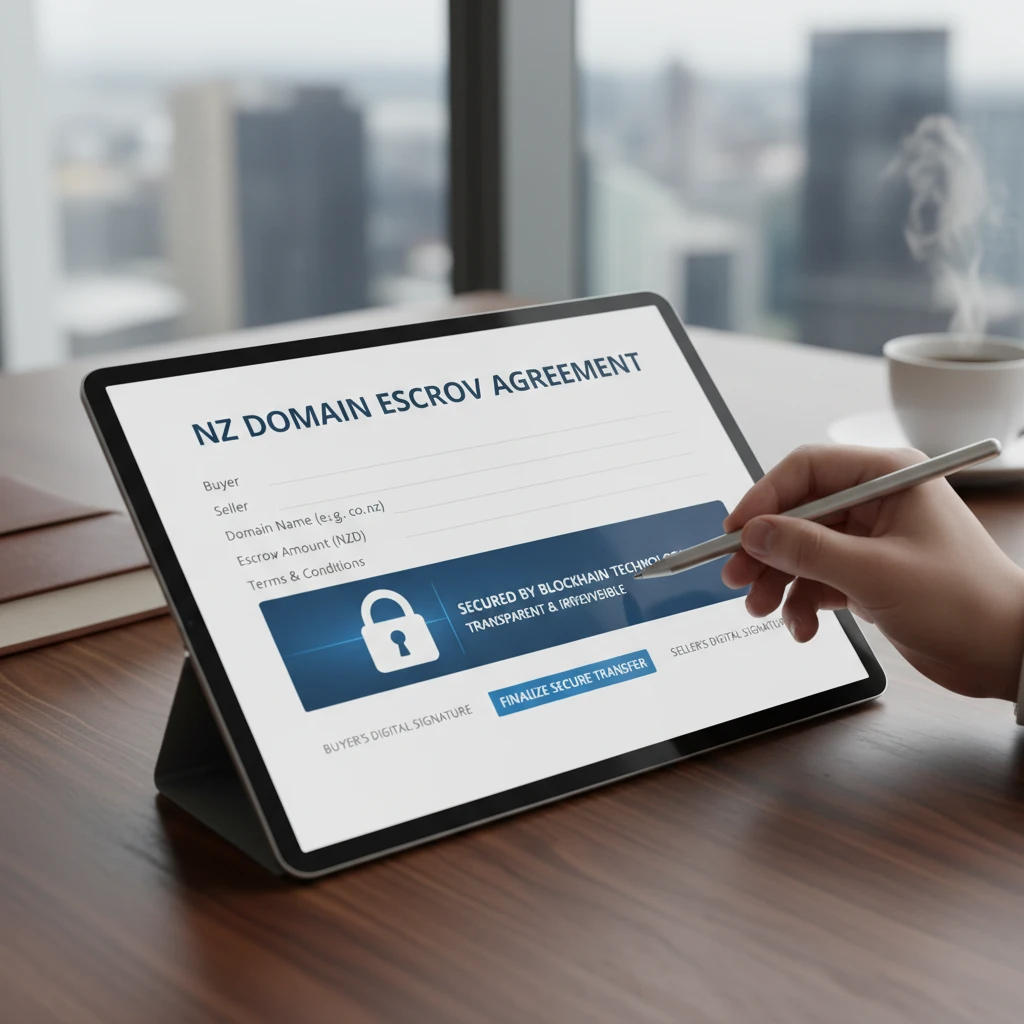
Once an nz domain appraisal is complete and a buyer is found, the next hurdle is the secure transfer of the asset. This is where localized escrow services become vital. Using a US-based escrow service for a .nz transaction can lead to complications with GST (Goods and Services Tax), bank transfer delays, and currency fluctuations that can eat into the profit margins.
A localized NZ escrow service understands the Domain Name Commission (DNC) regulations and the specific transfer codes (UDAIs) required for .nz domains. They ensure that the funds are held in a New Zealand-regulated trust account, providing both parties with legal recourse under NZ law—something that is often impossible or prohibitively expensive when using international services.
Maximizing Your Exit Value
To maximize the value of your NZ domain, the strategy should be: 1) Get a professional manual appraisal to set a realistic but ambitious price. 2) Utilize a local broker who has a network of NZ business owners. 3) Close the deal using an NZ-based escrow service to minimize fees and legal risks. This localized approach ensures that the value identified during the appraisal stage is actually realized in the final bank transfer.
People Also Ask
How much does a .nz domain appraisal cost?
A professional manual appraisal for a .nz domain typically ranges from $200 to $1,000 NZD, depending on the complexity of the asset and the depth of the report required. Automated appraisals are often free but lack the accuracy needed for high-value transactions.
Is .co.nz more valuable than .nz?
Currently, .co.nz is often perceived as more valuable for established businesses due to its long history and high consumer trust in New Zealand. However, shorter .nz domains are gaining traction among tech startups and for mobile-first branding.
How do I check the owner of a .nz domain?
You can use the WHOIS service provided by the Domain Name Commission (DNC) of New Zealand. However, many owners use privacy services, in which case you may need a broker to facilitate contact.
What makes a .nz domain “premium”?
A premium .nz domain is usually short (under 10 characters), uses a dictionary word, has high local search volume, or is a category-killer (e.g., insurance.co.nz). Cultural relevance and brandability within the NZ market are also key factors.
Can I use GoDaddy for NZ domain appraisals?
You can, but it is not recommended for accuracy. GoDaddy’s algorithm is optimized for the .com market and often fails to account for the unique market dynamics, local competition, and cultural nuances of the New Zealand digital landscape.
Do I need an escrow service for a .nz domain sale?
Yes, using an escrow service is highly recommended for any domain sale over $500. It protects both the buyer and seller by ensuring the funds are verified before the domain transfer (UDAI) is initiated, specifically within the NZ legal framework.
