


Local Presence Requirements
.nz domain privacy rules are governed by the Domain Name Commission (DNC) and mandate that all registrants provide valid contact details. While businesses must display full contact information on the public register, the Individual Registrant Privacy Option (IRPO) allows non-trading individuals to withhold their physical address and telephone number from public WHOIS searches to protect personal privacy.
In the competitive landscape of Digital Asset Management, securing the correct top-level domain (TLD) is the foundational step of brand protection. For entities operating within or targeting Aotearoa, the .nz extension is a powerful signal of local relevance and trust. However, unlike generic extensions like .com, the .nz namespace operates under a specific framework of policies designed to balance transparency with privacy.
Navigating the intersection of nz domain privacy rules and local presence requirements is critical for asset managers, international corporations, and local startups alike. Failing to adhere to these protocols can result in the suspension of digital assets, loss of brand authority, and significant legal headaches. This guide details the regulatory environment managed by InternetNZ and the Domain Name Commission (DNC).
Who is Eligible to Register a .nz Domain?
The .nz domain space is generally considered an “open” registry, meaning that for the vast majority of second-level domains (such as .co.nz, .net.nz, or the direct .nz), there are no restrictive citizenship or residency requirements for the registrant. This differs significantly from other country-code TLDs (ccTLDs) like .au (Australia), which strictly requires a verifiable local connection.
However, “eligibility” in the context of New Zealand Digital Asset Management goes beyond the simple ability to buy a domain. It encompasses the ability to maintain that domain in compliance with nz domain privacy rules. While anyone globally can register a .nz domain, the categorization of the registrant determines the data obligations.
Registrant Classifications
To understand eligibility, one must understand the two primary classifications recognized by the Domain Name Commission:
- Individuals: Natural persons who are not using the domain for significant commercial trade. These registrants are eligible for privacy protection.
- Entities/Traders: Companies, incorporated societies, trusts, or individuals using the domain for commercial activity (e.g., an e-commerce store or a portfolio site for a freelance photographer). These registrants are generally not eligible for privacy masking.
Understanding NZ Domain Privacy Rules
The core of the nz domain privacy rules revolves around the transparency of the WHOIS database (often referred to as the Query Service). The guiding principle of the .nz policy is that the public has a right to know who is operating a domain, particularly if that domain is engaged in commerce. This transparency builds trust in the digital economy.
The Individual Registrant Privacy Option (IRPO)
If you are an individual and do not use the domain for trade, you can apply for the Individual Registrant Privacy Option. This is a critical feature for personal asset protection.
What is hidden?
- Physical address.
- Telephone number.
What remains public?
- Registrant Name.
- Email Address (This is mandatory for contactability).
- Country of residence.

Commercial Transparency Obligations
For businesses and digital asset managers, the rules are stricter. If you are trading, you cannot hide behind the IRPO. Your full business address and contact number must be publicly searchable. This requirement ensures that consumers can locate and serve legal documents to businesses they interact with online.
Attempting to classify a commercial domain as “individual” to utilize privacy features is a breach of policy. The Domain Name Commission actively audits the register. If a “personal” blog starts selling merchandise or running heavy advertising, it may be reclassified as a trading entity, stripping away the privacy protection.
The ‘New Zealand Presence’ and Validity Requirement
While you do not need to live in New Zealand to own a .nz domain, you must satisfy the “validity” and “contactability” requirements, which act as a de facto presence check.
The Requirement for Serviceable Contact Details
The most common misconception regarding nz domain privacy rules is that international owners can use fake addresses or “PO Box” style anonymity services to satisfy registration requirements. This is incorrect.
To maintain a .nz domain, the registrant must provide:
- A Physical Address: This cannot be a PO Box. It must be a location where legal documents can be physically served.
- Operational Email: An email address that is regularly monitored.
If the registrant is international, they are not required to have a New Zealand physical address, but they are required to respond to inquiries from the Domain Name Commission. If the DNC attempts to verify details and receives a bounce-back or no response, the domain is flagged for cancellation.
Moderated Domains and Strict Presence
While .co.nz is open, certain sub-domains have strict local presence requirements:
- .govt.nz: Restricted to New Zealand local and central government agencies.
- .cri.nz: Restricted to Crown Research Institutes.
- .health.nz: Restricted to NZ health organizations.
- .iwi.nz: Restricted to traditional Māori tribes (Iwi) and requires verification.

Exceptions and Rules for International Trademarks
International entities often acquire .nz domains for brand protection (defensive registration). Since the .nz registry is open, an international trademark holder does not need to prove they have a registered NZ trademark to buy the domain initially. However, holding a trademark is vital if a dispute arises.
The Dispute Resolution Service (DRS)
If a local entity challenges an international owner’s right to a domain, the Dispute Resolution Service (DRS) comes into play. The DRS is an alternative to court proceedings. To successfully defend a domain without a physical New Zealand presence, an international entity usually needs to prove:
- Rights: They hold valid intellectual property rights (like a trademark) recognized in New Zealand or globally.
- Unfair Registration: They must prove the current registrant registered the domain unfairly (e.g., cybersquatting).
Conversely, if an international brand holds a domain but does not use it (passive holding), they are generally safe unless a local entity with a “better” claim (like a local trademark) challenges it. In such cases, having a “New Zealand presence” via local legal counsel or a local subsidiary strengthens the defense significantly.
Consequences of Failing Presence and Privacy Checks
The Domain Name Commission is proactive in enforcing nz domain privacy rules. They conduct regular data validation checks. Failing these checks has severe consequences for digital asset management.
1. The Validation Process
If the DNC suspects that contact details are invalid (e.g., mail is returned, emails bounce, or the address looks fake), they will initiate a validation process. The registrar (the company you bought the domain from) will be asked to contact the registrant.
2. Suspension and Cancellation
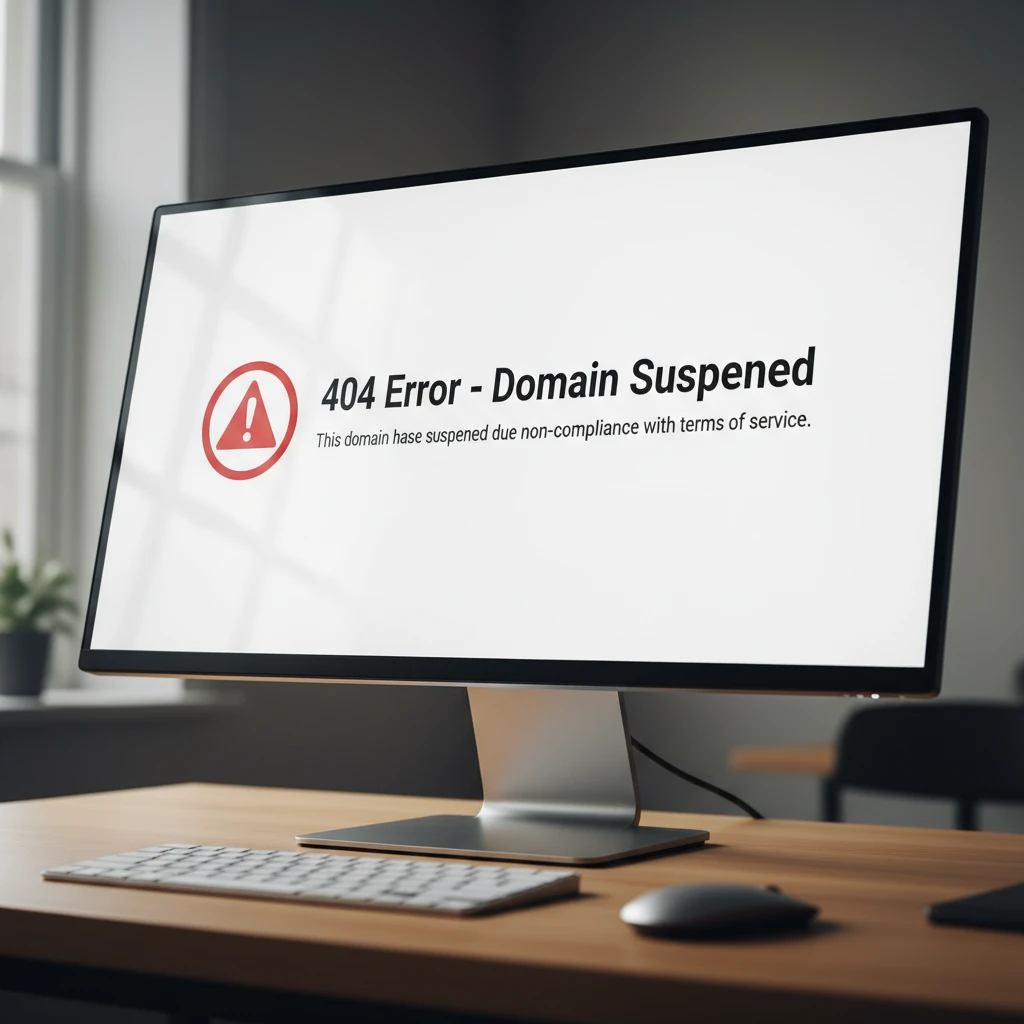
If the registrant fails to provide proof of valid contact details within the stipulated timeframe (usually 15 days), the domain is suspended. During suspension, the website and email services associated with the domain will stop working. If the issue remains unresolved, the domain is cancelled and released back into the public pool, where it can be snatched up by competitors or domain squatters.
3. Loss of Privacy Status
If an individual is found to be trading under a domain protected by the IRPO, the DNC has the authority to strip the privacy protection unilaterally. This results in the immediate publication of the registrant’s home address and phone number on the public WHOIS database. For high-profile individuals or those with safety concerns, this is a significant risk.
Summary of Best Practices
To ensure long-term security of your New Zealand digital assets:
- Ensure your registrar always has your current email and physical address.
- If you are a business, accept that transparency is the cost of entry; do not use the IRPO.
- If you are an international entity, ensure your administrative contact is responsive to English-language queries.
- Regularly check your WHOIS data to ensure no errors have crept in during renewals.
People Also Ask (PAA)
Can I hide my address on a .nz domain?
Yes, but only if you are an individual not using the domain for trade. You can apply for the Individual Registrant Privacy Option (IRPO) through your registrar, which hides your physical address and phone number from the public WHOIS search. Businesses and commercial entities must display their full address.
Do I need to live in New Zealand to buy a .nz domain?
No, there is no residency requirement for registering standard .nz, .co.nz, or .net.nz domains. International individuals and companies can register them. However, you must provide a valid physical address and email address where you can be contacted, regardless of your location.
What happens if my WHOIS information is incorrect?
If your contact information is found to be invalid, the Domain Name Commission may suspend and eventually cancel your domain name. You are contractually obligated to keep your details up to date to maintain your registration.
How much does .nz domain privacy cost?
The Individual Registrant Privacy Option (IRPO) is generally a free feature offered by the .nz registry. However, some registrars may charge an administrative fee to process the request or bundle it with other privacy services. You should check with your specific registrar.
Can a business use the Individual Registrant Privacy Option?
No. The IRPO is strictly for individuals who do not use the domain for commercial activity. If a business attempts to use this option, they are in breach of policy, and the Domain Name Commission can revoke the privacy status and publish the contact details.
Is WHOIS privacy the same as GDPR protection?
Not exactly. While GDPR protects personal data for EU citizens, the .nz policy is specific to New Zealand. The .nz policy balances privacy with transparency. Unlike some GDPR implementations that redact all data by default, .nz defaults to transparency for businesses and requires an active opt-in (IRPO) for non-trading individuals.
