


Acquiring Taken Australian Domains
The best domain broker for Australian domains is a specialized intermediary who navigates strict auDA regulations to acquire secondary market web addresses for businesses. They handle accurate valuation, anonymous negotiation, and complex ownership transfers, ensuring New Zealand SMEs legally secure their brand identity when expanding operations across the Tasman.
The Strategic Importance of the .com.au Extension
For New Zealand Small-to-Medium Enterprises (SMEs) eyeing expansion, the Australian market represents a massive opportunity for growth. However, a common hurdle arises immediately: your established brand name is already registered as a .com.au domain by another entity. Unlike the generic .com or the slightly more relaxed .co.nz namespace, the Australian domain space is highly regulated and fiercely competitive.
Securing the exact match .com.au domain is not merely a vanity metric; it is a critical component of commercial trust. Australian consumers maintain a high degree of loyalty to local domains. A .com.au extension signals local presence, compliance with Australian law, and commitment to the market. Consequently, acquiring an already taken domain becomes a high-stakes commercial transaction requiring specialized expertise.
This is where finding the best domain broker for Australian domains becomes essential. The process of acquiring a secondary market domain in Australia is fraught with legal complexities involving the .au Domain Administration (auDA). A standard acquisition approach used in the US or Europe often fails in Australia due to strict eligibility criteria, specifically the need for an Australian Business Number (ABN) or Australian Company Number (ACN) that matches the domain name.
Assessing the Value of a Secondary Market .com.au Domain
Before entering negotiations, it is vital to understand what you are buying. Unlike registering a new domain for $20, a secondary market domain is a digital asset with intrinsic value. Valuing these assets requires a sophisticated understanding of the digital real estate market.
Key Valuation Metrics
When your broker assesses a target domain, they analyze several critical factors to determine a fair market price:
- Keyword Authority: Generic, single-word domains (e.g., insurance.com.au) command premium prices due to their direct SEO benefits and memorability.
- Brand Match: If the domain is an exact match for your registered trademark in New Zealand, its value to you is high, but its value to the seller depends on their current usage.
- History and Age: Older domains with a clean history (no spam or penalties) carry more weight with search engines like Google.
- Traffic Volume: Does the domain currently receive type-in traffic? This is instant potential revenue for your business.
For a NZ SME, the value also includes defensive positioning. Calculating the cost of not owning the domain involves estimating lost revenue to competitors who might acquire it, or the marketing cost required to educate customers about an alternative, inferior URL.
The Risks of Losing Brand Identity Across the Tasman
Many New Zealand businesses make the fatal mistake of launching in Australia with a .com or a .net version of their brand because the .com.au was taken. This strategy dilutes brand equity and creates significant confusion.

The “Tasman Gap” in Consumer Trust
If a competitor or a domain squatter owns your brand’s .com.au equivalent, you risk bleeding traffic effectively every day. Australian users instinctively type .com.au. If that address leads to a parked page, a competitor, or a malicious site, your brand reputation suffers immediate damage.
Furthermore, search engines geo-target results. A user searching in Sydney is far more likely to be served a .com.au result than a .co.nz result. Without the local domain, your SEO efforts face a massive handicap, forcing you to spend significantly more on paid advertising (PPC) to achieve visibility. A competent broker understands that the acquisition cost of the domain is often lower than a single year’s wasted ad spend caused by domain confusion.
How to Choose the Best Domain Broker for Australian Domains
Not all domain brokers are equipped to handle the Australian market. The regulatory environment is unique. When selecting a partner to secure your intellectual property, look for the following qualifications:
1. auDA Policy Expertise
The broker must have a deep understanding of the .au Domain Administration licensing rules. Unlike .com domains, .au domains cannot be held purely for resale without a matching business purpose. A skilled broker knows how to leverage these rules to pressure squatters who may be holding your brand name in violation of policy.
2. Anonymity and Stealth
If a seller knows a successful New Zealand corporation is the buyer, the price will triple. The best domain broker for Australian domains acts as a shield, keeping your identity confidential until the price is agreed upon. They should have a track record of stealth acquisitions.
3. Escrow Capabilities
Never transfer funds directly to a seller. Your broker must utilize a recognized escrow service (such as Escrow.com or a legal trust account) to ensure that funds are only released once the domain ownership has been successfully transferred to your ABN/ACN.

Negotiation Strategies for Australian Domain Owners
Negotiating for a premium domain is an art form. It requires psychological maneuvering, patience, and data.
The “Walk Away” Protocol
The strongest leverage in any negotiation is the ability to walk away. Brokers often open negotiations with a low-ball offer to anchor the price. They must establish that the domain is “nice to have,” not “essential,” even if it is critical for your strategy. If the seller senses desperation, the negotiation is lost.
Leveraging the “Australian Presence” Requirement
In Australia, you cannot simply own a domain; you must have a connection to it. If the current owner is hoarding the domain without a valid business use or matching trademark, they may be in breach of the auDA Domain Name Eligibility and Allocation Policy Rules. A sharp broker can politely remind the seller of the risk of a policy deletion (where they lose the domain for free) to encourage a reasonable sale price.
Structured Payments
For high-value domains (six figures and above), negotiations often involve structured payouts. A broker can arrange lease-to-own agreements or multi-stage payments, allowing your business to cash flow the asset while securing immediate control of the DNS.
Navigating auDA Regulations and Eligibility
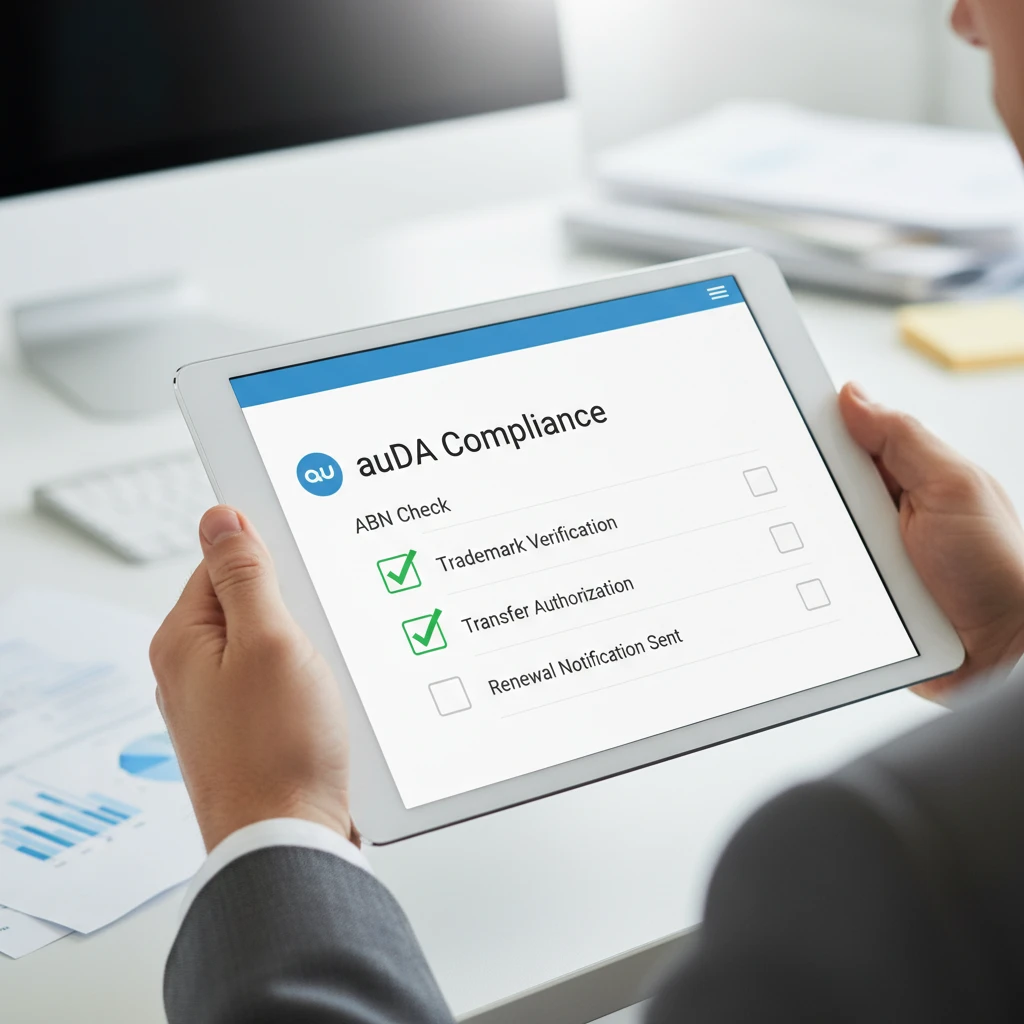
The final hurdle in acquiring a taken Australian domain is the transfer itself. This is not a simple “push” process. The new owner (you) must meet the Australian Presence Test.
For NZ SMEs, this usually means:
- Registering an Australian Private Company (Pty Ltd) to get an ACN.
- Registering as a foreign company doing business in Australia (ARBN).
- Holding an Australian Trademark that matches the domain exactly.
The best domain broker for Australian domains will coordinate with your legal team to ensure the corporate structure is in place before the transfer is initiated. If the transfer is flagged by the registrar because the eligibility details are incorrect, the domain can be locked, or the transfer rejected, jeopardizing the deal.
The Change of Registrant (CoR) Process
In the .au namespace, selling a domain triggers a “Change of Registrant” event. This effectively cancels the old license and issues a new one. This process incurs a fee and resets the domain license period. Your broker manages this technical administrative layer to ensure zero downtime for your digital presence.
People Also Ask
Can I buy a .com.au domain if it is already taken?
Yes, you can buy a taken .com.au domain through the secondary market. This involves identifying the current owner and negotiating a sale price. Because of the complexities involved, it is highly recommended to use a professional domain broker to handle the negotiation and transfer process.
How much does a domain broker charge in Australia?
Domain brokers typically charge a commission fee ranging from 10% to 20% of the final purchase price. Some brokers may also charge an upfront engagement fee or a minimum success fee, depending on the complexity of the acquisition and the value of the domain.
Do I need an ABN to own a .com.au domain?
Yes, to hold a .com.au license, you must satisfy the Australian Presence Test. The most common way to do this is by having a valid Australian Business Number (ABN) or Australian Company Number (ACN). Foreign entities can also qualify if they hold an Australian Trademark matching the domain.
Is domain squatting illegal in Australia?
While not strictly “illegal” in a criminal sense, domain squatting (cybersquatting) violates auDA policies. You cannot hold a .au domain solely for resale or without a close and substantial connection to the name. Violating these rules can lead to the domain being deleted by the regulator.
How do I find out who owns a specific Australian domain?
You can use the WHOIS lookup tool provided by auDA or accredited registrars. However, due to privacy laws, some contact details may be redacted. A domain broker has specialized tools and methods to locate and contact owners even when privacy protection is enabled.
What is the best way to value an Australian domain name?
Valuation is based on keyword search volume, brandability, extension authority (.com.au is the premium tier), length, and comparable sales history. Professional brokers use historical sales data of similar Australian domains to estimate a fair market value.
