

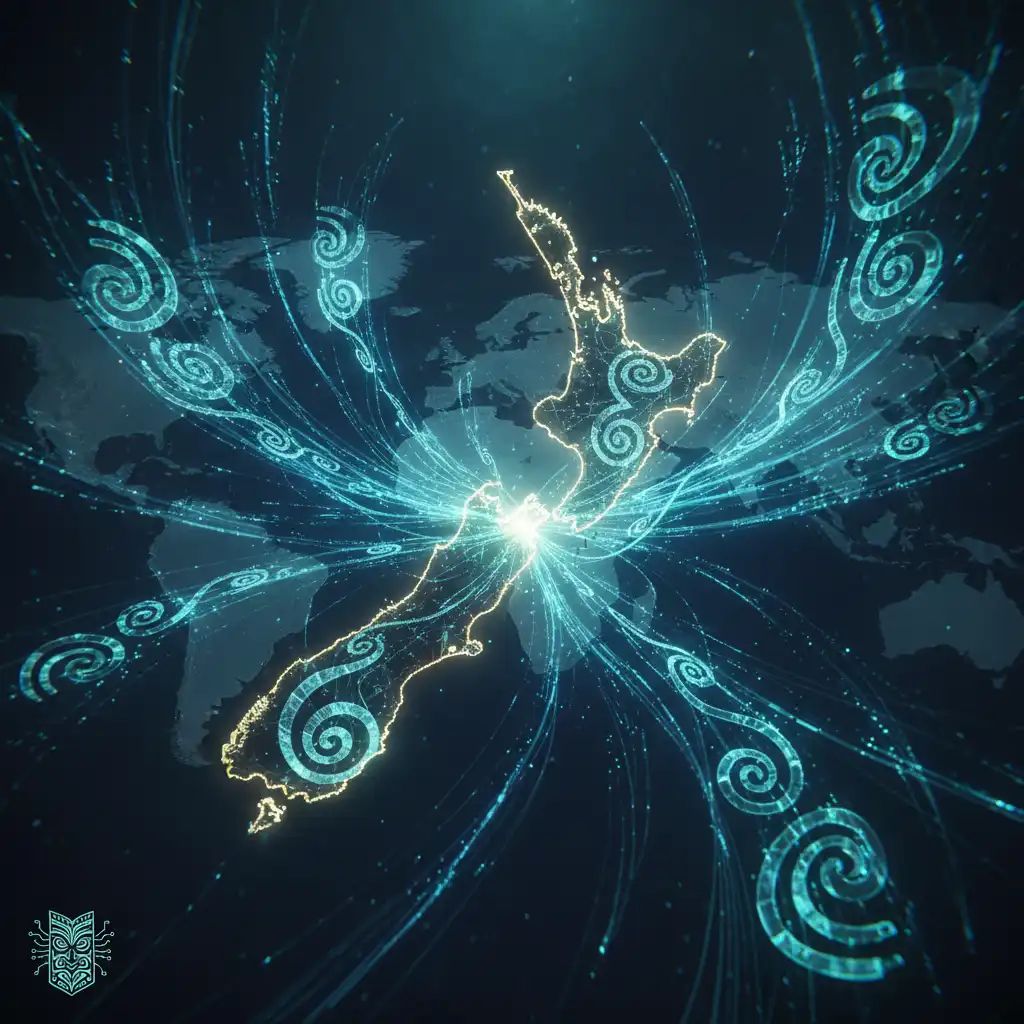
Māori Data Sovereignty & Domains
Māori data sovereignty in global trade refers to the inherent rights of Māori to control the collection, ownership, and application of their data within international commerce. It ensures that indigenous knowledge, language (Te Reo), and cultural intellectual property are protected from misappropriation while enabling equitable participation in the digital economy.
In the rapidly evolving landscape of the digital economy, New Zealand businesses are increasingly finding themselves at the intersection of commercial innovation and cultural responsibility. For Small to Medium Enterprises (SMEs) looking to scale internationally, understanding the nuances of indigenous rights is no longer optional—it is a critical component of strategic risk management and brand integrity.
As digital borders blur, the concept of sovereignty extends beyond physical land to the virtual realm. This includes everything from the domain names we register to the cloud servers where we store customer information. The principles of Te Tiriti o Waitangi are now being applied to data ecosystems, reshaping how New Zealand engages with the world.
Understanding WAI 262 and Digital Assets
To grasp the current landscape of Māori data sovereignty in global trade, one must first understand the WAI 262 claim. Often referred to as the “Flora and Fauna” claim, WAI 262 was lodged with the Waitangi Tribunal in 1991. It is one of the most complex and far-reaching claims in New Zealand’s history, concerning the ownership and protection of Māori culture, identity, and traditional knowledge (Mātauranga Māori).
From Flora to Fiber Optics
While the original claim focused on native plants and genetic resources, its implications have naturally extended into the digital sphere. In the modern context, data is a resource as valuable as land or fisheries. Digital assets—including domain names, branding elements derived from Māori imagery, and digitized traditional knowledge—are considered taonga (treasures) that require protection.
For NZ SMEs, this means that the unauthorized commercialization of Māori concepts, even in a digital format, can be seen as a breach of the Treaty of Waitangi principles. The Tribunal’s report, Ko Aotearoa Tēnei, recommends that Māori should have control over how their culture is used. When a business registers a domain name like buy-manuka-honey.co.nz or uses Māori iconography in a global app, they are navigating waters governed by these evolving standards of intellectual property (IP) and cultural rights.
Māori Data Sovereignty in Global Trade Agreements
New Zealand is unique in its approach to international trade policy, often embedding the Treaty of Waitangi exception clause in Free Trade Agreements (FTAs). This clause allows the government to adopt measures it deems necessary to fulfill its obligations to Māori, even if those measures might otherwise violate the trade agreement.
The Digital Economy Partnership Agreement (DEPA)
The Digital Economy Partnership Agreement (DEPA) between New Zealand, Chile, and Singapore represents a new frontier. It explicitly recognizes the importance of Indigenous rights in the digital era. For businesses, this signals a shift away from a “wild west” internet to a regulated environment where indigenous data sovereignty is respected across borders.
Key implications for exporters include:
- Data Localization: Sovereign nations may require data generated by their citizens (or indigenous populations) to be stored within their physical borders.
- Cross-Border Data Flows: While free flow of data is encouraged, exceptions are being carved out to protect indigenous data from being exploited by multinational tech giants without consent or benefit-sharing.
- IP Protections: Enhanced scrutiny on trademarks and patents that utilize indigenous language or knowledge in international markets.

Ethical Considerations for Te Reo Māori Domains
The domain name market is a high-value sector of the digital economy. Short, memorable, and keyword-rich domains can command high prices and drive significant traffic. However, the registration of Te Reo Māori domains by non-Māori entities for purely commercial gain raises significant ethical questions.
The Risks of “Digital Squatting”
Registering domains such as kai.co.nz, mahi.com, or aroha.net without a genuine connection to the culture or language can be viewed as digital colonization. This practice, sometimes called “cultural cybersquatting,” involves procuring indigenous terms to profit from their cultural cachet without returning value to the community.
The InternetNZ policy framework and the Domain Name Commission (DNC) have been exploring ways to manage this. While the .nz domain space is generally open, there is a growing expectation of kaitiakitanga (guardianship). Businesses should ask themselves:
- Relevance: Does this name accurately reflect my business, or am I using it solely for its “exotic” appeal?
- Authority: do I have the cultural mandate or partnership required to use this terminology?
- Impact: Does my use of this domain prevent Māori organizations from accessing their own linguistic heritage online?
Best Practices for Respectful Brand Stewardship
For New Zealand SMEs aiming for high-value commercial strategies, integrating Māori culture can be a powerful differentiator. It tells a story of place and connection. However, to avoid the pitfalls of appropriation and align with Māori data sovereignty in global trade, businesses must adopt a partnership model.
Consultation and Engagement
Before launching a brand or registering a domain that utilizes Māori imagery or language, engage with cultural advisors. This is not merely a “tick-box” exercise but a strategic alignment. Proper consultation ensures that the use of the data (language/image) is appropriate for the context. For example, using a term associated with tapu (sacredness) for a trivial product (like alcohol or gambling) would be culturally offensive and commercially damaging.
Benefit Sharing
True sovereignty implies that the owners of the data benefit from its use. If your business model relies heavily on a Māori narrative—for instance, exporting Manuka honey or Rotorua mud products—consider how profits are shared. This could involve direct partnerships with Iwi, royalties, or supporting community initiatives. In the global market, consumers are increasingly savvy and value authentic, ethical supply chains.

Technical Implementation: Residency vs. Sovereignty
When discussing data sovereignty, a technical distinction must be made between data residency and data sovereignty. This distinction is vital for CIOs and CTOs of NZ SMEs planning their infrastructure.
Data Residency
Data residency refers to the physical geographical location where data is stored. For example, storing your customer database in a Microsoft Azure data center located in Auckland. While this keeps the data on New Zealand soil, it does not automatically guarantee Māori data sovereignty.
Data Sovereignty
Data sovereignty encompasses the legal jurisdiction and the rights of control. Even if data is resident in New Zealand, if it is held by a US-owned company, it may be subject to the US CLOUD Act, which allows US law enforcement to access data stored overseas. Māori Data Sovereignty advocates for governance structures where Māori determine who accesses the data and for what purpose.
Actionable Steps for SMEs:
- Audit your Cloud Providers: Understand where your data lives and which laws govern it.
- Sovereign Cloud Solutions: Look for local cloud providers who can offer guarantees regarding jurisdiction and protection from foreign interference.
- Data Governance Protocols: Implement internal policies that tag Māori data (e.g., Iwi affiliation data) and apply stricter access controls to it.
The Future of Indigenous IP in Commerce
The trajectory of global trade is moving toward greater inclusivity and protection of indigenous rights. The World Intellectual Property Organization (WIPO) is actively discussing international legal instruments to protect Traditional Knowledge (TK) and Traditional Cultural Expressions (TCEs).
For New Zealand businesses, being ahead of this curve is a competitive advantage. Companies that proactively embrace Māori data sovereignty principles will find themselves better positioned in markets like the EU and Canada, where ethical consumption and indigenous rights are high on the agenda. Conversely, those who ignore these shifts risk reputational damage and potential legal challenges as the WAI 262 claim continues to influence legislation.
Ultimately, the goal is a digital ecosystem where Māori innovation is celebrated and protected, and where New Zealand businesses can trade with the world carrying a unique, authentic, and ethically sound brand identity.

Conclusion
Māori data sovereignty in global trade is not a barrier to business; it is a framework for sustainable, ethical, and high-value commercial relationships. By respecting the mana of the data, engaging in genuine partnership, and understanding the legal landscape of WAI 262, NZ SMEs can build brands that are not only commercially successful but also culturally enduring.
People Also Ask
What is the difference between Māori data sovereignty and data privacy?
While data privacy focuses on the protection of an individual’s personal information, Māori data sovereignty is a collective right. It concerns the rights of Māori as a people to control data that relates to their whakapapa, resources, culture, and collective identity, ensuring it benefits the community rather than just the individual.
How does the WAI 262 claim affect New Zealand businesses?
WAI 262 establishes that Māori have rights over their traditional knowledge and taonga species. For businesses, this means that using Māori imagery, language, or native flora (like Manuka) for commercial gain requires ethical consideration, consultation, and potentially benefit-sharing models to avoid misappropriation.
Can non-Māori businesses use .maori.nz domain names?
Technically, the .maori.nz domain space is open for registration. However, it is moderated to ensure applicants have a genuine connection to Māori organizations or a mandate to use the name. Using it without cultural authorization is considered unethical and may be challenged by the Māori Internet Community.
What is the purpose of the Te Mana Raraunga Charter?
Te Mana Raraunga is the Māori Data Sovereignty Network. Their charter provides guidelines and principles for the collection, use, and management of Māori data. It serves as a gold standard for organizations looking to align their data practices with Treaty of Waitangi obligations.
How do free trade agreements impact indigenous data rights?
Modern Free Trade Agreements (FTAs), like the NZ-UK FTA, often include specific chapters or exceptions for indigenous rights. These provisions ensure that the New Zealand government retains the right to implement policies that favor Māori data sovereignty without being sued for creating trade barriers.
Why is data localization important for Māori sovereignty?
Data localization ensures that data remains within New Zealand’s legal jurisdiction. This protects it from foreign laws (like the US Patriot Act) that might allow external governments to access sensitive indigenous information without the consent of the Iwi or hapū involved.
