


SEO Impact of Te Reo Domains
SEO for Māori keywords involves optimizing digital assets to rank for Te Reo search queries by correctly handling macron characters in URLs and metadata, implementing bilingual hreflang tags, and structuring content for code-switching audiences. This strategy signals cultural relevance to Google, enhancing local authority within the New Zealand market while ensuring accessibility for indigenous speakers.
The Digital Landscape of Aotearoa: A Dual-Language Opportunity
In the evolving digital ecosystem of New Zealand, the integration of Te Reo Māori into business operations is no longer just a cultural gesture—it is a strategic imperative. For digital asset brokers and advisory firms, understanding the nuances of SEO for Maori keywords is essential for capturing a growing segment of the market that values cultural authenticity and linguistic precision.
As the revitalization of the Māori language continues to gain momentum, search behaviors are shifting. Kiwis are increasingly using Te Reo terms in their daily queries, ranging from government services to retail and tourism. This shift presents a unique opportunity for forward-thinking businesses to optimize their digital real estate for bilingual visibility.
How Google Handles Macrons in Search
One of the most common technical questions in this niche involves the treatment of macrons (tohutō). Does Google treat “Māori” and “Maori” as the same keyword? The answer lies in the evolution of semantic search and UTF-8 encoding.
Does Google Recognize Macrons as Distinct Characters?
Historically, search engines struggled with diacritical marks. However, Google’s modern algorithms, powered by BERT and MUM, are increasingly sophisticated at understanding context. In most cases, Google treats the macronized and non-macronized versions of a word as synonyms. If a user searches for “Taupo,” Google understands they are likely looking for “Taupō.”
However, from a strict technical SEO perspective, consistency is vital. Here is how you should handle macrons across different on-page elements:
- URLs: It is generally safer to use standard ASCII characters in URLs (e.g.,
example.co.nz/maori-language) to avoid encoding issues when URLs are shared on platforms that do not support special characters. However, if your CMS handles UTF-8 correctly, using macrons in URLs is acceptable and signals precision. - Title Tags and Meta Descriptions: Always use the correct spelling with macrons. This improves Click-Through Rate (CTR) by signaling cultural competency and accuracy to the user.
- Body Content: Use the macronized form. Google will still rank the page for the non-macronized query, but using the correct orthography builds trust (E-E-A-T) with your New Zealand audience.
Ranking for Te Reo Search Queries
Ranking for indigenous keywords requires a nuanced understanding of search intent. Unlike high-volume English keywords, Te Reo queries often have lower search volume but significantly higher intent and engagement rates.
Understanding Code-Switching in Search
New Zealanders often “code-switch”—alternating between English and Te Reo—during search sessions. A user might search for “funeral directors near me” and then refine the search to “tangihanga services Auckland.” To capture this traffic, your content strategy must reflect this linguistic fluidity.
Strategy for implementation:
- Keyword Mapping: Identify the Te Reo equivalents of your primary commercial keywords. For a digital asset broker, this might include terms related to pakihi (business) or hoko (trade/sell).
- Synonym Optimization: Do not just replace English words; use Te Reo terms naturally alongside English definitions. This helps Google associate the two terms as relevant synonyms for your specific domain authority.
- Structured Data: Use Schema.org markup to define the language of specific sections if you are mixing languages on a single page, although separate pages are often cleaner for pure SEO.

Local SEO Benefits of Indigenous Branding
In the context of New Zealand’s digital economy, Local SEO is heavily influenced by trust and community relevance. Utilizing Te Reo domains and keywords is a powerful signal of local presence.
Enhancing E-E-A-T through Cultural Competency
Google’s Quality Rater Guidelines emphasize E-E-A-T (Experience, Expertise, Authoritativeness, and Trustworthiness). For NZ-based businesses, demonstrating an understanding of Tikanga Māori and correct language usage contributes to the “Trust” component.
When a local business correctly utilizes terms like Aotearoa, Whānau, or Kai in their Google Business Profile (GBP) descriptions and posts, it resonates with the local demographic. Furthermore, it differentiates the brand from international competitors who may be targeting New Zealand keywords without a physical presence or cultural understanding.
Actionable Tip: Update your Google Business Profile to include bilingual service descriptions. If you offer services nationwide, explicitly mention “serving all of Aotearoa” to capture broad, culturally-aligned search intent.
Bilingual Site Structure Best Practices
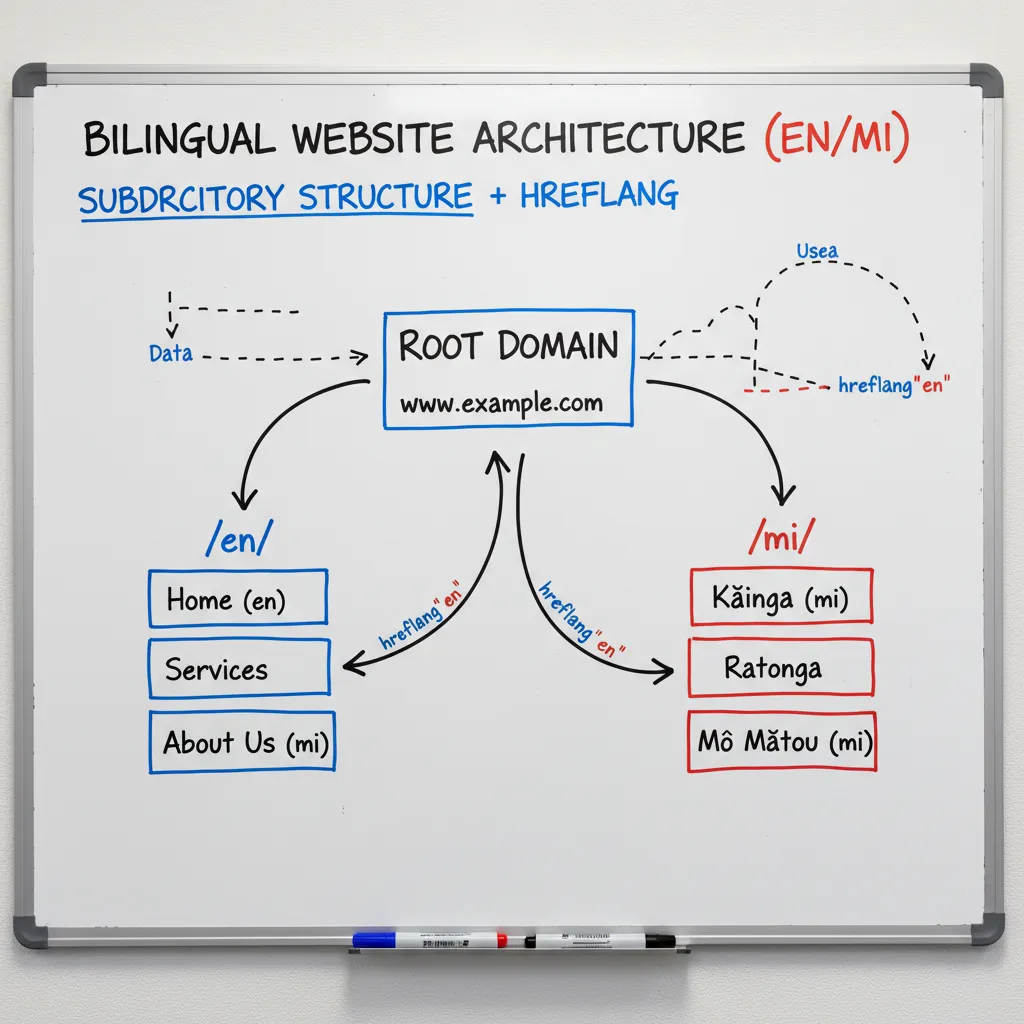
For digital asset advisories dealing with high-value platforms, the architecture of a bilingual site is critical. You want to avoid keyword cannibalization where the English and Māori versions of a page compete against each other.
Subdirectories vs. Subdomains
For most businesses, using subdirectories is the superior method for SEO authority consolidation.
- Recommended:
example.co.nz/mi/(Subdirectory). This keeps all link equity on the main root domain. - Not Recommended:
mi.example.co.nz(Subdomain). Google often treats subdomains as separate entities, diluting your domain authority.
Implementing Hreflang Tags
To ensure Google serves the correct language version to the correct user, you must use hreflang tags. The ISO 639-1 code for Māori is mi.
Example code block for the head section:
<link rel="alternate" hreflang="en-nz" href="https://example.co.nz/page" />
<link rel="alternate" hreflang="mi-nz" href="https://example.co.nz/mi/page" />
This technical implementation tells Google explicitly: “This is the Te Reo version of the page, and this is the English version.” It prevents duplicate content penalties and improves the user experience.
Te Reo Domains as Digital Assets
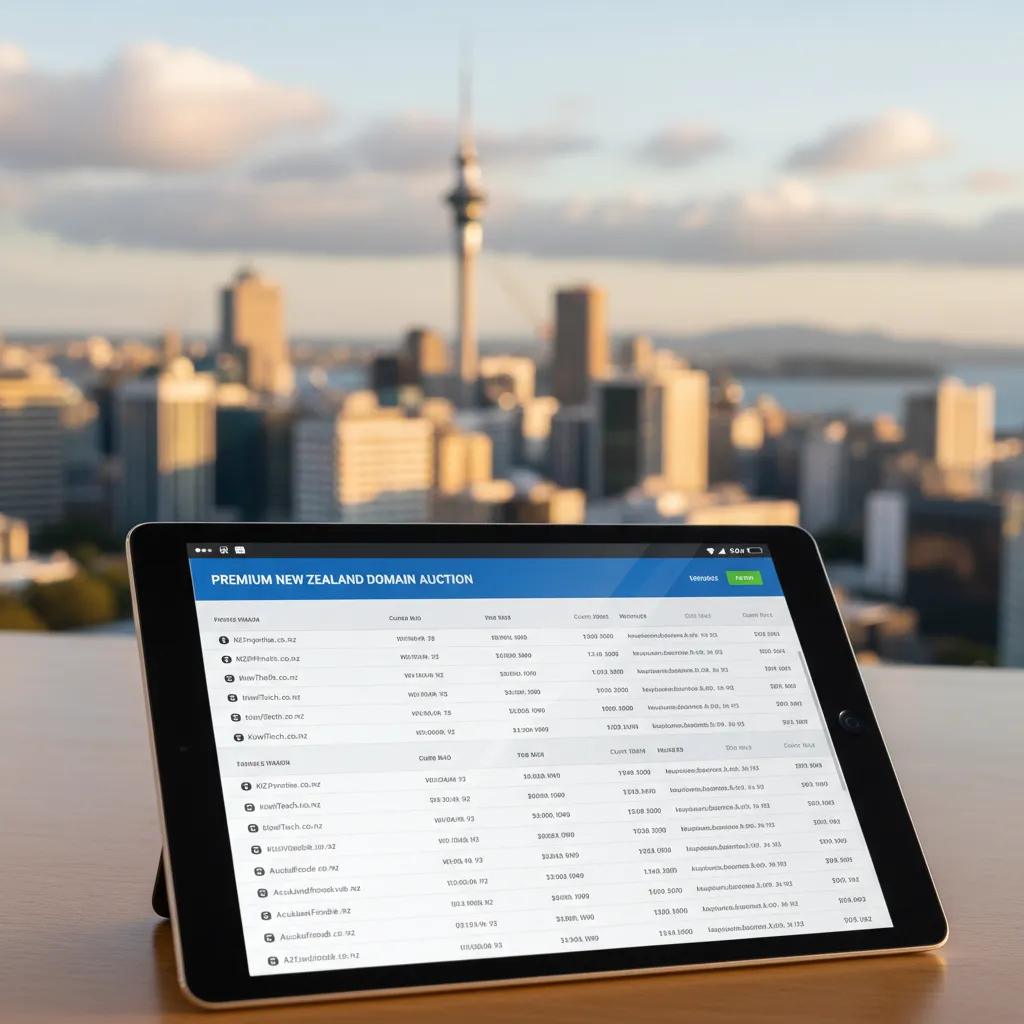
As a brokerage and advisory firm, evaluating the worth of digital assets is core business. Te Reo domains (e.g., generic words like mahi.co.nz or whare.co.nz) are becoming increasingly valuable digital real estate.
Valuation Factors for Te Reo Domains
The scarcity of premium single-word Te Reo .co.nz domains drives their value. Factors influencing valuation include:
- Simplicity and Spelling: Words that are easy to spell for non-fluent speakers hold higher commercial value.
- Commercial Intent: Words related to property, finance, food, and tourism have higher monetization potential.
- Brand Protection: Companies are increasingly acquiring the Te Reo translation of their brand name to protect their IP and prevent competitors from capturing that traffic.
Furthermore, the .maori.nz second-level domain exists, but it generally carries less SEO weight than the standard .co.nz or .nz. However, for organizations specifically targeting iwi or community initiatives, .maori.nz sends a very strong signal of community alignment.
Conclusion: The Future is Bilingual
Integrating SEO for Maori keywords is not a trend; it is a reflection of New Zealand’s maturing identity. For digital asset brokers, this presents a dual opportunity: optimizing your own platforms to reach a wider audience and advising clients on the intrinsic value of culturally relevant digital assets.
By respecting the technical requirements of macrons, implementing proper bilingual architecture, and aligning with the intent of Te Reo searchers, businesses can secure a robust Position 0 in the future of Aotearoa’s digital landscape.
People Also Ask
Does using macrons in URLs affect SEO rankings?
Using macrons in URLs generally does not negatively affect rankings if UTF-8 encoding is handled correctly by the server. However, to ensure maximum compatibility across all browsers and social sharing platforms, many SEO experts recommend using standard ASCII characters (no macrons) in the URL slug, while keeping macrons in the title tag, meta description, and on-page content.
What is the hreflang code for Te Reo Māori?
The ISO 639-1 language code for Te Reo Māori is “mi”. When targeting users in New Zealand specifically, the correct hreflang attribute is “mi-NZ”. This helps search engines understand that the content is in Māori and intended for a New Zealand audience.
Are Te Reo keywords competitive in Google Search?
Currently, most Te Reo keywords have lower competition compared to their English counterparts, representing a “blue ocean” SEO strategy. However, the intent behind these searches is often very high. As bilingual proficiency grows in New Zealand, competition for these terms is expected to rise significantly.
Should I translate my entire website into Te Reo for SEO?
You should only translate your entire website if you have the resources to ensure high-quality, professional translation. Poorly translated content (using automated tools without review) can harm your brand’s reputation (E-E-A-T). A better strategy is often to start with key landing pages or a dedicated bilingual section.
Does a .maori.nz domain rank better than .co.nz?
Generally, a .co.nz domain has stronger authority and is more widely recognized by the general public. A .maori.nz domain does not inherently rank better in Google algorithms, but it is highly effective for signaling specific relevance to Māori communities and organizations.
How do I find Māori keywords for my business?
You can find Māori keywords by using standard tools like Google Keyword Planner or Ahrefs and inputting Te Reo terms relevant to your industry. Additionally, look at “Searches related to” at the bottom of Google SERPs for NZ queries, and analyze the bilingual glossary of terms used by government competitors.
