

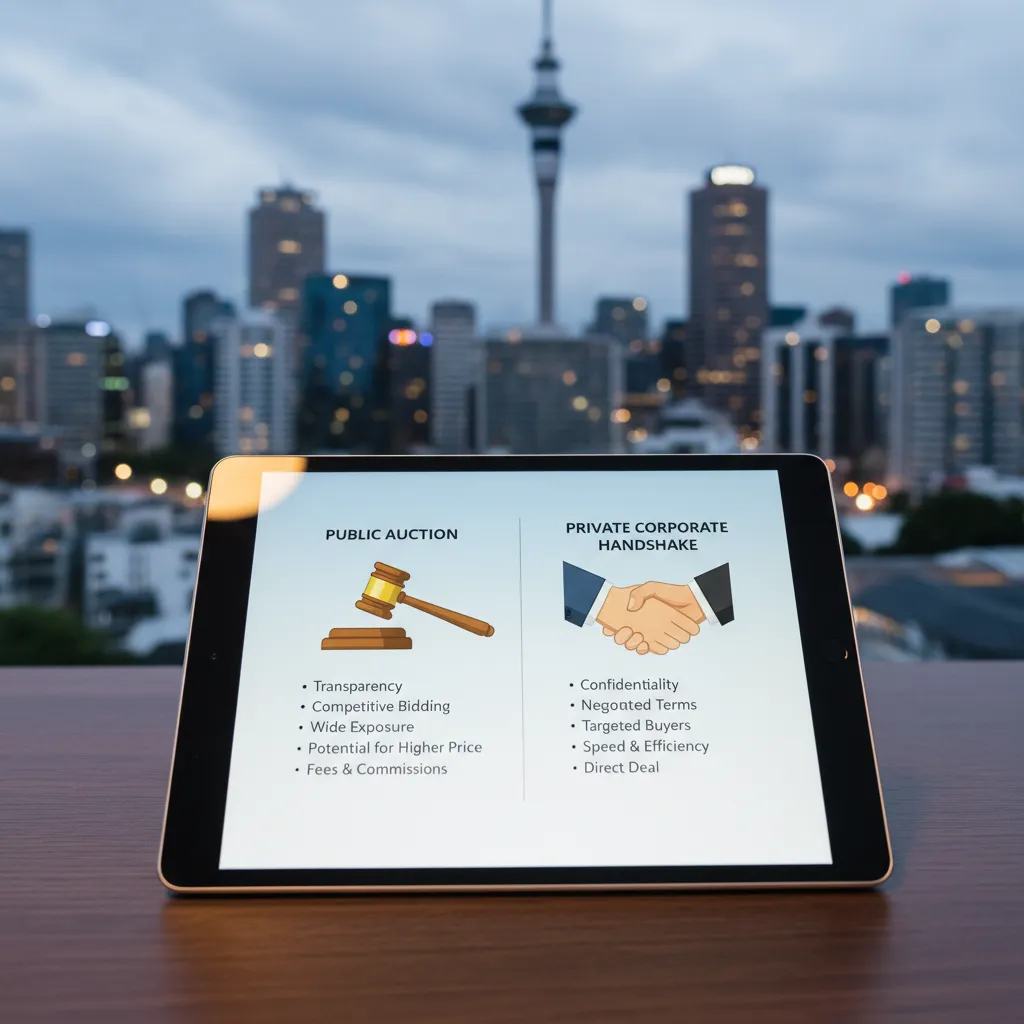
TradeMe vs. Professional Brokerage
Selling a domain on TradeMe offers a quick, low-cost DIY listing suitable for lower-value assets, whereas engaging a professional broker provides accurate valuation, access to qualified corporate buyers, and secure escrow services essential for premium .co.nz domains. Brokers maximize final sale price through private negotiation rather than public auction pressure.
The Reality of Selling Domains in New Zealand
When you hold a premium digital asset, specifically a high-value .co.nz or .nz domain, the method of sale you choose is the single most significant determinant of your final return on investment. For many New Zealanders, TradeMe is the default marketplace for everything from used cars to real estate. It is a trusted, high-traffic platform that serves the general public exceptionally well. However, when the conversation shifts to intellectual property and digital assets, the dynamics change drastically.
The decision to sell a domain on TradeMe vs broker representation is not merely a choice of platform; it is a choice of business strategy. One approach treats your domain as a commodity to be liquidated, while the other treats it as a strategic asset to be leveraged. In the high-stakes world of premium domains, where a single keyword can command five to six figures, understanding the nuances of the “Commercial” search intent is vital. Buyers of premium domains are rarely browsing general auction sites; they are corporate entities, investors, and brand managers who operate through private channels.
TradeMe Limitations: The Generalist Platform Problem
TradeMe is an undeniable giant in the Kiwi e-commerce landscape. Its ubiquity means that listing an item there guarantees eyeballs. However, in the context of domain sales, the quality of those eyeballs is often more important than the quantity. The fundamental limitation of generalist platforms lies in the mindset of the user base.
The Bargain Hunter Mentality
Users browse TradeMe primarily to find deals. Whether they are looking for a second-hand sofa or a generic website name, the psychological framework is one of thrift. When you list a premium domain on a general auction site, you are immediately framing it as a “distressed asset” or a bargain bin item. High-value corporate buyers—the ones with the budget to pay fair market value for a premium .co.nz domain—do not typically scour TradeMe for their branding needs. They rely on acquisition consultants to find the specific asset that matches their strategic goals.
The Auction Cap
Auctions work exceptionally well for items with a clearly defined market value and high demand liquidity (like an iPhone). For unique assets like domains, where the value is subjective and dependent on the buyer’s specific business case, auctions often fail to reach the reserve. If two motivated buyers are not in the room at the exact same time, the price stagnates. A broker, conversely, creates a market by identifying buyers who have a specific need for that name, regardless of whether they were actively looking for it.
Lack of Nuance in Listing
A TradeMe listing allows for a description and a Q&A section, but it does not allow for the presentation of a business case. You cannot present traffic analytics, search volume data, brandability metrics, or comparable sales history in a format that professional investors respect. You are limited to a text box, which severely handicaps your ability to justify a premium price tag.
Risk Analysis: DIY Listings vs. Managed Sales
Beyond the potential for a lower sale price, the “sell domain on TradeMe vs broker” debate must address the inherent risks of a Do-It-Yourself (DIY) approach. The domain transfer process involves strict technical and legal protocols, particularly under the guidance of the Domain Name Commission (DNC) in New Zealand.

Low-Ball Offers and Tire Kickers
Public listings attract “tire kickers”—individuals with no intention or capacity to buy, who clutter your inbox with low-ball offers and irrelevant questions. Engaging with these leads is a significant drain on time. More dangerously, a public record of a domain failing to sell or receiving low bids can permanently tarnish the asset’s reputation. If a savvy buyer sees that a domain failed to meet a $2,000 reserve on TradeMe six months ago, they will use that data to drive down the price during future negotiations.
Lack of Buyer Vetting
In a DIY scenario, you have limited tools to verify the identity or solvency of a buyer. Is the person bidding a legitimate entity, or a competitor trying to lock up your asset during a crucial launch window? Professional brokers perform rigorous due diligence (KYC) on potential buyers before revealing the price or engaging in serious talks. This protects the seller from wasting time on fraudulent or unserious inquiries.
The Escrow Gap
Perhaps the most critical risk is the transaction itself. TradeMe facilitates the connection but does not act as a financial intermediary for intangible assets in the same way specialized escrow services do. Transferring a domain before receiving funds is a recipe for theft; accepting funds before transfer can trigger chargeback fraud. Brokers utilize licensed escrow services (like Escrow.com or local legal trust accounts) to ensure that the domain and the money change hands simultaneously and securely.
The Professional Broker Advantage
Engaging a professional domain broker transforms the sales process from a passive wait into an active pursuit. Brokers do not merely list domains; they market them. This distinction is crucial for sellers aiming for the “Commercial” intent of maximizing profit.
Access to Private Investors and Corporates
The primary value proposition of a broker is their Rolodex. Established brokers maintain relationships with venture capital firms, brand agencies, and corporate acquisition departments. When you sign with a broker, your domain is often presented directly to decision-makers at large New Zealand and Australian companies who may have a strategic interest in the keyword.
For example, if you own “insurance.co.nz,” a broker does not wait for an insurance company to search for it. They actively contact the CMOs of major insurance providers, presenting a data-backed proposal on how acquiring this domain will lower their customer acquisition costs (CAC) and improve their SEO dominance. This outbound approach unlocks budgets that simply do not exist in a public auction environment.

Negotiation Buffer
Negotiating on your own behalf can be emotionally taxing and strategically difficult. If you appear too eager, the price drops. If you are too firm, the buyer walks. A broker acts as a professional buffer. They can push for a higher price, create a sense of urgency (FOMO), and handle objections without the emotional attachment of the owner. They are trained to pivot the conversation from “price” to “value,” anchoring the negotiation in the ROI the buyer will receive rather than the cost to the seller.
Anonymity and Stealth Acquisitions
High-net-worth transactions often require discretion. A seller may not want competitors to know they are liquidating assets, and a buyer may not want to signal a new product launch. Brokers facilitate blind negotiations, protecting the identities of both parties until the contract is signed. This level of confidentiality is impossible on a public listing platform.
Valuation Methodologies: Auction vs. Appraisal
Understanding the difference in valuation is key to the “sell domain on TradeMe vs broker” decision. TradeMe relies on Market Value via Liquidity. This means the domain is worth only what the highest bidder is willing to pay right now, usually within a 7-14 day window. This often results in wholesale pricing.
Brokers utilize Investment Value. They calculate the value based on:
- Exact Match Search Volume: How many people type this keyword into Google NZ monthly?
- CPC (Cost Per Click): How much are advertisers paying for this keyword? If the CPC is $20, the organic traffic from the domain is highly valuable.
- Brandability: Is it short, memorable, and easy to spell?
- Extension Authority: .co.nz is the premier extension for New Zealand business, commanding significantly higher prices than .net.nz or .org.nz.
By presenting this data, a broker justifies a price based on future revenue potential for the buyer, rather than current market liquidity.
Case Study: A Failed DIY Listing Turned Successful Sale
To illustrate the disparity between these two methods, consider the anonymized case of a client owning a generic industry keyword domain in the New Zealand logistics sector (e.g., “FastFreight.co.nz”).
The DIY Attempt: The owner originally listed the domain on TradeMe with a reserve of $2,000. Over a three-week period, the listing received 400 views and 12 watchlist adds, but the highest bid reached only $850. The auction closed unsold. The owner assumed the market was dead and the domain was worthless.
The Brokerage Intervention: Six months later, the owner contacted a specialist NZ domain broker. The broker conducted an analysis and realized that while “Fast Freight” wasn’t a popular consumer search term, it was a perfect brand match for three emerging logistics logistics startups and two established trucking firms looking to rebrand.
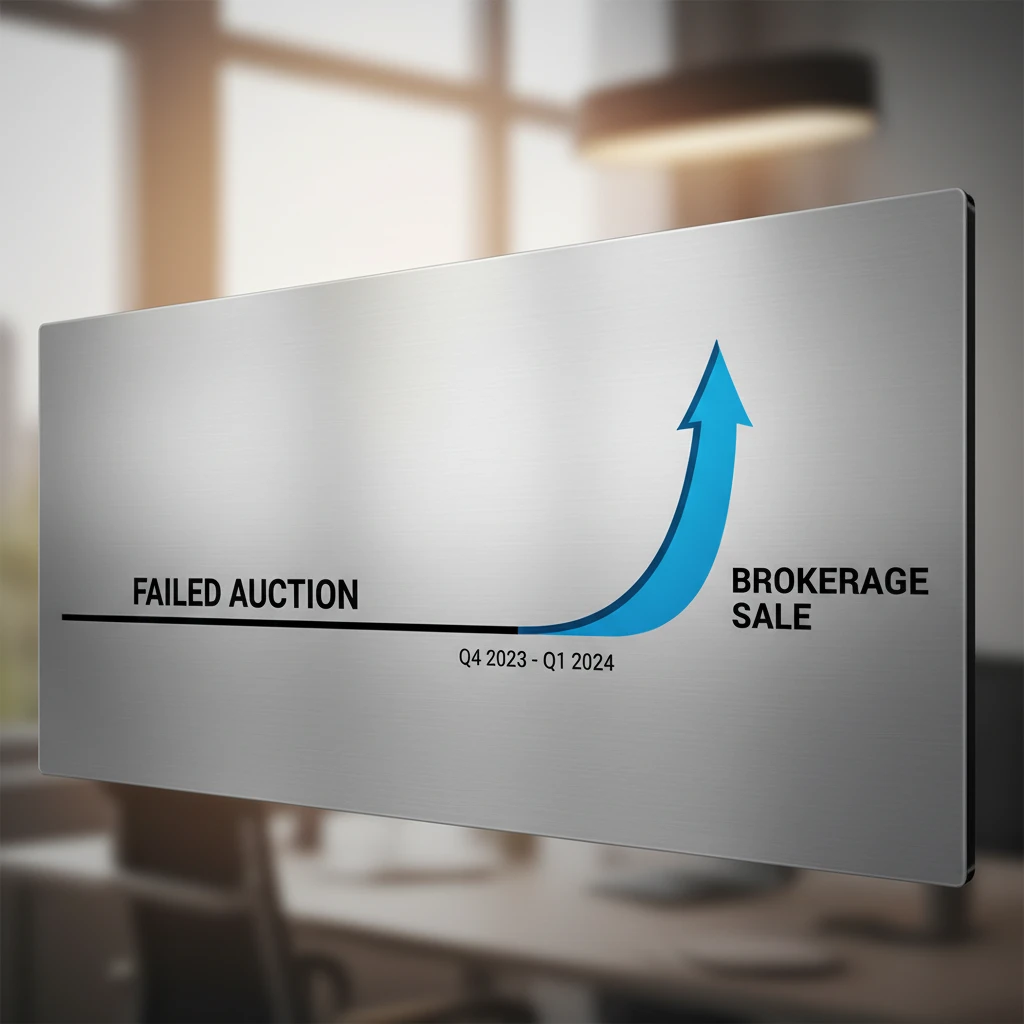
The Strategy: The broker did not list the domain publicly. Instead, they prepared a prospectus outlining the SEO benefits and brand authority of the domain. They contacted the CEOs of the five identified targets. Two companies expressed interest.
The Result: By creating a private bidding war between two corporate entities, the broker secured a final sale price of $18,500—over 20 times the highest bid achieved on TradeMe. The commission fees paid to the broker were negligible compared to the massive increase in capital realized.
Frequently Asked Questions
Is it worth using a broker for a domain worth less than $5,000?
Generally, no. Most professional brokers work on a commission basis (10-15%) and often have a minimum fee or exclusive contract requirements. If your domain’s estimated value is under $5,000, the broker’s time investment may not be justified. For these “mid-range” domains, a marketplace like Sedo or Afternic (or even TradeMe with a fixed price) might be more appropriate.
What are the standard broker fees in New Zealand?
Standard brokerage commissions range from 10% to 20% of the final sale price. Some brokers may charge an upfront engagement fee to cover the cost of appraisal and initial outreach, though many operate on a “no sale, no fee” success basis for high-quality assets.
Can I list on TradeMe and use a broker at the same time?
This is usually discouraged and often a breach of contract. Most brokers require an “exclusive right to sell” agreement for a set period (e.g., 60-90 days). Listing the domain publicly on TradeMe while a broker is trying to negotiate a private sale undermines the broker’s leverage and confuses potential buyers.
How long does a broker take to sell a domain?
Unlike a 7-day auction, brokerage is a medium-to-long-term strategy. It can take anywhere from 30 days to 12 months to find the right buyer and close a deal. The goal is to maximize value, not speed.
Does TradeMe offer escrow services for domains?
TradeMe offers “SafeTrader” for tangible goods, but it is not optimized for digital asset transfers. For domain sales, it is highly recommended to use a dedicated service like Escrow.com or a lawyer’s trust account to manage the exchange of the UDAI (Unique Domain Authentication ID) and funds.
What makes a domain “Premium” in the NZ market?
A premium NZ domain typically features a high-volume generic keyword (e.g., loans.co.nz), a short acronym (3-4 letters), or a highly brandable one-word dictionary term. It must be a .co.nz or .nz extension to command top-tier local pricing.
