

Selling SEO Value & Traffic
Selling an aged domain in NZ involves leveraging its historical SEO data, existing traffic, and backlink profile to command a premium price. Buyers invest in these assets to bypass the Google Sandbox, utilizing established authority and local .co.nz relevance to achieve immediate search engine visibility and faster ROI compared to fresh registrations.
In the competitive digital landscape of New Zealand, a domain name is far more than a mere web address; it is digital real estate. For investors and business owners looking to sell aged domain nz assets, understanding how to quantify and articulate the SEO value inherent in an older domain is crucial for maximizing the sale price. Unlike a fresh registration, an aged domain carries a history—a digital footprint that search engines like Google have already indexed, categorized, and ranked. This history translates directly into monetary value.
Why Do Aged Domains Command Higher Prices in New Zealand?
The primary driver behind the high valuation of aged domains is the ability to circumvent the initial “trust-building” phase required by search engines. When a new website is launched on a fresh domain, it often sits in what SEO professionals refer to as the “Google Sandbox.” During this period, the site struggles to rank for competitive keywords regardless of content quality, as the algorithm verifies the site’s legitimacy and longevity.
An aged domain, particularly one with a history of consistent content and traffic, has already passed this test. For a buyer in the New Zealand market, purchasing a domain that has been active since 2010 offers a significant competitive advantage over a competitor starting from scratch in 2024. This “head start” saves months, if not years, of SEO effort and link-building costs.
What is the ‘Sandbox Effect’ and how does it impact price?
The Sandbox Effect refers to the probation period new domains face before they can rank well. Aged domains bypass this. Consequently, the price of an aged domain reflects the opportunity cost of time. If a business estimates it would take 12 months and $20,000 in SEO agency fees to reach a certain Domain Authority (DA), an aged domain with that DA already established is theoretically worth at least that amount, purely based on cost-savings.
How to Verify and Showcase Domain Traffic?
When you prepare to sell an aged domain in NZ, claims of “high traffic” must be substantiated with irrefutable data. Buyers are wary of inflated numbers or bot traffic. To demand a premium, you must provide a granular view of the domain’s performance history.
What are the best methods for traffic verification?
The gold standard for traffic verification is Google Analytics (GA4). Screenshots can be forged, so providing read-only access to your analytics property is the most transparent method. However, before inviting buyers, you must ensure the data is clean.
- Filter Bot Traffic: Ensure that known bot signatures and spider traffic are filtered out of your reports. Inflated numbers that drop significantly upon the buyer’s audit will kill the deal.
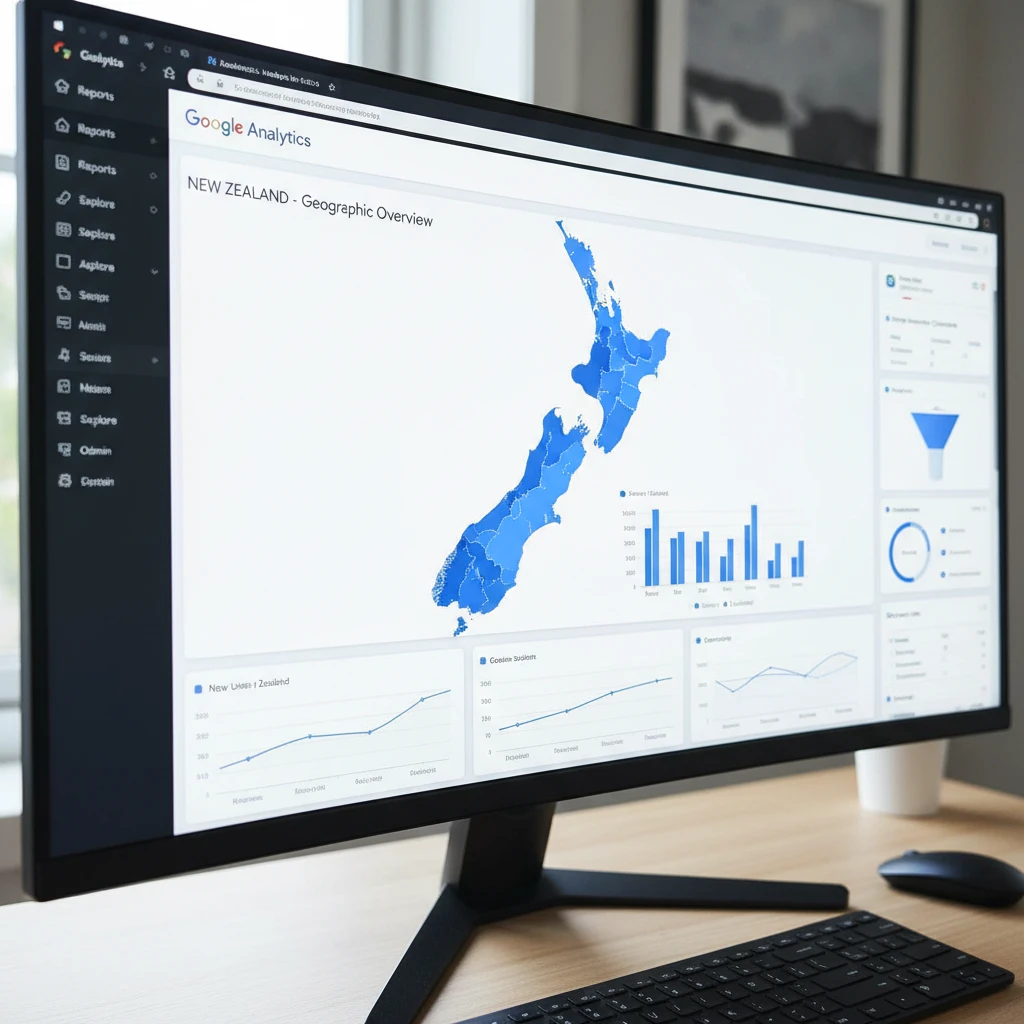
- Geographic Segmentation: For NZ-specific domains (.co.nz), buyers are primarily interested in traffic originating from New Zealand. Create a segment in GA4 that isolates NZ users to show the true local value.
- Traffic Sources: clearly distinguish between Organic Search, Direct, and Referral traffic. Organic search traffic is the most valuable asset you are selling because it implies sustainable, free visibility.
Presenting a 12-month trend line that shows stability or growth is far more compelling than a single month of high traffic. If there are dips in traffic, be prepared to explain them (e.g., seasonality, migration, or content pruning).
The Value of Existing Backlink Profiles
In the world of SEO, backlinks are the currency of trust. A link from a reputable site (like a government entity, a major NZ news outlet like Stuff.co.nz or NZHerald, or an educational institution) acts as a vote of confidence. When selling an aged domain, you are essentially selling this portfolio of votes.
How do you evaluate the quality of a backlink profile?
Not all backlinks are created equal. A profile with thousands of low-quality, spammy links can actually devalue a domain. High-value profiles feature:
- Relevance: Links from other sites in the same niche. If you are selling a tourism domain, links from travel blogs and tour operators are premium.
- Authority: Links from high DR/DA sites carry more “link juice.”
- Local Context: For NZ domains, having a high percentage of inbound links from other .co.nz or .nz domains signals strong local relevance to Google, which is critical for ranking in local search results.
Warning: Before listing, conduct a backlink audit. Use tools to identify toxic links and create a disavow file if necessary. Selling a clean profile is easier than explaining away a spammy one. Explicitly highlight any “hard-to-get” links in your sales prospectus, such as mentions from Wikipedia or major industry associations.
Using Ahrefs and Moz Data in Your Sales Pitch
Sophisticated buyers will not take your word for it; they will run your domain through third-party SEO tools. You should preempt this by including data from industry-standard tools like Ahrefs, Moz, and Majestic in your sales listing. This demonstrates professionalism and transparency.

Which metrics matter most to buyers?
Focus on the metrics that indicate authority and trust:
- Domain Authority (DA) – Moz: A score from 1-100 that predicts how well a website will rank on search engine result pages (SERPs). A DA over 30 is generally considered good for a niche site; over 50 is excellent.
- Domain Rating (DR) – Ahrefs: This measures the strength of the target website’s backlink profile. It is logarithmic, meaning it is much harder to grow from DR 70 to 80 than from 20 to 30.
- Trust Flow (TF) & Citation Flow (CF) – Majestic: These metrics help identify spam. A high Citation Flow with a low Trust Flow often indicates low-quality, spammy backlinks. Ideally, the ratio should be close to 1:1.
When writing your sales pitch, use these metrics to contextualize value. For example: “This domain features a DA of 45 and a DR of 42, placing it in the top 10% of sites in the NZ gardening niche. It retains 250+ referring domains, including 15 educational (.ac.nz) backlinks.”
Transferring Google Analytics Data to Buyers
The transfer of data is often the final hurdle in a domain sale. The historical data residing in your Google Analytics account is part of the asset. Without it, the new owner is flying blind regarding user behavior and historical performance.
How do you safely transfer account ownership?
Never simply give a buyer your login credentials. The correct process ensures security for both parties:
1. Clean the Account: Ensure the property being sold is isolated. If it is part of an account with other sites, you may need to move the property to a new account organization or export the data if migration isn’t possible (though GA4 makes moving properties difficult, often requiring a new setup or purely data export). *Note: In GA4, moving properties between accounts is currently restricted compared to Universal Analytics, so often the entire account is transferred or access is granted to the specific property.*
2. Add User: Add the buyer’s email address to the Google Analytics property with “Administrator” permissions.
3. Remove Yourself: Once the buyer confirms they have full control and the funds are in escrow, the buyer (or you) can remove your access.
Including the historical data as a deliverable adds tangible value. It allows the new owner to perform Year-Over-Year (YoY) comparisons immediately. Make sure to specify in your contract that “historical analytics data access” is included in the sale.
Pricing Strategies for NZ Aged Domains
Valuing a domain is both an art and a science. While automated appraisers exist (like GoDaddy’s appraisal tool), they often miss the nuance of SEO value and local NZ market scarcity. A manual valuation based on metrics and revenue potential is far more accurate.

How to calculate the price?
Consider using a multi-factor approach:
- Replacement Cost Method: Calculate the cost to register a new domain and build the backlink profile to its current level. If a DR 30 link costs $200 to acquire via outreach, and the domain has 50 such links, the base value is substantial.
- Traffic Value Method: Look at the “Traffic Value” metric in Ahrefs. This estimates what the organic traffic would cost if purchased via Google Ads (PPC). A domain with $1,000/month in traffic value can command a sale price of 24x to 36x that monthly value if it is monetized, or a percentage of it if it is just a parked domain.
- Brandability Premium: Short, memorable, keyword-rich .co.nz domains command a premium regardless of metrics. A domain like “insurance.co.nz” has inherent value beyond its backlinks due to direct type-in traffic and brand authority.
In the New Zealand market, scarcity plays a role. The pool of premium .co.nz domains is smaller than .com. Therefore, a high-quality aged .co.nz domain is a finite resource. Don’t undervalue the “local” factor. If your domain has history serving the NZ public, it is a proven entity in a specific, wealthy demographic.
Final Thoughts on Selling
Successfully selling an aged domain in NZ requires shifting the conversation from “names” to “assets.” You are not selling a string of characters; you are selling a business advantage. By meticulously verifying traffic, auditing backlinks, and presenting professional SEO data, you position your domain as a premium investment. Remember, transparency builds trust, and trust drives higher sale prices in the digital asset market.
How much is an aged domain worth in NZ?
The value varies wildly based on metrics. A simple aged domain with no traffic might sell for $100-$500, while a premium .co.nz domain with a high Domain Authority (DA 40+), clean backlink profile, and consistent traffic can sell for $5,000 to over $50,000.
Does the domain extension (.co.nz vs .com) matter for selling in NZ?
Yes, significantly. For businesses targeting New Zealand customers, .co.nz is the most trusted and preferred extension. It signals local relevance to both users and Google. Consequently, .co.nz domains often command a higher price within the domestic market compared to a generic .com.
How do I transfer a .co.nz domain securely?
To transfer a .co.nz domain, you need the UDAI (Unique Domain Authentication ID). This is a code generated by your registrar. You provide this code to the buyer, who uses it to initiate the transfer to their registrar. Always use an escrow service (like Escrow.com) to hold funds until the transfer is complete.
Can I sell a penalized domain?
You can, but you must be transparent about it. A domain with a manual Google penalty is worth significantly less. However, some SEO experts buy penalized domains at a discount to rehabilitate them. Hiding a penalty will likely result in a chargeback or legal dispute.
What is the best platform to sell NZ domains?
While global platforms like Sedo, Flippa, and Afternic are popular, you may find better success with local platforms or brokers who specialize in NZ assets, such as Webos or direct outreach to NZ businesses in the same niche.
How long does it take to sell an aged domain?
Liquidity in the domain market can be low. A competitively priced domain with strong metrics might sell in a few weeks on a marketplace like Flippa. However, high-value domains often require a private broker and can take 3-6 months to find the right buyer.
