


Renewal & Grace Periods
The NZ domain renewal period follows a strict lifecycle managed by the Domain Name Commission (DNC). Upon expiration, a .nz domain enters a 90-day grace period known as ‘Pending Release.’ During this time, the domain ceases to function, but the registrant retains the exclusive right to renew it at standard rates before it is cancelled and released to the public.
Standard Renewal Cycles for .nz Domains
Understanding the lifecycle of a New Zealand domain name is critical for business continuity, brand protection, and digital asset management. Unlike generic top-level domains (gTLDs) like .com or .net, which operate under ICANN regulations, .nz domains are governed by the InternetNZ subsidiary, the Domain Name Commission (DNC). This distinction creates a unique set of rules regarding registration lengths and renewal obligations.
When registering a .nz domain (whether it is .co.nz, .org.nz, or the shorter .nz), the registrant enters into a contract with an authorized registrar. The standard registration and renewal cycle allows for flexibility, ranging from a minimum of one year to a maximum of ten years. This multi-year option is often recommended for established businesses to mitigate the risk of accidental expiry and to signal longevity to search engines, although the direct SEO benefit of long-term registration is often debated.
It is important to note that the renewal clock does not stop. If a domain is registered for one year, the registrar is obligated to send renewal reminders at set intervals—typically 30 days, 7 days, and 1 day prior to expiration. However, the ultimate responsibility lies with the registrant to ensure payment details are current. Failure to renew by the anniversary date triggers a cascade of technical and administrative events that can disrupt business operations instantly.
The .nz Expiry Timeline: Day 0 to Day 90
The confusion surrounding domain expiry often stems from the difference between “active” status and “registered” status. A domain can be registered to you but inactive technically. The .nz ecosystem utilizes a specific status code known as Pending Release to manage expired domains.
What happens exactly when a domain expires?
At the exact moment a domain passes its expiration timestamp (Day 0), the status of the domain changes at the registry level. The following sequence occurs:
- DNS Deactivation: The most immediate consequence is the removal of the domain from the Zone File. This means the Domain Name System (DNS) stops resolving the domain to an IP address.
- Service Interruption: Any website associated with the domain will go offline immediately, typically displaying an “NXDOMAIN” or “Server Not Found” error.
- Email Failure: Perhaps more damaging than the website downtime is the cessation of email services. Emails sent to addresses ending in that domain will bounce back to the sender, potentially causing significant communication breakdowns and loss of business trust.
Despite these service interruptions, the domain has not yet been lost. It has simply entered the “Pending Release” state. This state is a safety net designed to protect registrants from immediately losing valuable intellectual property due to a simple billing error or an expired credit card.
The 90-Day Grace Period Explained
The “Pending Release” period is effectively the New Zealand equivalent of a grace period. It lasts for exactly 90 days following the expiration date. This is significantly longer than the grace periods offered by many other country-code top-level domains (ccTLDs), providing a generous window for recovery.
During this 90-day window, the following rules apply:
- Exclusivity: The domain remains in the name of the original registrant. It cannot be transferred to a new registrar, nor can it be registered by a third party. It is essentially in a frozen state of limbo.
- Recoverability: The registrant can renew the domain at any point during these 90 days. Once the renewal fee is processed by the registrar, the “Pending Release” status is lifted, the DNS records are propagated again, and services (website and email) are restored.
- Whois Status: If you perform a WHOIS lookup on a domain in this state, the status will clearly read “Pending Release.” This serves as a signal to domain brokers and investors that the domain may soon become available, but it is not yet purchasable.

It is vital to understand that while the domain is safe from theft during this period, the business damage is cumulative. A website that is offline for 89 days will suffer severe SEO penalties, losing organic rankings that may take months or years to rebuild. Therefore, while the 90-day period exists, relying on it is a dangerous strategy for any commercial entity.
Restoration Fees vs. Standard Renewal
In the generic TLD world (like .com), there is a distinction between a “Renewal Grace Period” and a “Redemption Grace Period.” The latter often incurs a hefty penalty fee (often $80 USD to $200 USD) charged by the registry to restore a deleted domain.
Does .nz charge restoration fees?
The .nz policy is more consumer-friendly. The registry itself does not impose a punitive “redemption fee” during the 90-day Pending Release period. Technically, a registrant should only be liable for the standard renewal cost.
However, registrars are private businesses and may have their own terms and conditions. Some registrars charge an administrative fee for reactivating a domain that has lapsed into the Pending Release status. This fee is to cover the manual processing or administrative overhead required to reinstate the domain.
It is crucial to check your specific registrar’s Service Level Agreement (SLA). While the DNC ensures the domain can be renewed, they do not dictate the retail pricing models of registrars. If your registrar charges exorbitant reactivation fees, you are generally stuck paying them because you cannot transfer a domain that is in Pending Release status to a different (cheaper) registrar until it has been renewed.
The Drop: What Happens After Cancellation?
If the 90-day Pending Release period elapses without payment, the domain reaches the end of its lifecycle. On day 91 (or shortly thereafter, depending on the specific batch processing times of the registry), the domain status changes to “Cancelled.”
Once cancelled, the domain is deleted from the registry database. At this precise moment, the domain is released back into the public pool of available names. This event is known in the industry as “The Drop.”
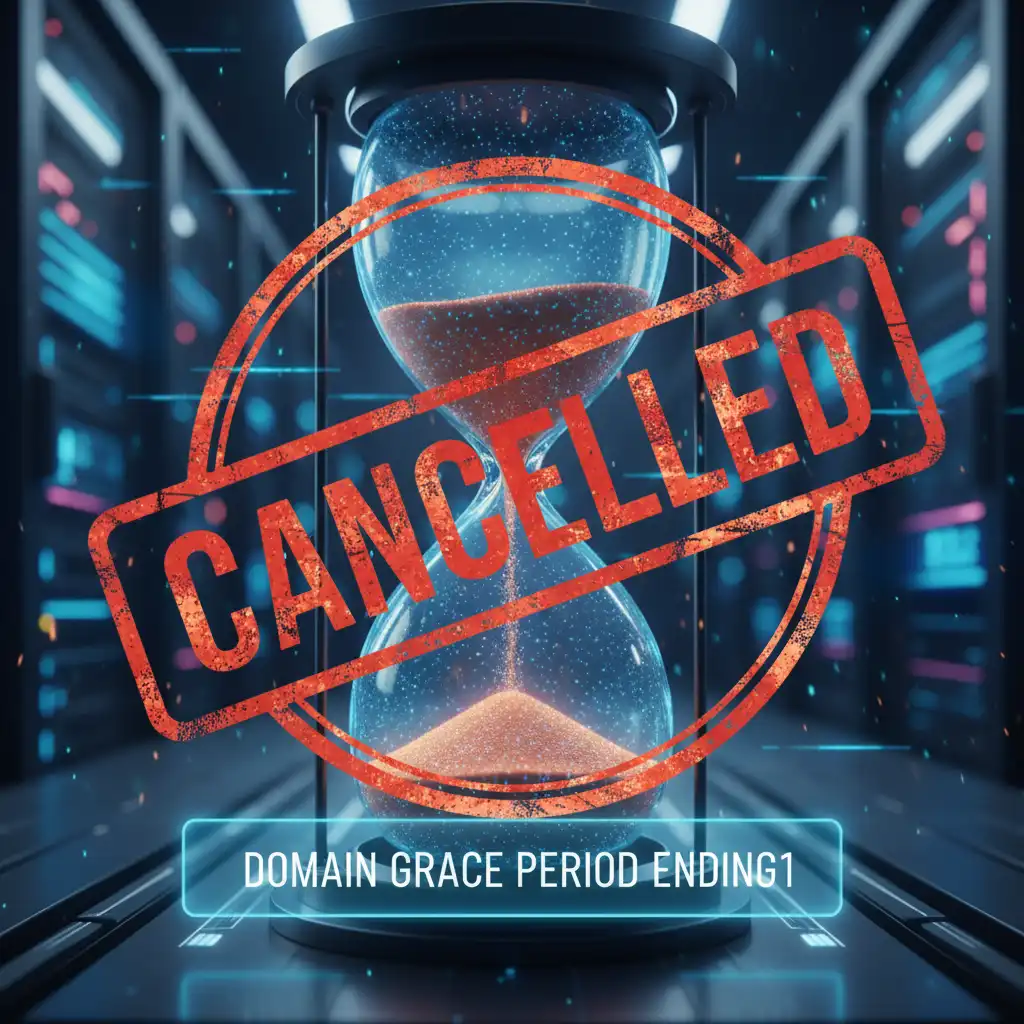
For high-value domains—short names, generic keywords, or domains with strong backlink profiles—the drop is highly contested. It is rare for a valuable domain to simply sit available for hand-registration. Instead, it is usually snapped up milliseconds after release.
Brokerage & Acquisition of Expired Domains
This phase of the lifecycle is where the domain market and brokerage niche becomes highly active. Professional domain investors and brokers utilize specialized software known as “drop catchers” to acquire domains the instant they become available.
How Drop Catching Works
Drop catching services have direct connections to the registry. When a desirable .nz domain is scheduled to drop, multiple parties may have placed a “backorder” on that name. The drop catcher attempts to register the name programmatically the microsecond it is released.
If you are a business owner who lost a domain after the 90-day period, you are no longer the owner. To get it back, you may have to:
- Purchase it from the new owner: If an investor caught it, they might list it for sale at a premium price (often thousands of dollars).
- Participate in an auction: If multiple people backordered the domain via the same drop catching service, it often goes to a private auction.
- Hire a Domain Broker: If the domain was caught by a third party who is not publicly listing it, a broker can negotiate an acquisition on your behalf, ensuring anonymity and transaction security.

Best Practices for Domain Management
To avoid the stress of the 90-day grace period and the potential loss of your digital identity, implement the following management protocols:
1. Enable Auto-Renewal
The simplest defense is automation. Ensure your credit card on file is valid and check the “Auto-Renew” box in your registrar’s dashboard. However, do not rely on this 100%, as expired credit cards are the number one cause of unintentional domain drops.
2. Keep Contact Details Current (UDAI)
Ensure your registrant contact email is an address you check frequently. Do not use an email address associated with the domain itself (e.g., admin@yourdomain.co.nz) for your registrar account. If the domain expires, that email stops working, and you will miss the critical warning notifications.
3. Monitor Your Portfolio
If you manage multiple domains, consolidate them with a single enterprise-grade registrar or use domain portfolio management software. This provides a single view of all expiry dates.
4. Understand the UDAI
The Unique Domain Authentication ID (UDAI) is the password for your domain. While not directly related to renewal, having this code is essential if you need to transfer your domain to a registrar that offers better renewal support or lower fees before the domain expires.
By understanding the nuances of the NZ domain renewal period, specifically the 90-day Pending Release window, businesses can avoid the catastrophic loss of their online presence. While the grace period offers a safety net, the goal should always be continuous, uninterrupted registration.
How long is the grace period for .nz domains?
The grace period for .nz domains, officially called “Pending Release,” lasts for 90 days after the domain’s expiration date. During this time, the domain is inactive, but the original owner can renew it.
Does it cost extra to renew an expired .nz domain?
The .nz registry does not charge a penalty fee during the 90-day grace period. However, individual registrars may charge their own administrative fees for reactivating a domain that has entered the Pending Release status.
Can someone else buy my domain while it is in the grace period?
No. During the 90-day Pending Release period, the domain is locked to the original registrant. It cannot be transferred or registered by a third party until the 90 days have elapsed and the domain is cancelled.
What happens if I don’t renew my domain after 90 days?
After the 90-day period ends, the domain is cancelled and deleted from the registry. It becomes available for public registration on a first-come, first-served basis, often picked up by drop catchers or investors.
Will my email stop working if my domain expires?
Yes. As soon as the domain expires and enters Pending Release, the DNS is deactivated. This means all services attached to the domain, including websites and email accounts, will stop functioning immediately.
How do I check when my .nz domain expires?
You can check your expiry date by performing a WHOIS lookup on the Domain Name Commission website (dnc.org.nz) or by logging into your account with your specific domain registrar.
