

Expired Domain Auctions
An NZ expired domain list is a curated database of .co.nz and .nz web addresses that have not been renewed by their previous owners and are available for re-registration or auction. Investors and SEO professionals use these lists to acquire domains with existing authority, backlinks, and traffic history to accelerate digital growth.
In the competitive landscape of New Zealand’s digital economy, securing a premium .co.nz or .nz domain can be the difference between immediate visibility and months of stagnation. The secondary market for domains—specifically expired domains—offers a unique opportunity to bypass the “sandbox” effect often associated with brand-new registrations. By leveraging an authoritative nz expired domain list, businesses and SEO strategists can inherit years of trust flow and backlink equity.
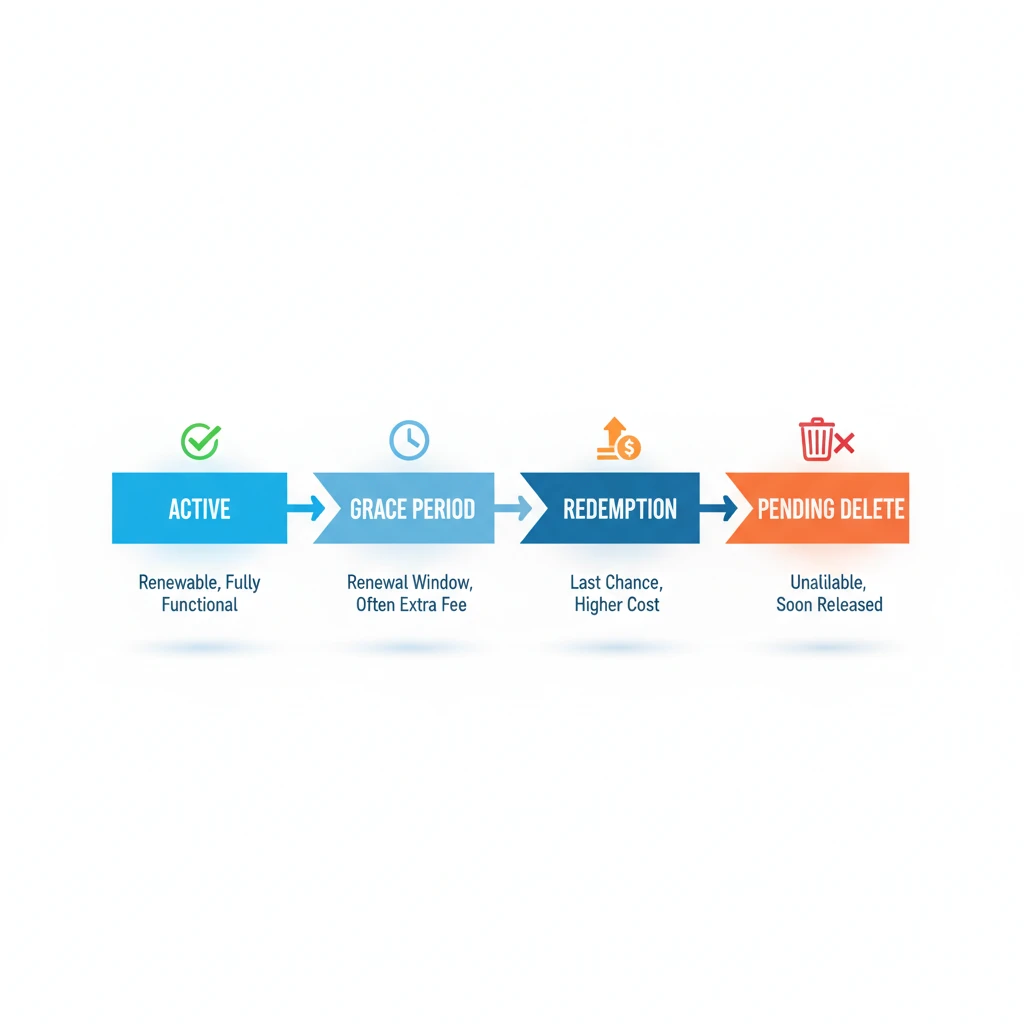
What is the Lifecycle of an Expired .NZ Domain?
Before diving into how to acquire these assets, it is crucial to understand the specific regulations governed by the Domain Name Commission (DNC) in New Zealand. Unlike generic top-level domains (gTLDs) like .com, the .nz namespace follows a strict timeline that dictates when a name appears on an nz expired domain list.
When a registrant fails to renew a domain, it does not become immediately available for public registration. It enters a Grace Period, typically lasting 90 days. During this time, the original owner can still renew the domain without penalty. If the domain remains unrenewed, it moves into a status often referred to as “Pending Release.”
It is during the transition from the grace period to public availability that the domain becomes valuable to investors. This is the “drop” window. Specialized registrars and drop-catching services monitor these timelines down to the millisecond, allowing them to snap up high-value domains the instant they are released by the registry. Understanding this cycle is the first step in successfully utilizing any expired domain list.
Where Can You Find a Reliable NZ Expired Domain List?
Finding a high-quality list is not about manually checking names; it requires sophisticated tools that aggregate data from the registry. There are several tiers of sources for finding these domains, ranging from free aggregators to premium subscription services.
Global Aggregators with NZ Filters
Major global platforms often have the most robust data, even for local markets. Tools like ExpiredDomains.net allow users to filter specifically for .co.nz, .net.nz, and .nz extensions. These platforms provide extensive metrics, including Majestic Trust Flow, Moz Domain Authority, and the number of backlinks. This is often the first stop for anyone building an nz expired domain list because it is free and comprehensive.
Local Drop-Catching Platforms
For the most competitive domains, you need local expertise. New Zealand has specific registrars that specialize in the secondary market. Platforms such as Expired.co.nz or services provided by local registrars often have exclusive access or faster connection speeds to the .nz registry. These platforms often curate lists of “dropping soon” domains, allowing you to place backorders before the general public even knows the domain is available.
Brokerage Lists
For premium, high-value domains (often single-word generic terms), private brokerage lists are the gold standard. These are not typically “expired” in the traditional sense but are domains being liquidated by investors. While more expensive, these lists offer safety and immediate transferability without the risks associated with auction bidding wars.
How to Participate in Backorder Auctions?
Once you have identified a target from your nz expired domain list, the acquisition process usually involves a backorder or a “drop catch.” This is a service where a registrar attempts to register the domain on your behalf the microsecond it drops.
In New Zealand, the drop-catching market works on a priority system. If multiple people want the same domain, the drop-catcher usually holds a private auction for those interested parties. Here is the standard workflow:
- Identification: You spot a domain dropping in 24-48 hours.
- Placement: You place a backorder with a service (e.g., DropCatcher.co.nz or a global equivalent supporting .nz).
- The Catch: The service attempts to register the domain programmatically.
- The Auction: If the service secures the domain and you were the only bidder, you get it for the backorder fee. If others also backordered it through the same service, a private auction ensues, usually lasting 3-7 days.
It is advisable to place backorders on multiple platforms if possible, though you must read the terms of service carefully. Some platforms require exclusivity, while others operate on a “no catch, no fee” basis. Spreading your bets increases the statistical probability of one of your chosen registrars winning the “fastest finger” contest against the registry.
How to Perform Due Diligence and Spam Checks?
Not every domain on an nz expired domain list is a treasure; many are landmines. A domain might have high metrics (DA/DR) but be toxic due to previous misuse. Failing to perform due diligence can result in buying a domain that is penalized by Google, rendering it useless for SEO.
The Wayback Machine Analysis
Your first stop must always be the Internet Archive (Wayback Machine). Look at the history of the website. Was it a legitimate NZ business? Or was it repurposed at some point to sell pharmaceuticals, gambling links, or counterfeit goods? If you see Chinese or Russian text on what should be a local Kiwi plumbing site, avoid it immediately. This indicates the domain was previously hacked or used for spam.
Backlink Profile Auditing
Use tools like Ahrefs or Majestic to inspect the anchor text cloud. A healthy profile for a New Zealand domain should have anchors related to the brand name or the service provided (e.g., “Auckland Roofing,” “Smith & Sons”). If the anchor text is dominated by terms like “cheap nike shoes,” “viagra,” or random alphanumeric strings, the domain has been subjected to aggressive spamming. These links are incredibly difficult to disavow effectively and often carry a permanent algorithmic dampener.

Trademark Verification
In the New Zealand market, you must be wary of the Fair Trading Act and trademark laws. Just because a domain is on an expired list does not mean you have the legal right to use it if it infringes on a registered trademark. Check the IPONZ (Intellectual Property Office of New Zealand) database to ensure the domain name isn’t a protected brand. Buying “coca-cola.co.nz” just because it expired would lead to immediate legal action and forfeiture.
What are Sniper Strategies for Auctions?
When a domain goes to auction after a successful drop catch, emotions can run high. To secure the best assets from your nz expired domain list without overpaying, you need a sniper strategy.
1. The Last-Minute Bid (Sniping):
Most auction platforms extend the auction time if a bid is placed in the final minutes (e.g., extending by 5 minutes). However, waiting until the final feasible moment to show interest keeps the price low during the early days. Bidding early signals demand and encourages competitors to watch the auction closely.
2. Psychological Bidding:
Avoid round numbers. If the current bid is $100, don’t bid $110. Bid $117. Often, bidders set mental caps at round numbers like $150 or $200. By bidding slightly oddly, you can sometimes beat a maximum proxy bid that was set at a nice round number.
3. Valuation Discipline:
Before the auction starts, calculate the ROI. If you are buying for SEO, calculate the cost of acquiring equivalent backlinks via outreach. If the domain costs $500 but has a backlink profile that would cost $5,000 to replicate, it is a bargain. Set your walk-away price based on data, not emotion.
How to Monetize Expired NZ Domains?
Once you have secured a domain from the nz expired domain list, there are three primary paths to monetization:
- The 301 Redirect: This is a common SEO strategy where you redirect the expired domain to your main “money site.” This passes a portion of the link equity (PageRank) to your site. However, relevance is key. Redirecting a dentist’s domain to a car mechanic’s site will likely yield no benefit or even a penalty.
- Building a Microsite/PBN: You can rebuild the site using its original content (from the Wayback Machine) or new, relevant content. This preserves the link juice and allows you to link out to your main properties. Note that Private Blog Networks (PBNs) carry risks if detected by search engines.
- Domain Flipping: New Zealand has a robust resale market. You can acquire a domain for the registration fee (approx. $20-$50 NZD) and resell it to a business owner who needs that specific branding for hundreds or thousands of dollars.
The New Zealand domain market is less saturated than the .com market, meaning high-quality gems appear on the nz expired domain list more frequently. By combining rigorous due diligence with strategic auction tactics, you can build a valuable portfolio of digital real estate that drives tangible business results.
People Also Ask
How long is the redemption period for .nz domains?
The .nz domain lifecycle typically includes a 90-day grace period after the expiry date. During this time, the registrant can renew. There is no separate “redemption period” with high fees like in .com; however, once the 90 days are up, the domain is released (dropped).
Can I buy a .nz domain if I don’t live in New Zealand?
Yes, generally, there are no residency restrictions for registering .nz, .co.nz, or .net.nz domains. International registrants can acquire them, making the nz expired domain list valuable for global SEOs targeting the Kiwi market.
What is the difference between Expired and Deleted domains?
Expired domains are in the grace period and can still be renewed by the owner. Deleted (or dropping) domains have finished the grace period and are being released by the registry for public re-registration.
Are expired domains good for SEO?
Yes, if vetted correctly. Expired domains with clean history and strong backlinks provide an immediate authority boost, allowing new sites to rank faster than they would on a fresh domain.
How much does a backorder cost in NZ?
Backorder fees vary by platform but typically range from $25 to $50 NZD if uncontested. If the domain goes to auction, the price can rise significantly depending on demand.
What tools check for domain bans?
Tools like IsMyWebsitePenalized, Google Search Console (if you can verify ownership), and checking the site: operator in Google can help determine if a domain has been de-indexed or banned.
