


Domain Financing for Startups
Buying a domain via a payment plan in New Zealand involves a lease-to-own agreement where the buyer pays monthly installments to the seller, usually facilitated by a third-party escrow service. This model allows NZ startups to secure premium .co.nz or .nz domains immediately for website and email use, while the legal ownership transfers only after the final payment is completed.
For New Zealand startups and established enterprises alike, securing the perfect digital identity is often the first step toward market dominance. However, premium domains—especially short, keyword-rich .co.nz or .nz web addresses—can command prices ranging from four to six figures. This capital intensity often creates a barrier to entry. Domain financing bridges this gap, offering a strategic mechanism to acquire high-value assets without depleting operating capital.
The Strategic Value of Premium NZ Domains
In the digital economy, a domain name is more than a URL; it is intellectual property that dictates brand authority, search engine visibility, and consumer trust. For Kiwi businesses, owning a category-defining .co.nz domain acts as a significant competitive moat.
However, the scarcity of high-quality domains has driven prices upward. A generic term like insurance.co.nz or build.nz is not merely a registration fee; it is a market asset valued based on its potential to generate organic traffic and reduce customer acquisition costs (CAC). Startups often face a dilemma: settle for a mediocre, long-tail domain or exhaust their seed funding on a premium name. Domain financing eliminates this binary choice, allowing businesses to treat the domain acquisition as an operating expense rather than a massive upfront capital expenditure.
How Domain Financing Works
Domain financing is structurally similar to a car lease or a mortgage, but with specific nuances related to digital asset management and registrar protocols. It is essential to understand the mechanics before entering an agreement.
The Escrow Mechanism
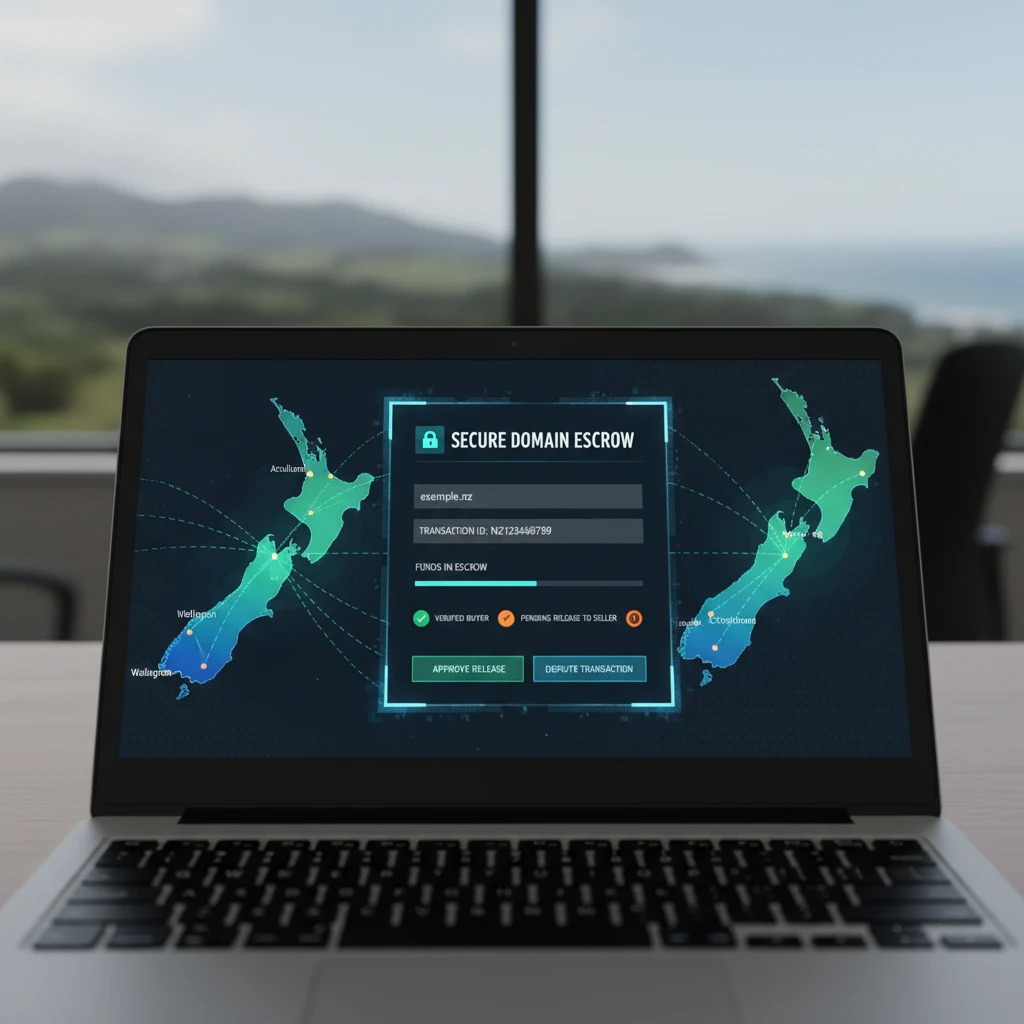
Trust is the currency of high-value domain transactions. A seller in Wellington cannot simply trust a buyer in Christchurch to make payments after transferring the domain. Therefore, a neutral third party—an escrow service—is almost always employed. The escrow service holds the domain in a secure account and disburses funds to the seller as they are received.
Lease-to-Own vs. Standard Leasing
It is critical to distinguish between leasing and financing (lease-to-own):
- Standard Leasing: You pay a monthly fee to use the domain, similar to renting an office. You never own the asset. This is rare for brand domains but common for exact-match marketing domains.
- Lease-to-Own (Financing): Every payment you make contributes toward the total purchase price. At the end of the term (usually 12 to 60 months), the lock is removed, and full legal ownership is transferred to your registrar account.
DNS Control vs. Registrar Transfer
During the payment period, the buyer typically receives DNS control. This means you can point the domain to your website servers (A Records) and set up your business email (MX Records). To the outside world, you fully own the domain. However, the Registrant Name usually remains with the escrow service or the seller until the final payment is cleared to prevent the buyer from selling the asset before paying for it.
Benefits of Lease-to-Own Models
Opting to buy a domain via a payment plan in NZ offers distinct advantages, particularly for lean startups and SMEs managing tight cash flows.
1. Preservation of Working Capital
Cash flow is the lifeblood of any new venture. Instead of sinking $25,000 into a domain name upfront, a business might pay $500 to $1,000 per month. This retains capital for product development, marketing, and hiring—activities that generate immediate ROI.
2. Immediate Brand Authority
You do not have to wait until you have saved the full amount to launch. You can go to market on Day 1 with a tier-one domain. This immediate legitimacy can increase conversion rates and partnership opportunities, effectively helping the domain pay for itself over time.

3. Risk Mitigation
If a startup pivots or fails, a long-term financing contract often includes a cancellation clause. While the buyer usually forfeits the equity paid to date, they are not necessarily liable for the remaining balance (depending on the specific contract terms). This effectively turns the transaction into a rental if the business model proves unviable, reducing long-term liability.
4. Locking in the Price
Domain values generally appreciate over time. By agreeing to a price today and paying it off over five years, you are hedging against future inflation in the digital asset market. You secure the asset at today’s valuation.
Providers Offering Payment Plans in NZ
While the New Zealand domain market is niche, several avenues exist to secure a payment plan. It is important to note that few “banks” offer loans specifically for domains; rather, the financing is vendor-provided or platform-facilitated.
Global Marketplaces with NZ Inventory
Most premium .nz and .co.nz domains are listed on global marketplaces that have built-in financing infrastructure. These are the safest routes for Kiwi buyers:
- Dan.com: Highly popular among domain investors. They offer a seamless lease-to-own wizard. If a seller lists a domain here, you can often request a payment plan directly through the landing page.
- Sedo: One of the world’s largest marketplaces. They offer domain financing services where they act as the trusted intermediary for the transaction.
- Afternic: Owned by GoDaddy, this platform also facilitates lease-to-own options, though they are sometimes less flexible than Dan.com regarding custom terms.
specialized Domain Brokers
For high-value transactions (usually $10k+), engaging a domain broker is advisable. Brokers can negotiate payment terms on your behalf. In New Zealand, while there are fewer local brokerage firms compared to the US, many digital agencies facilitate these acquisitions. Additionally, international brokers frequently handle .nz transactions.
Private Treaty via Escrow.com
If you identify the owner of a domain (via WHOIS lookup) and negotiate directly, you should never send monthly payments directly to their bank account. Instead, set up a “Domain Holding” transaction on Escrow.com. This service is the industry standard. They hold the domain, collect your payments, and release the domain to you only upon completion. They support transactions in various currencies, though USD is standard, so be mindful of FX rates from NZD.
Contractual Obligations and Default Risks
While financing is attractive, it is a binding legal agreement. Understanding the risks is paramount to avoiding loss of funds and digital identity.
Default and Forfeiture
The most significant risk is default. If you miss a payment (usually after a short grace period of 3-10 days), the contract is typically voided. The consequences are severe:
- Loss of Domain: The DNS is reverted, taking your website and email offline immediately.
- Loss of Equity: Unlike a mortgage where you might sell the house to recover equity, domain leases generally retain all previous payments as “rental fees.” You get nothing back.
- Brand Damage: Sudden loss of a website can destroy consumer trust and SEO rankings.
Registrar Locks
During the financing term, the domain is often locked at a specific registrar. You may not be able to transfer the domain to your preferred local registrar (e.g., Crazy Domains, Discount Domains) until the debt is paid. This means you must abide by the holding registrar’s renewal fees and interface.
The “Google Tax”
Ensure your contract specifies who pays for the annual renewal fees. In most lease-to-own models, the buyer is responsible for the monthly installment plus the annual registration fee of the domain.
Step-by-Step Guide to Securing a Payment Plan
Ready to acquire your .nz asset? Follow this professional workflow to ensure a secure transaction.
Step 1: Valuation and Budgeting
Before negotiating, assess the domain’s value. Use tools like Estibot (automated) or consult a broker. Determine your maximum monthly budget. Remember to factor in GST if the seller is a GST-registered New Zealand entity.
Step 2: Brokerage and Negotiation
Contact the owner. Express interest in a “Lease-to-Own” structure. A common proposal is 12, 24, or 36 months.
Example Offer: “I am willing to meet your price of $12,000 NZD, provided we can structure this over 24 months at $500/month via Escrow.com.”
Step 3: Contract Setup
Once terms are agreed, the seller initiates the transaction on a platform like Dan.com or Escrow.com. Review the terms carefully:
- Term Length: How many months?
- Grace Period: How many days before default?
- Early Payoff: Is there a penalty for paying early? (Usually, there shouldn’t be).
Step 4: DNS Configuration
Upon the first payment, you will be granted access to update nameservers. Point these to your hosting provider immediately to begin building your site.

People Also Ask (PAA)
Can I finance a .co.nz domain if the seller is overseas?
Yes, absolutely. The location of the seller does not prevent financing. However, you must use an international escrow platform like Escrow.com or Dan.com that supports cross-border transactions. Be aware of currency exchange rates if the seller demands payment in USD or EUR, as this will fluctuate against the NZD over the term of your payment plan.
Do I own the domain during the payment plan?
No, you do not hold legal title to the domain during the payment plan. You hold “beneficial use” rights, meaning you can use the domain for your website and email. Legal ownership (Registrant details) is only transferred to you once the final installment is paid in full. This protects the seller in case of non-payment.
What is the typical interest rate on domain financing?
Domain financing rarely involves an explicit “interest rate” like a bank loan. Instead, the total purchase price is often slightly higher (10-20% markup) for a payment plan compared to a “Buy It Now” cash price. Alternatively, platforms like Dan.com may charge a markup fee to cover the administrative costs of managing the monthly billing.
Can I transfer the domain to another registrar while paying?
Generally, no. The domain must remain at the registrar where the escrow or seller holds it to ensure they maintain control over the asset. Once you complete your payments, the domain is unlocked, and you are free to transfer it to any NZ-accredited registrar of your choice.
What happens if I stop making payments?
If you default on payments, the contract is usually terminated. The domain ownership reverts fully to the seller, and they can point the DNS elsewhere or sell it to another party. In most standard agreements, you forfeit all payments made up to that point. It is crucial to treat these payments as a priority operating expense.
Is domain leasing tax-deductible in New Zealand?
In many cases, lease payments can be treated as an operating expense (OpEx) which is tax-deductible in the year incurred, whereas purchasing a domain outright might be considered a capital asset (CapEx) or intangible asset subject to different accounting rules. However, tax laws are complex, and you must consult with a qualified NZ chartered accountant to understand the specific tax implications for your business.
