

Selling a trademarked domain involves listing a web address that is identical or confusingly similar to a registered trademark for profit. In New Zealand, this practice can be classified as “bad faith” registration under the Domain Name Commission policies. Sellers risk losing the domain via the Dispute Resolution Service (DRS) and may face legal liability under the Fair Trading Act for misleading conduct.
The Legal Landscape of Domain Sales in New Zealand
The secondary market for domain names in New Zealand is vibrant, yet it is fraught with legal complexities that every investor must navigate carefully. When you enter the business of buying and selling digital assets, particularly within the .nz namespace, you are operating at the intersection of technology, property rights, and intellectual property law.
Unlike physical property, domain names are licenses to use a specific string of characters. When that string mirrors a brand name, the rights of the trademark holder often supersede the rights of the registrant. The primary governing body in New Zealand is the Domain Name Commission (DNC), which oversees the .nz domain space. They provide the framework for the Dispute Resolution Service (DRS), a mechanism designed to resolve conflicts between domain registrants and rights holders without the need for expensive High Court litigation.
Understanding the nuances of selling trademarked domain names is critical. It is not merely about whether you can register a name, but whether you have a legitimate right to sell it. The assumption that “first come, first served” applies absolutely is a dangerous misconception in the domain industry. If a domain is registered with the primary intent of selling it to a trademark holder for a profit, the registrant is often on the wrong side of the policy.
Identifying Trademark Infringement Risks
Trademark infringement in the context of domain names usually occurs when a domain is identical or confusingly similar to a registered mark. However, the risk profile changes significantly when the intent shifts from “holding” to “selling.”
What constitutes a confusingly similar domain?
A domain does not need to be an exact match to infringe on a trademark. “Typosquatting” (registering a misspelling of a popular brand) or adding generic terms to a brand (e.g., “Apple-Computers.co.nz”) are common tactics that tribunals view unfavorably. In New Zealand law, the test often revolves around whether the average consumer would be misled or deceived into thinking the domain is associated with the trademark owner.
When selling trademarked domain assets, you must assess whether the value of the domain is derived intrinsically from its generic meaning or extrinsically from the goodwill of someone else’s brand. If the value comes from the brand, you are likely infringing.
How to Check the IPONZ Register
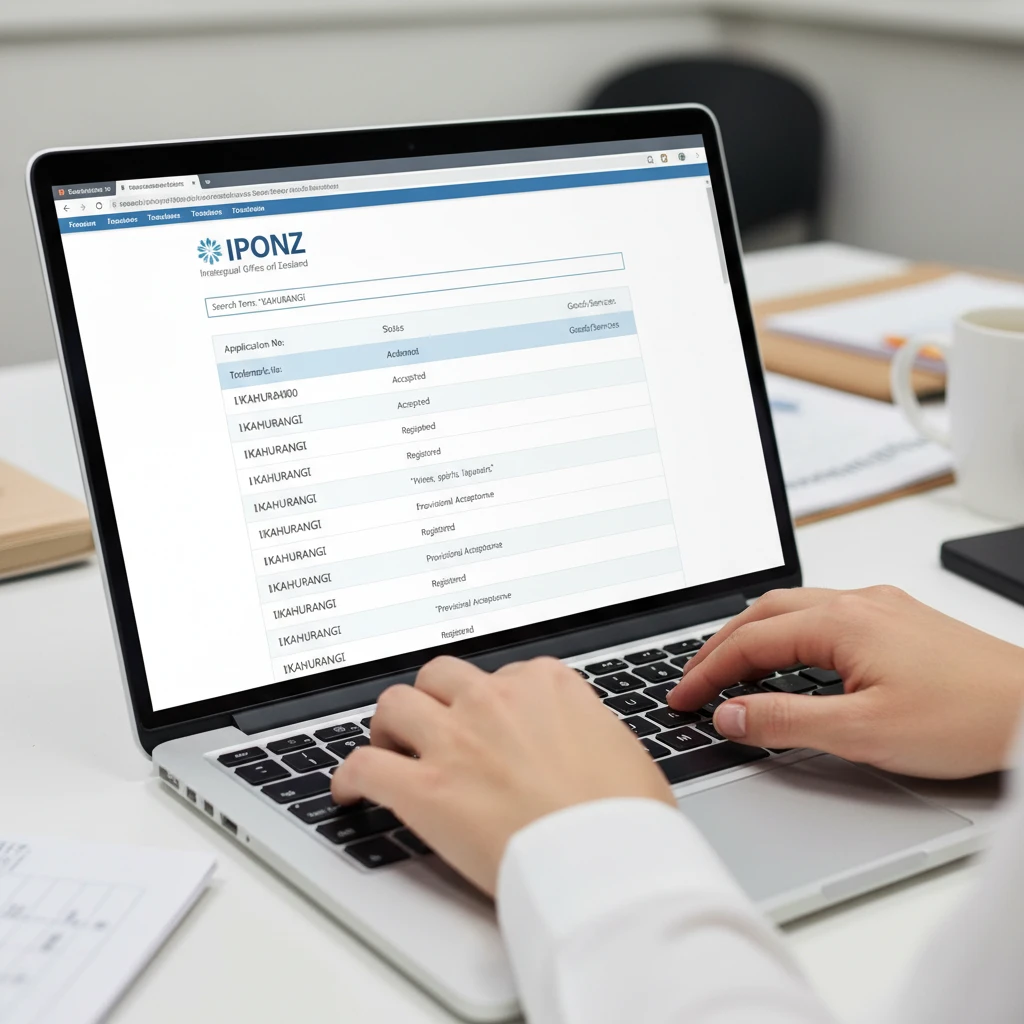
Before acquiring or listing a domain for sale, performing a comprehensive search on the Intellectual Property Office of New Zealand (IPONZ) register is the first line of defense. Ignorance of a registered trademark is rarely accepted as a valid defense in dispute proceedings.
Step-by-Step Search Process
To mitigate risk, domain investors should follow a rigorous vetting process:
- Direct Match Search: Enter the exact keyword of the domain into the IPONZ database. Look for active registrations in classes relevant to the potential use of the domain.
- Phonetic and Fuzzy Search: Search for terms that sound similar or have minor spelling variations.
- Owner Verification: If a trademark exists, check who owns it. Is it a defunct company, or a multinational corporation with a dedicated legal team?
- Global Checks: While .nz is local, the internet is global. Check WIPO (World Intellectual Property Organization) databases if you plan to market the domain internationally.
Bad Faith Registration Explained
The concept of “Bad Faith” is the cornerstone of the .nz Dispute Resolution Service policy. To successfully claim a domain from a registrant, a complainant must usually prove that the registrant has rights in the name and that the current registration is unfair.
The Unfair Registration Test
Under the .nz policies, an unfair registration (often equated to bad faith) is typically found if the domain was registered or acquired primarily for the purpose of selling, renting, or otherwise transferring the domain name to the complainant (the trademark holder) or a competitor, for valuable consideration in excess of the registrant’s out-of-pocket costs.
This is the critical trap for domainers. If you acquire a domain like “SparkTelecom.co.nz” and immediately list it for $5,000, you have essentially provided evidence against yourself. The high price tag, relative to the registration fee (usually around $20-$30 NZD), suggests the value is based on the trademark, not the generic value of the words.

Liability for Selling Infringing Domains
Beyond losing the domain name through the DRS process, selling trademarked domain names can expose the seller to financial liability. While the DRS does not award monetary damages, the courts can.
Fair Trading Act 1986
In New Zealand, the Fair Trading Act prohibits misleading and deceptive conduct in trade. If you sell a domain that misleads consumers into believing it is connected to a famous brand, you could be liable. This applies not only to the final sale but also to the listing itself. Listing a domain on TradeMe or international platforms like Sedo or Afternic constitutes “conduct in trade.”
Passing Off
This is a common law tort used to enforce unregistered trademark rights. If a business has built up goodwill in a name, and you sell a domain that allows a third party to misrepresent their goods as those of the original business, you could be named as a party to the infringement. The damages in passing off cases can be substantial, covering the loss of profit and damage to reputation suffered by the brand owner.
Safe Harbor Practices for Domain Investors
Despite the risks, it is possible to invest in domains safely. The key is distinguishing between generic terms and distinctive brands.
Best Practices for Compliance
- Stick to Generics: Words like “Plumber,” “Auckland,” “Loans,” or “Flowers” are generally safe. “AucklandPlumber.co.nz” is descriptive and unlikely to be successfully challenged by a single entity unless they have a very specific reputation.
- Document Your Intent: If you register a domain that happens to be a trademark in a different industry, document your business plan. Why did you register it? If you have a legitimate plan to build a site unrelated to the trademark holder’s goods, you may have a defense.
- Pricing Strategy: Avoid setting “ransom” prices on domains that arguably infringe on trademarks.
- Respond to C&D Letters: If you receive a Cease and Desist letter, do not ignore it. Consult with an IP lawyer immediately. Often, simply transferring the domain is the most cost-effective solution to avoid escalation.

People Also Ask
Can I sell a domain with a trademark in the name?
Generally, no, if the intent is to profit from the trademark’s goodwill. While you might physically be able to list it, doing so puts you at risk of a dispute (DRS) where you could lose the domain, or legal action for trademark infringement and passing off.
How do I check if a domain is trademarked in NZ?
You should use the IPONZ (Intellectual Property Office of New Zealand) online case search tool. Search for the text of your domain to see if there are registered text marks or combined image/text marks that match or are confusingly similar.
Is cybersquatting illegal in New Zealand?
Cybersquatting is not a criminal offense in the traditional sense, but it is a civil wrong. It is addressed through the .nz Dispute Resolution Service (DRS) which can strip you of the domain, and through civil courts under the Fair Trading Act or passing off laws.
What is considered bad faith registration?
In NZ, this is often termed “Unfair Registration.” It typically involves registering a domain primarily to sell it to the trademark owner for a profit, to block the owner from registering it, or to disrupt a competitor’s business.
Can I buy a trademarked domain for personal use?
If the domain is used purely for non-commercial personal use (like a fan site or criticism site) and does not mislead the public or generate revenue, you may have a defense (Legitimate Interest). However, this is a complex legal area and does not guarantee immunity from disputes.
How much does a domain dispute cost in NZ?
Filing a complaint with the .nz DRS involves fees (starting around $2,000 NZD + GST for a decision by an expert) if the initial mediation fails. However, if the dispute goes to the High Court, legal costs can easily reach tens of thousands of dollars.
