

NZ domain laws and administration refer to the comprehensive regulatory framework governed by the Domain Name Commission (DNC) and the technical operations managed by InternetNZ. This ecosystem encompasses registrant eligibility, the Dispute Resolution Service (DRS), privacy options like IRPO, and tax obligations, ensuring a secure, compliant, and stable digital environment for New Zealand businesses and investors.
Navigating the landscape of nz domain laws and administration requires a sophisticated understanding of both the technical architecture that keeps the internet running and the legal statutes that govern ownership. For domain investors, brokers, and business owners operating within the New Zealand market, treating a domain name simply as a web address is a liability. It must be treated as a digital asset, subject to specific property laws, tax implications, and technical protocols unique to the .nz namespace.
New Zealand possesses one of the most robust and transparent domain environments globally, overseen by InternetNZ and the Domain Name Commission (DNC). However, the ease of registration often belies the complexity of ongoing administration. From managing Unique Domain Authentication IDs (UDAI) to understanding the nuances of the Dispute Resolution Service (DRS), mastery of these elements is essential for asset protection and portfolio growth.
Demystifying the Technical Process
To effectively manage a portfolio of .nz domains, one must first understand the tripartite structure of the New Zealand domain market. Unlike some country-code top-level domains (ccTLDs) that are government-run, the .nz space operates through a delegated model that separates policy from technical operation.

The Registry: InternetNZ
At the top of the technical hierarchy sits InternetNZ. They act as the designated manager for the .nz ccTLD. Their primary role is technical; they maintain the master database (the registry) of all .nz domain names and ensure the Domain Name System (DNS) resolves queries correctly. When a user types a URL, InternetNZ’s infrastructure directs that traffic. They do not sell domains directly to the public.
The Regulator: Domain Name Commission (DNC)
While InternetNZ handles the hardware and code, the Domain Name Commission (DNC) handles the policy and policing. The DNC develops and enforces the rules concerning nz domain laws and administration. They accredit registrars, manage the dispute resolution service, and ensure that the integrity of the .nz brand is maintained. For a domain broker, the DNC is the authority to consult regarding policy breaches or registrant data accuracy.
The Registrar and the UDAI
The Registrar is the retail arm—the authorized service provider where you actually purchase the domain. The critical technical link between the registrar and the registrant (you) is the UDAI (Unique Domain Authentication ID).
The UDAI is an 8-character password unique to every .nz domain. It is required for:
- Transferring a domain from one registrar to another.
- Verifying ownership during disputes.
- Authorizing significant changes to the domain record.
Critical Security Note: A common administrative failure in New Zealand is the mishandling of UDAIs. If a malicious actor obtains your UDAI, they can transfer your domain away instantly. As a best practice, regenerate your UDAI immediately after a transfer is complete to ensure the previous owner or broker no longer has access.
Legal Compliance with NZ Regulations
Compliance in the .nz space is not merely about paying renewal fees; it involves adhering to strict data accuracy and eligibility policies. Failure to comply can result in the cancellation of a domain name, a disastrous outcome for high-value premium domains.
Registrant Data and the IRPO
The DNC enforces a strict policy regarding the accuracy of registrant information. Unlike some TLDs where privacy proxies are standard, .nz prioritizes transparency. However, to balance this with privacy rights, the DNC introduced the Individual Registrant Privacy Option (IRPO).
If you are an individual not using the domain for significant trade (e.g., a personal blog or a parked page), you can apply the IRPO to hide your address and phone number from the public WHOIS search. However, if you are a business or trading entity, your contact details must be public. Domain investors often fall into a grey area here; if you are buying and selling domains as a business, you generally cannot use the IRPO legally.

Dispute Resolution Service (DRS)
One of the most distinct aspects of nz domain laws and administration is the Dispute Resolution Service. This is an alternative to court litigation for resolving trademark and rights-based disputes. It is modeled on the UDRP but has specific local nuances.
To successfully defend a domain under the DRS, or to capture one, three elements are usually assessed:
- Rights: The complainant must have rights (usually a trademark) in a name or mark identical or similar to the domain.
- Unfair Registration: The registration must be considered “unfair” in the hands of the registrant.
Unlike the UDRP which requires “Bad Faith,” the NZ DRS looks for “Unfair Registration.” This is a lower threshold but still protects legitimate domain investors. Holding a generic domain (e.g., cars.co.nz) is generally safe, whereas holding a typo-squatted brand (e.g., faceboook.co.nz) is indefensible.
Tax and Business Structure Considerations
For participants in the NZ Domain Market & Brokerage sector, the tax implications of domain ownership are frequently misunderstood. New Zealand does not have a comprehensive capital gains tax, but that does not mean domain profits are tax-free.
Capital vs. Revenue
Under New Zealand tax law (specifically the Income Tax Act 2007), the intention at the time of acquisition determines the tax treatment. If you acquire a domain name with the specific purpose of selling it, any profit made from that sale is taxable income, not a capital gain.
For domainers who buy hundreds of names hoping one will sell, the Inland Revenue Department (IRD) views this as a trading activity. Consequently:
- Trading Stock: Domains may need to be valued as trading stock at the end of the financial year.
- Deductibility: Renewal fees and registration costs are generally deductible expenses for a domain trading business.

GST Implications
Goods and Services Tax (GST) applies to domain sales if the seller is GST-registered. However, the administration of GST becomes complex in cross-border transactions.
If a New Zealand tax resident sells a .nz domain to an overseas buyer, the transaction may be zero-rated for GST (taxed at 0%), provided specific export criteria are met. Conversely, if you are a non-resident buying a .nz domain from a NZ registrar, you will likely be charged 15% GST unless you can prove you are not in New Zealand at the time of supply. Brokers must factor this 15% variance into their margin calculations when negotiating international deals.
Troubleshooting Common Issues
Even with a robust system, technical and administrative issues arise. Knowing how to troubleshoot these efficiently is the mark of a professional administrator.
The Domain Lifecycle and Redemption
A common panic point is accidental expiration. The .nz lifecycle offers a safety net, but it is time-sensitive.
- Active Status: The domain is live.
- Grace Period (0-5 days post-expiry): The domain still resolves, but is overdue. Immediate renewal is required.
- Redemption Period (90 days): The domain is deactivated (website goes down) but is held by the registry. It can be restored by the original registrant, usually for a higher fee.
- Pending Release (5 days): The domain cannot be renewed and is about to be dropped back into the public pool.
Sophisticated investors monitor the “Pending Release” list to catch valuable domains dropping out of the system (a practice known as drop-catching).
Fixing Invalid WHOIS Data
If the DNC receives a complaint about your contact details being false (e.g., a disconnected phone number), they will initiate a validation process. You typically have 14 days to provide proof of identity and address. Failure to respond results in the domain being suspended. To fix this, log in to your registrar immediately, update the details, and proactively notify the DNC compliance team that the update has been made.
Advanced Administration: Security and Locks
For high-value domains—such as three-letter acronyms or category-defining keywords—standard security is insufficient. Nz domain laws and administration allow for advanced security measures.
Registry Lock
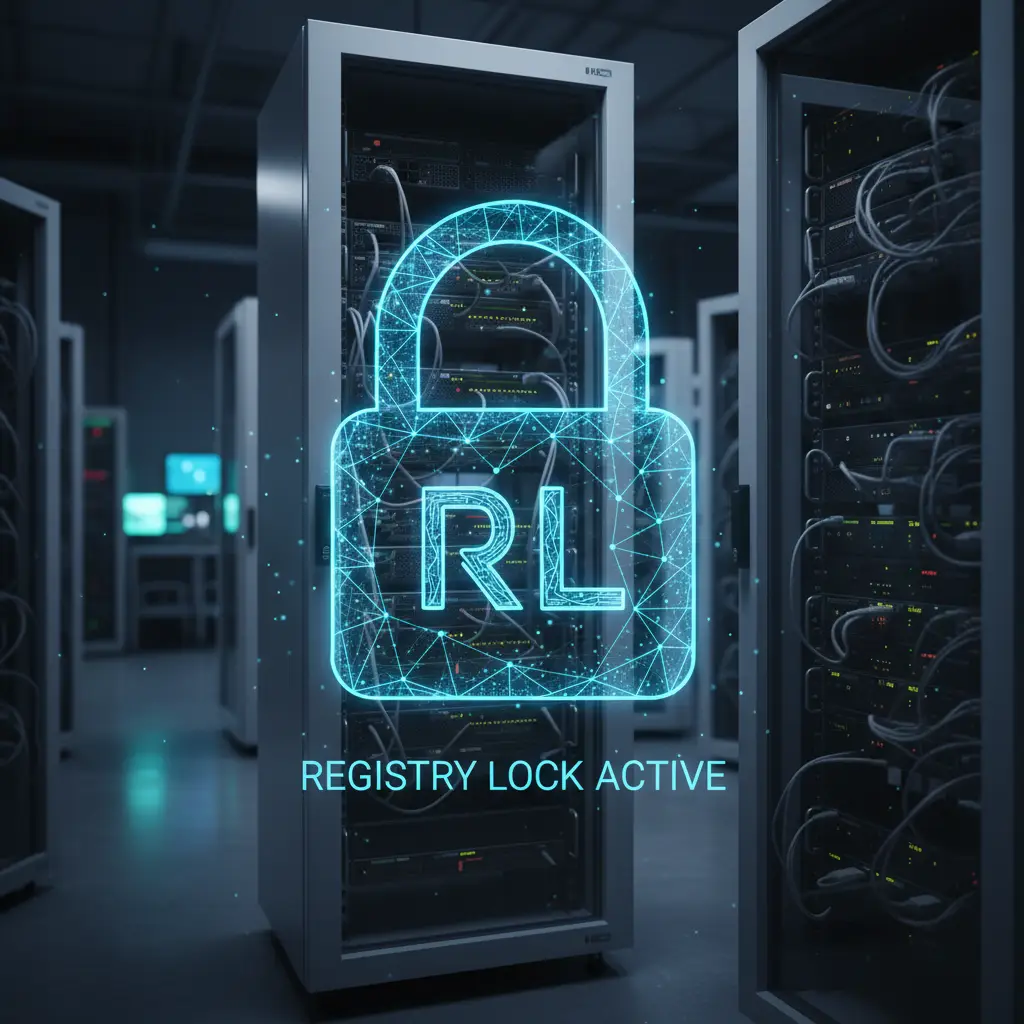
Registry Lock is the highest level of protection available. It locks the domain at the registry level (InternetNZ), not just the registrar level. To make any changes (transfer, DNS update, cancellation), a manual authentication process involving the registrar and the registry is required. This effectively neutralizes remote hacking attempts and unauthorized transfers. While this service usually incurs an extra fee, it is mandatory insurance for domains valued in the five or six-figure range.
DNSSEC
Domain Name System Security Extensions (DNSSEC) adds a layer of cryptographic security to the DNS record. It prevents “cache poisoning,” where a hacker redirects traffic from your legitimate site to a fake one. New Zealand has high adoption rates for DNSSEC. Enabling this requires coordination between your DNS host and your registrar, but it significantly increases the trust and integrity of the domain.
People Also Ask
Who regulates .nz domains?
The .nz domain space is regulated by the Domain Name Commission (DNC). While InternetNZ manages the technical infrastructure and registry database, the DNC is responsible for setting policies, managing the Dispute Resolution Service, and ensuring registrar compliance.
Do I need to live in NZ to buy a .nz domain?
No, you do not need to live in New Zealand to purchase a standard .nz, .co.nz, or .net.nz domain. There are no local presence requirements for these open extensions. However, specific moderated extensions like .govt.nz or .edu.nz do have strict eligibility criteria requiring valid New Zealand status.
What is a UDAI code?
A UDAI (Unique Domain Authentication ID) is an 8-character security code generated for every .nz domain. It acts as the password for the domain, allowing the owner to transfer the domain between registrars or authorize significant changes. It should be kept secure and regenerated after use.
Are domain names taxable in NZ?
Generally, yes, if they are bought with the intention of selling them. Under NZ tax law, if you acquire a domain for the purpose of disposal, the profit is treated as taxable income. If you buy a domain for a business to use (capital asset) and sell it later due to business changes, it may not be taxable, but professional advice is recommended.
How do I resolve a .nz domain dispute?
Disputes are handled through the DNC’s Dispute Resolution Service (DRS). This process involves mediation and, if necessary, expert determination. You must prove you have rights to the name and that the current registration is unfair. It is faster and cheaper than High Court litigation.
What is the redemption period for .nz domains?
The redemption period for .nz domains is 90 days following the domain’s expiration. During this time, the domain will not work, but the original owner can still reactivate it (usually for a restoration fee). After 90 days, it enters a 5-day pending release phase before becoming available to the public.
