

A domain appraisal scam email is a type of advance-fee fraud where a fake buyer claims interest in purchasing your domain name for a significantly inflated price but insists you first purchase a valuation certificate from a specific, fraudulent appraisal service. Once you pay the fee for the worthless certificate, the buyer disappears, leaving you out of pocket.
The Rising Threat in the Secondary Domain Market
For domain investors and business owners in New Zealand, receiving an unsolicited offer for a domain name can be an exhilarating moment. Whether you hold a premium .co.nz generic term or a catchy brandable .nz address, the prospect of a five or six-figure sale is enticing. However, the secondary market is rife with sophisticated social engineering attacks, the most prevalent being the domain appraisal scam.
This scam is particularly insidious because it preys on the seller’s optimism. Unlike standard phishing attempts that cast a wide net with poor grammar and generic templates, appraisal scams are often targeted. The attackers may reference your specific registration details found via WHOIS data, making the approach feel legitimate. Understanding the mechanics of this fraud is the only way to protect your digital assets and your bank account.
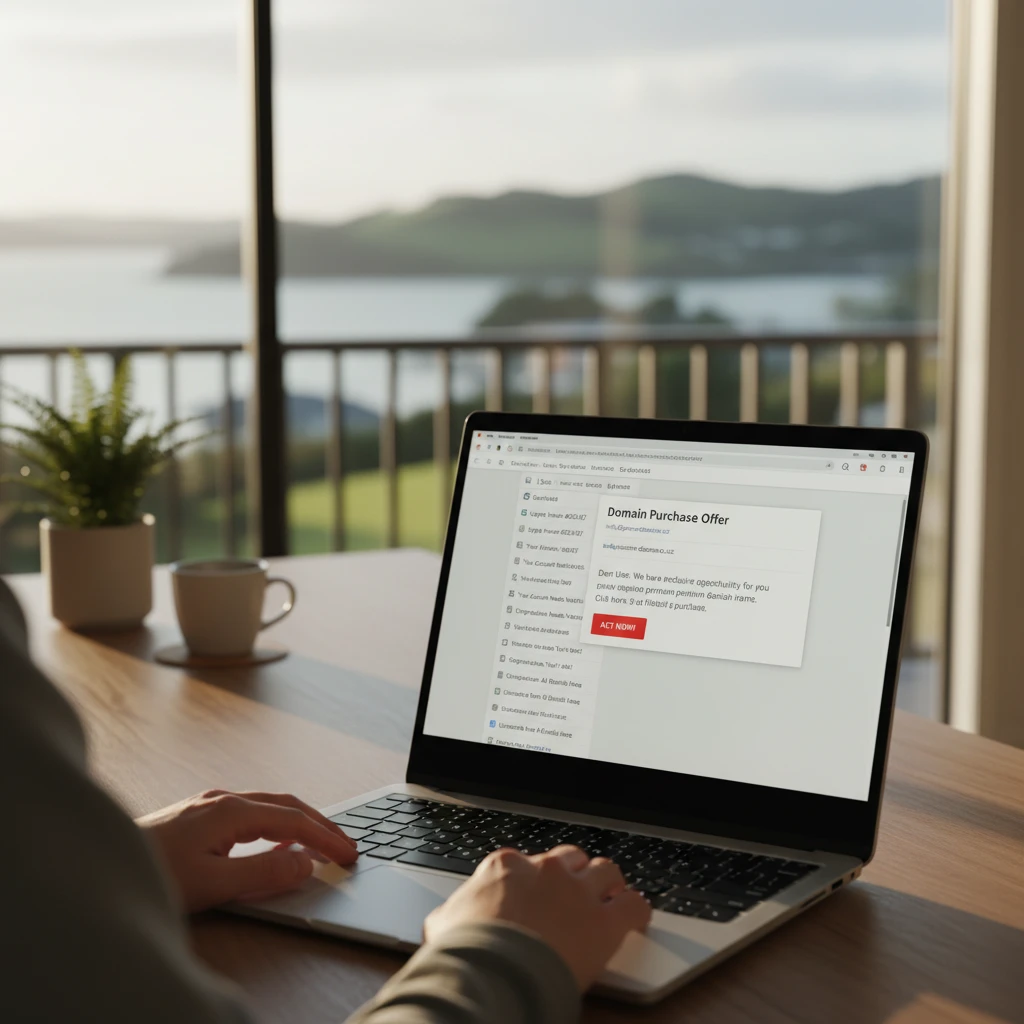
The Anatomy of the Appraisal Scam Email
To spot the scam, you must first recognize the pattern. While the names and specific wording change, the structural anatomy of the appraisal scam email remains remarkably consistent. It almost always follows a three-step narrative arc designed to lower your defenses.
1. The Initial Contact ( The Hook)
The first email is usually brief and professional. It comes from a generic name (e.g., “John Smith” or “Alice Chen”) or someone claiming to be a broker for a high-net-worth client. They will ask if your domain is for sale and may ask for an asking price. Crucially, they do not mention an appraisal yet.
“Hello, I represent an investor interested in acquiring [your-domain.co.nz]. Are you the current owner? If so, do you have an asking price in mind? Please get back to me at your earliest convenience.”
2. The Acceptance (The Bait)
Regardless of the price you quote—even if you intentionally quote an absurdly high figure—the “buyer” will agree to it. In fact, they often suggest a price higher than what you asked to simulate a serious, flush-with-cash investor. This is designed to trigger greed and suppress critical thinking.
3. The “Policy” Twist (The Trap)
Once the price is agreed upon, the catch is introduced. The buyer will claim that because they are using company funds, representing a third party, or seeking a bank loan for the purchase, they require an independent appraisal. They will explicitly state that they do not accept appraisals from major leaders like GoDaddy or Sedo, citing “bias” or “previous bad experiences.” Instead, they will direct you to a specific, obscure appraisal agency.
Why They Ask You to Pay for a Valuation
The core of this scam is Advance-Fee Fraud. Many victims mistakenly believe the scammer is trying to steal the domain name itself. In reality, the scammer has no interest in the domain. Their sole goal is to extract the appraisal fee, which typically ranges from $200 to $900 USD.
The Closed Loop Ecosystem
The scammer operates both the “buyer” email persona and the “appraisal service” website. When the buyer insists you use GlobalDomainValuators.com (a hypothetical example), they are sending you to a site they own.
- The Setup: The scammer creates a professional-looking website for an appraisal firm. They copy text from legitimate financial sites to make it sound authoritative.
- The Payment: When you pay for the certificate, the money goes directly to the scammer.
- The Outcome: You receive a PDF “certificate” stating your domain is worth exactly what the buyer offered. You send this to the buyer.
- The Ghosting: Once the fee is paid, the buyer stops responding. You are left with a worthless PDF and are out several hundred dollars.

Red Flags in Buyer Communication
If you know what to look for, these emails scream “fraud.” Here are the critical red flags that should immediately halt your communication.
1. Disregard for Market Value
If you own a domain that you know is worth $500, and a buyer immediately accepts an offer of $20,000 without negotiation, it is a scam. Legitimate domain investors negotiate. They do their due diligence. An immediate acceptance of a high price is a tactic to rush you into the next phase of the scam.
2. The “Specific Service” Requirement
This is the smoking gun. A legitimate buyer might ask for an appraisal, but they will accept data from industry standards like Estibot, GoDaddy, or Sedo. If a buyer insists on a service you have never heard of and refuses to accept an appraisal from a reputable source, walk away.
3. Generic Email Addresses for “CEOs”
Scammers often pose as CEOs or Acquisition Managers of large corporations. However, they will email you from a @gmail.com, @outlook.com, or @yahoo.com address. A real acquisition manager for a tech firm will email you from their corporate domain.
4. Poor Grammar and Phrasing
While AI tools are helping scammers improve, many still use awkward phrasing. Look for odd capitalization, misuse of idioms, or formal language that feels slightly “off.” For example, phrases like “kindly do the needful” or “revert back to me with the certificate” are common in these scripts.
How to Investigate the “Appraiser”
Before you even consider replying, you should investigate the appraisal company the buyer is recommending. In 99% of scam cases, a simple background check reveals the fraud.
Check the Domain Age
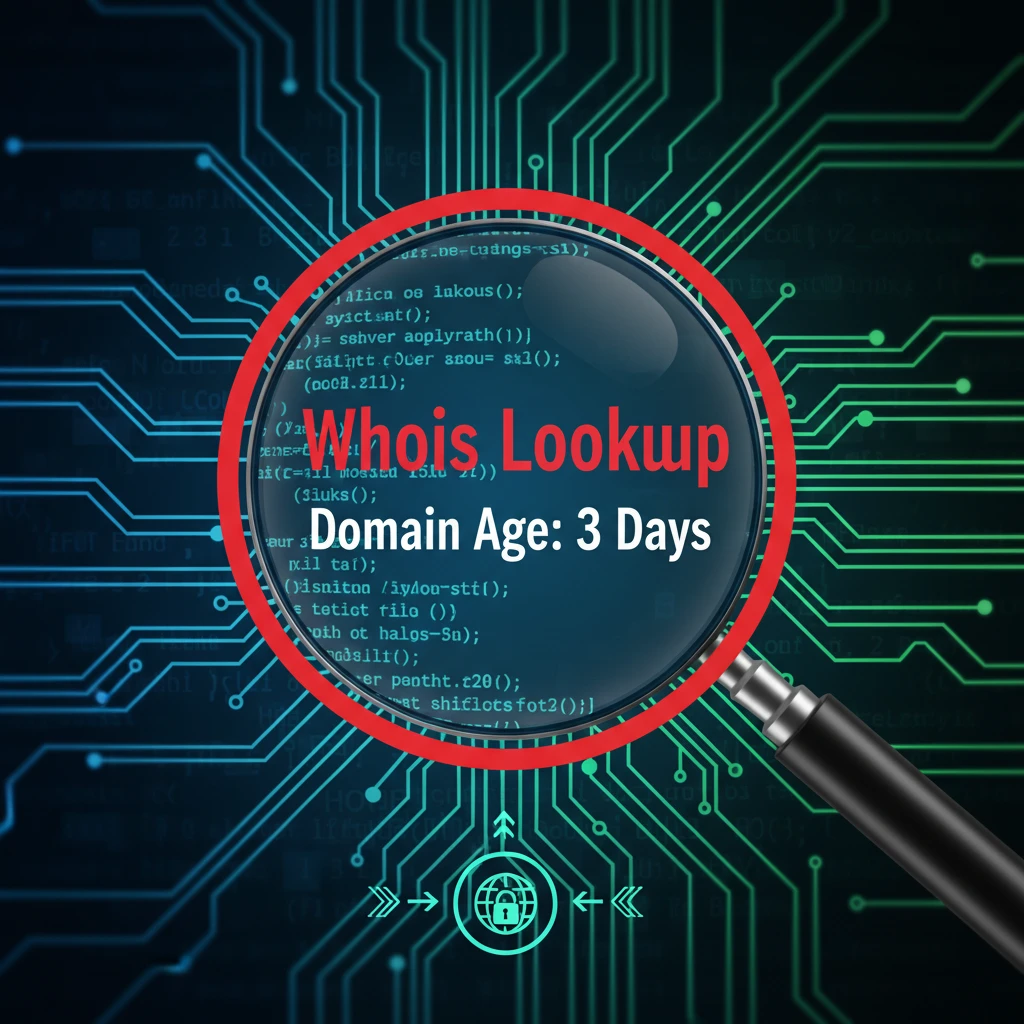
The most powerful tool in your arsenal is a WHOIS lookup. Scammers constantly spin up new appraisal sites because the old ones get reported and shut down.
The Test: Go to a WHOIS lookup tool (like whois.domaintools.com) and enter the URL of the appraisal site.
The Result: If the appraisal site claims to have “15 years of experience” but the domain was registered last month, it is a scam.
Reverse Image Search
Take the photos of the “staff” or “analysts” from the appraisal website and run them through Google Lens or TinEye. You will likely find that these are stock photos used on hundreds of other websites, or photos stolen from LinkedIn profiles of unrelated people.
Protecting Your .nz Domains
The New Zealand domain market is regulated by the Domain Name Commission (DNC). While the DNC manages the .nz space, they cannot intervene in private sales disputes or recover funds lost to international scammers. However, understanding the local context is vital.
Scammers targeting New Zealanders often try to build trust by referencing local entities. They might claim to represent a client in Auckland or Wellington to create a false sense of proximity. Be aware that just because a buyer claims to be local, or uses a spoofed phone number with a +64 country code, it does not verify their identity.
In the NZ secondary market, legitimate transactions are often conducted through recognized platforms like TradeMe (for lower value domains) or through international escrow services. Direct bank transfers based on email promises are highly irregular for high-value assets.
Reporting Scams to Netsafe NZ
If you have been targeted by a domain appraisal scam, or worse, if you have paid the fee, it is crucial to report it. In New Zealand, the primary body for handling online fraud is Netsafe.
Why Report?
Reporting helps Netsafe track trends, warn other New Zealanders, and potentially disrupt the scammer’s infrastructure (such as getting the fake appraisal site taken down).
How to Report:
- Do not delete the emails. Keep the headers and the full conversation history.
- Forward the email. You can forward suspicious emails directly to
report@netsafe.org.nz. - File a report online. Visit the Netsafe website to lodge a formal complaint, especially if you have lost money.
- Contact your bank immediately. If you paid via credit card, you may be able to initiate a chargeback if you act quickly, citing fraud/non-delivery of legitimate services.

How to Sell Safely
The existence of scams shouldn’t deter you from selling your domain. You simply need to adhere to a strict safety protocol.
Use Escrow Services
Never conduct a high-value transaction without an escrow service. Platforms like Escrow.com act as a neutral third party. They hold the buyer’s money and only release it to you once the domain transfer is verified. If a buyer refuses to use a recognized escrow service, they are not a real buyer.
Stick to Known Marketplaces
List your domains on reputable marketplaces such as Sedo, Afternic, or Dan.com. These platforms have built-in verification processes and secure transfer mechanisms. If a buyer contacts you directly, you can politely direct them to purchase the domain through one of these platforms. A serious buyer will have no issue paying the platform fee for the security it provides.
The “Appraisal” Rule
Adopt a strict rule: Never pay for an appraisal requested by a buyer. If a buyer wants an appraisal, they can pay for it themselves, or they can use an automated valuation from a trusted source. There is no legitimate scenario where a seller must pay a third party to prove the value of their asset to a buyer.
Conclusion
The domain appraisal scam is a psychological game that exploits the desire for a profitable sale. By recognizing the request for a specific, paid valuation as the ultimate red flag, you can immunize yourself against this fraud. Remember, in the world of domain investing, money should flow to the seller, not away from them. If you are asked to open your wallet before you’ve been paid, close the deal and report the email to Netsafe immediately.
Is a domain appraisal ever legitimate?
Yes, domain appraisals can be legitimate tools used by investors to gauge value. However, legitimate appraisals are voluntarily sought by the owner for their own knowledge or are conducted by the buyer at the buyer’s expense. You should never be forced to use a specific, unknown service by a prospective buyer.
What happens if I pay the appraisal fee?
If you pay the fee, the scammer will collect the money and likely cut off all communication. In some cases, they may try to extract more money by claiming “transfer fees” or “banking issues,” but the domain sale will never materialize.
How can I verify if a domain buyer is real?
Insist on a phone call or a video meeting. Check their email address against the company they claim to represent. Most importantly, propose using a licensed escrow service (like Escrow.com). A fake buyer will always find an excuse to avoid escrow.
Can I get my money back if I fell for the scam?
It is difficult, but possible. If you paid via credit card, contact your bank immediately to file a dispute (chargeback) for fraud. If you paid via cryptocurrency or wire transfer, recovery is extremely unlikely.
Why do scammers use fake appraisal sites?
Fake appraisal sites add a layer of credibility to the scam. They allow the scammer to justify the fee as a “third-party requirement” rather than a direct payment to them, which lowers the victim’s suspicion.
Are .nz domains more safe from scams?
No extension is immune. While .nz is a smaller market than .com, scammers target it specifically because owners may feel less suspicious of “local” inquiries. Always apply the same due diligence regardless of the domain extension.
