

To sell a domain fast using SEO strategies, you must optimize your sales landing page and marketplace listings with high-intent keywords relevant to the domain’s industry. Create descriptive, keyword-rich listing titles, build authoritative backlinks from niche-specific directories, and ensure your landing page loads instantly to capture organic traffic and convert potential buyers immediately.
Understanding the New Zealand Domain Market
When attempting to sell domain fast in the specialized New Zealand secondary market, one must first appreciate the nuances of the local digital landscape. Unlike the generic global market dominated by .com extensions, New Zealand businesses and investors place a significant premium on local extensions, specifically .co.nz and the newer .nz.
Search engines like Google NZ prioritize local domains for local search queries. Therefore, SEO for your domain listing isn’t just about general best practices; it is about signaling local relevance. If you hold a premium keyword domain such as AucklandPlumbing.co.nz, your SEO strategy must pivot around the geographical and industrial intent of potential buyers in that region. The goal is to make your listing visible not just to domain investors (domainers), but to the end-users—the business owners who need that digital real estate to grow their operations.

Speed is often a function of visibility. The more eyes you get on your asset, the statistically higher your chances of receiving a bid. By leveraging Search Engine Optimization (SEO), you move your listing from a passive state—waiting for someone to stumble upon it—to an active state, where it appears in front of motivated buyers searching for business solutions.
Strategic Keyword Research for Domain Listings
To sell a domain fast, you must speak the language of your potential buyer. Keyword research is the foundation of this communication. You are not merely optimizing for “domain for sale”; you are optimizing for the business value the domain represents.
Identifying Buyer Intent Keywords
There are two types of keywords you need to integrate into your listing and landing page:
- Asset-Class Keywords: These are terms used by investors, such as “premium .nz domains,” “aged domains for sale,” or “brandable NZ domains.”
- End-User Keywords: These are terms a business owner might search for. If you are selling BestCoffee.co.nz, you want to rank for “coffee business for sale NZ” or “start a cafe in Auckland.”
By targeting end-user keywords, you tap into a market of buyers who may not realize they need a premium domain until they see yours. This strategy drastically reduces the time on market because you are presenting a solution (the domain) to their problem (starting a business).
Mastering Listing Titles for High CTR
Whether you are listing on Trade Me, Sedo, Afternic, or a dedicated landing page, your title is the most critical on-page SEO element. It is the headline that appears in search engine results pages (SERPs). A vague title like “Domain for Sale” is a wasted opportunity.
Your title tag should follow a structure that maximizes Click-Through Rate (CTR) and keyword relevance. A robust formula for the New Zealand market is:
[DomainName] – Premium [Industry] Domain for Sale | [Marketplace Name]
For example: “ChristchurchHomes.co.nz – Premium Real Estate Domain for Sale”.
This structure accomplishes three things:
- Exact Match Relevance: It puts the primary asset (the domain name) first.
- Industry Signaling: It tells Google the listing is relevant to “Real Estate.”
- Commercial Intent: It uses the phrase “for sale,” inviting clicks from buyers ready to purchase.

Writing Descriptions That Rank and Convert
The description field in your domain listing is where you win the sale and the search algorithm. Many sellers make the mistake of leaving this blank or writing a single sentence. To sell a domain fast, treat the description as a sales letter optimized for SEO.
The Semantic Richness Approach
Google uses semantic analysis to understand the context of a page. Your description should include Latent Semantic Indexing (LSI) keywords related to the domain’s niche. If you are selling a financial domain, your description should include terms like “fintech,” “investment,” “mortgage rates,” and “financial planning.”
Structuring the Description
Use the inverted pyramid style for your description:
- The Hook: State clearly why this domain is valuable. “Acquire the authority of a 10-year-old premium .nz domain.”
- The Use Case: Explain how it can be used. “Perfect for a startup, rebranding an existing firm, or lead generation.”
- The SEO Benefits for the Buyer: Explicitly mention that the domain contains high-volume keywords. “This domain matches the search term ‘buy insurance NZ’ which receives 5,000 monthly searches.”
- Call to Action (CTA): Create urgency. “Priced to sell domain fast. Make an offer today.”
Content length matters. Aim for at least 300 words in your listing description if the marketplace allows it. This gives search crawlers enough text to understand the page’s relevance.
Backlinking Strategies to Boost Authority
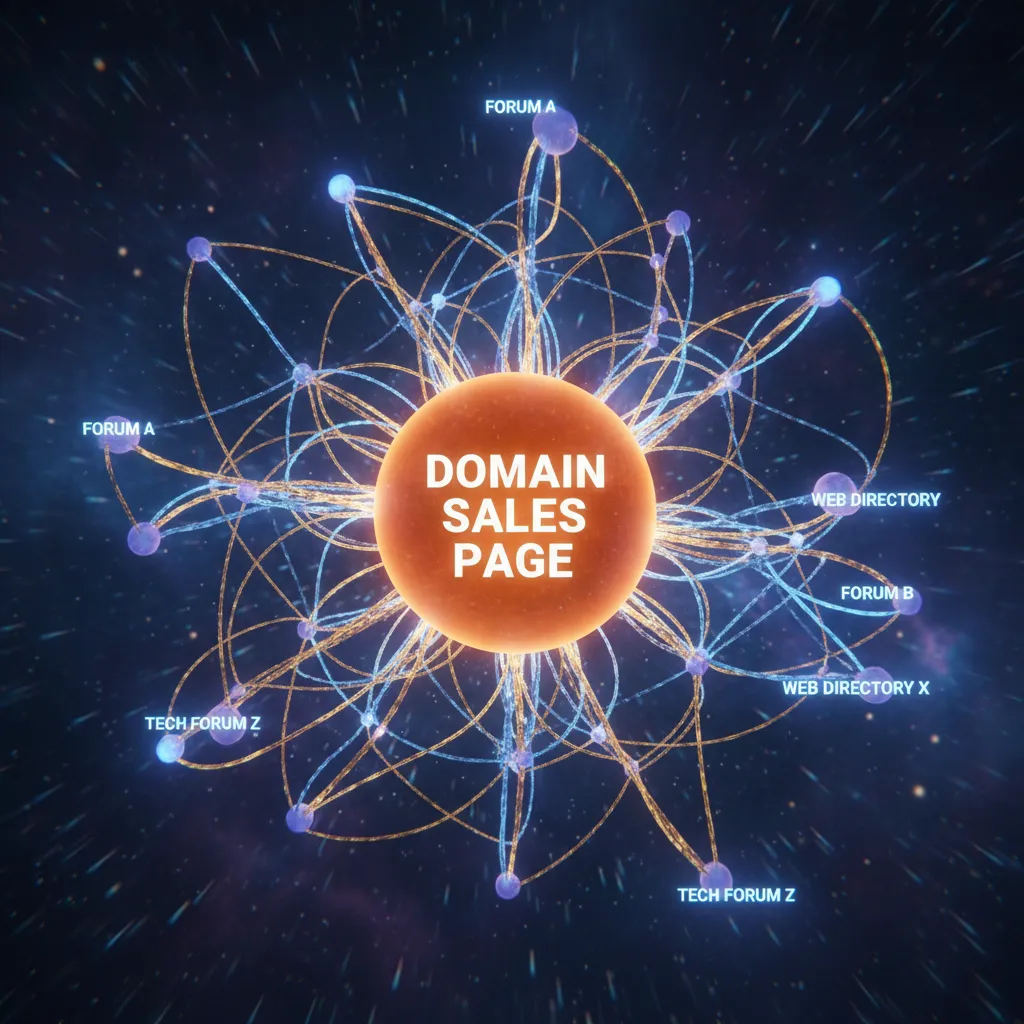
If you are hosting a dedicated landing page for your domain (which you should be), off-page SEO is vital. A standalone sales page with no inbound links is an island in the ocean of the internet—hard to find.
Niche Directories and Forums
In the New Zealand market, getting a backlink from relevant local sources can significantly boost your visibility. If you are selling a tech domain, participate in discussions on platforms like Geekzone (without spamming). Place a link to your sales page in your signature or profile.
Press Releases
For high-value domains (evaluated at $5,000+), consider a press release. A story titled “Premium NZ Digital Asset Hits the Market” distributed to local business news outlets can generate high-authority backlinks. This signals to Google that the sales page is important, helping it rank for the domain name itself and related keywords.
Driving Organic Traffic to Your Sales Page
To sell a domain fast, you cannot rely solely on marketplace internal traffic. You must drive your own organic traffic via Google. This involves creating content that sits on the domain while it is for sale.
The Mini-Site Strategy
Instead of a blank “For Sale” page, build a 3-5 page mini-site. Include a blog post about the industry the domain serves. For a gardening domain, write an article about “Top Gardening Trends in NZ.” Optimize this content for long-tail keywords.
When users search for gardening trends, they land on your site. They see the content, but they also see a prominent banner: “This Domain is For Sale.” You are converting information seekers into asset buyers. This method is incredibly effective because it demonstrates the domain’s traffic potential in real-time.
Technical SEO for Domain Landing Pages
Technical performance is a ranking factor. A slow-loading sales page will result in a high bounce rate. If a potential buyer clicks your link and it takes 5 seconds to load, they will leave, and you will lose the sale.
Mobile Optimization
Over 60% of web traffic is mobile. Ensure your “For Sale” landing page is fully responsive. The “Buy Now” or “Make Offer” button must be easily clickable on a smartphone screen. Google uses mobile-first indexing, so if your mobile site is poor, your rankings will suffer regardless of how good your keywords are.
HTTPS and Security
Even for a sales lander, SSL (HTTPS) is mandatory. Browsers mark non-secure sites as “Not Secure,” which kills buyer trust immediately. A buyer will not submit their contact details or make an offer on an insecure page.

By implementing these technical and content-driven SEO strategies, you elevate your domain from a simple database entry to a compelling, visible digital asset. This proactive approach is the secret to selling domains fast in the competitive New Zealand market.
People Also Ask
How can I sell my domain name quickly?
To sell a domain name quickly, price it competitively based on recent comparable sales, list it on multiple major marketplaces (like Sedo, Afternic, and Trade Me for NZ), and optimize the landing page with SEO to attract organic traffic. Active outbound marketing to potential end-users also speeds up the process.
Where is the best place to sell NZ domains?
For New Zealand specifically, Trade Me is a popular local platform. However, for broader reach, dedicated domain marketplaces like Sedo and Afternic are essential. Specialized NZ domain brokerages can also be effective for high-value .co.nz assets.
Does traffic help sell a domain?
Yes, traffic is a major selling point. If a domain has existing type-in traffic or organic search traffic, it provides immediate value to the buyer, allowing you to command a higher price and sell the domain faster.
How do I write a good domain description?
A good domain description should highlight the branding potential, mention the industry relevance, cite search volume for the keywords in the domain, and include a clear call to action. Use professional language and avoid hype.
What is the value of a .co.nz domain?
The .co.nz extension is the most trusted and recognized in New Zealand. It carries significant SEO weight for local searches and is generally preferred by NZ businesses over .com or .nz, making it highly valuable for local commerce.
Is SEO important for selling domains?
Absolutely. SEO ensures your domain listing appears in search results when buyers are looking for businesses or keywords related to your domain. This visibility increases the pool of potential buyers beyond just domain investors.
