

The best domain selling sites in NZ depend on your target buyer. For maximum local exposure to Kiwi businesses, Trade Me and Domainz are the top choices. However, for premium generic names targeting international investors, global platforms like Sedo, Dan.com, and Afternic offer superior reach and sales infrastructure.
When venturing into the secondary market for New Zealand domain names (specifically .nz, .co.nz, and .net.nz), investors face a critical strategic decision: should you list on a local platform where the brand recognition is high, or a global marketplace with deeper pockets? This guide analyzes the commercial viability of both routes to maximize your return on investment.
The Landscape: Trade Me vs. Specialized Registrars vs. Global Giants
The New Zealand domain market is a unique ecosystem overseen by the Domain Name Commission (DNC). Unlike generic top-level domains (gTLDs) like .com, the .nz country code is strictly associated with local relevance. This geographic specificity dictates where the liquidity lies. Understanding the landscape is the first step in identifying the best domain selling sites NZ has to offer.
At the local level, the market is dominated by generalist marketplaces rather than specialized domain auction houses. This is a stark contrast to the US market. In New Zealand, a domain name is often treated similarly to a piece of real estate or a used vehicle—it is a commodity traded on platforms where Kiwis already gather. Conversely, the global landscape is ruled by sophisticated technology platforms that utilize syndication networks to put your domain in front of millions of registrars simultaneously.

The friction point for many sellers is the “walled garden” effect. A domain listed solely on a local NZ registrar may be invisible to a buyer in London looking to expand into Auckland. However, a domain listed solely on a global platform might be missed by a local plumber in Wellington who only searches on Google.co.nz or Trade Me. The modern domain strategist must understand that the landscape is not binary; it often requires a hybrid approach to capture both the local end-user and the global investor.
Pros and Cons of Local Listing Platforms
When searching for the best domain selling sites NZ, the conversation almost always begins with the titans of local ecommerce. Selling locally has distinct advantages, primarily revolving around trust and search intent.
Trade Me: The Local Heavyweight
Trade Me is arguably the most effective platform for selling lower-to-mid-range .co.nz domains. Because it is the de facto marketplace for everything in New Zealand, it captures the casual business owner who is not domain-savvy. These buyers aren’t browsing specialized domain forums; they are searching for business assets on a platform they trust.
Pros of Trade Me:
- High Trust Factor: Kiwis are comfortable transacting here. The platform’s escrow-like protection (Ping) adds a layer of security for smaller transactions.
- Targeted Traffic: Your listing is seen by people specifically looking for NZ-centric items. The “Business for Sale” and “Websites” categories are frequently browsed by entrepreneurs.
- Auction Format: This creates urgency, which can be beneficial for liquidating inventory quickly.
Cons of Trade Me:
- Listing Fees: Unlike many global platforms that are commission-only, Trade Me often charges upfront listing fees and high success fees, which can eat into margins on lower-value sales.
- Lack of Domain Tools: It is not a specialized registrar. You won’t find automated DNS transfer tools or lease-to-own contracts. The transfer process is manual and relies on the seller pushing the UDAI (Unique Domain Authentication ID) to the buyer.
- Limited Audience: International buyers rarely check Trade Me.
Specialized NZ Registrars and Forums
Beyond Trade Me, there are registrar-based marketplaces and local forums (like Geekzone, though less commercial) where sales occur. Some registrars like Domainz or Freeparking allow for “Make an Offer” landing pages, but these are often passive strategies rather than active marketplaces.
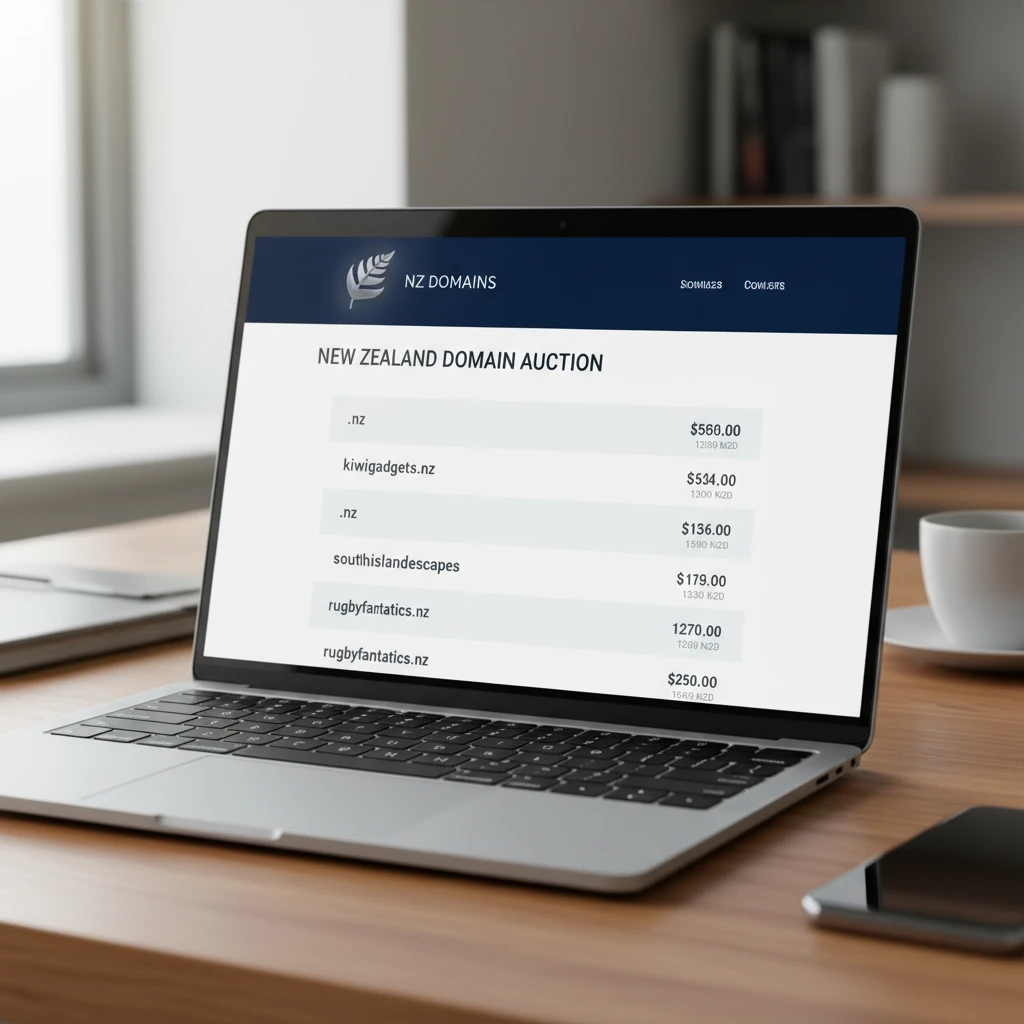
The primary advantage of using a local registrar’s selling tools is the seamlessness of the transfer. If both buyer and seller are on the same registrar, the “push” is instant. However, the liquidity is significantly lower than Trade Me or global giants.
When to Go Global: Sedo, Afternic, and Dan.com
If you hold premium inventory—such as single-word dictionary terms (e.g., Insurance.co.nz) or three-letter acronyms—limiting yourself to local platforms is a mistake. High-value assets attract global investors and multinational corporations entering the NZ market. These buyers utilize global acquisition networks.
Sedo: The Auction Powerhouse
Sedo (Search Engine for Domain Offers) is a German-based company with massive global reach. It is one of the best domain selling sites for .nz domains if you are looking to run a premium auction.
Why use Sedo for NZ domains? Sedo has a dedicated brokerage team that can handle cross-border negotiations. If you are selling a domain for $10,000+, you want a broker who speaks the language of corporate acquisitions. Additionally, Sedo supports .nz extensions fully, meaning the technical transfer process is supported by their escrow service.
Afternic: The Distribution Network
Afternic, owned by GoDaddy, plays a different game. Their strength is the “Fast Transfer” network (DLS). When you list a domain on Afternic, it doesn’t just appear on their site; it pops up in the search results of over 100 partner registrars. While .nz domains may not be eligible for the instant “Fast Transfer” automation due to DNC regulations, the visibility is unmatched.
If a user types your domain into GoDaddy, Namecheap, or Network Solutions to register it, Afternic ensures they see your domain is “For Sale” with a price tag. This captures the buyer at the exact moment of intent.
Dan.com: The Conversion King
Dan.com (also acquired by GoDaddy but operating distinctly) revolutionized the market with clean, trust-inducing landing pages. For the NZ market, Dan.com is exceptional for “Lease-to-Own” options.

Many small Kiwi businesses cannot afford a $5,000 lump sum for a premium domain. Dan.com allows you to set up a payment plan (e.g., $416/month for 12 months). The platform handles the automated billing and DNS management. This feature alone makes it one of the best domain selling sites for NZ sellers targeting small business owners.
Fee Structures and Commission Rates Comparison
Profitability is not just about the sale price; it is about what you keep. The fee structures vary wildly between local and global platforms. Here is a commercial analysis of the costs involved.
Trade Me Fees
Trade Me operates on a tiered structure. You will typically pay a listing fee (often between $20-$50 depending on features like “Bold” or “Featured”) regardless of whether the item sells. Upon sale, a success fee applies. For high-value items, this is capped, but for mid-range domains, it can effectively be around 7.9% of the sale price. The hidden cost here is the listing fee risk—if the domain doesn’t sell, you are out of pocket.
Global Commission Rates
- Dan.com: Historically 9%, but moving towards 15% to align with Afternic post-acquisition. If you point your nameservers to them, the fee is generally lower than if you just list without pointing DNS.
- Sedo: Standard commission is 15% for marketplace sales. If you use their parking service, it can be lower. Auction fees vary.
- Afternic: Uses a tiered commission structure. Generally 20% for sales up to $5,000, and 15% for the amount above $5,000. While this seems high, you are paying for the massive distribution network.
The Verdict on Fees: If you are confident the domain will sell quickly, Trade Me’s capped fees might be cheaper for high-ticket items. However, for a portfolio of domains that might sit for years, the “no sale, no fee” model of Dan, Sedo, and Afternic is financially safer.
Choosing the Right Platform for Your Persona
To determine the best domain selling sites NZ offers for your specific situation, you must categorize your portfolio and your sales style. Below is a strategic framework for decision-making.
Persona A: The “Local Brandable” Seller
Portfolio: Catchy, two-word names like PlumbersAuckland.co.nz or BestPies.co.nz.
Target Buyer: Local small business owners.
Strategy: Use Trade Me. The buyer is likely browsing locally. The trust barrier is lower. Create a detailed listing explaining how this domain can improve their local SEO.
Persona B: The “Premium Generic” Investor
Portfolio: One-word dictionary terms like Loans.co.nz, Cloud.nz, or Travel.co.nz.
Target Buyer: Large NZ corporates or International companies entering NZ.
Strategy: Use Sedo or Afternic. These buyers have corporate budgets and acquisition departments. They will use a broker. You need the credibility of a global escrow service to handle a six-figure transaction.

Pro Tip: Implement a “Hybrid Strategy.” List your domain on Afternic and Sedo for global reach. Simultaneously, create a simple “For Sale” landing page (using Dan.com nameservers) so that anyone typing the domain directly into their browser sees a professional offer page. Avoid listing on Trade Me simultaneously if you are using global distribution networks that require exclusivity, or manage your inventory carefully to avoid double-selling.
Persona C: The Portfolio Liquidator
Portfolio: Hundreds of low-to-mid value domains.
Target Buyer: Other investors or bargain hunters.
Strategy: Bulk listing on Dan.com. The management interface allows for easy bulk pricing, and the lease-to-own option helps move inventory that is priced slightly out of reach for immediate cash buyers.
Frequently Asked Questions
Can I list my .nz domain on GoDaddy auctions?
Yes, you can list .nz domains on GoDaddy Auctions (via Afternic). GoDaddy is a global registrar and supports the .nz extension. However, ensure your domain is unlocked and you have the UDAI ready for transfer, as international registrars sometimes have slightly different transfer flows for ccTLDs.
What is the UDAI and why do I need it to sell?
The UDAI (Unique Domain Authentication ID) is an 8-character code required to transfer a .nz domain from one registrar to another. It acts as the password for the domain. You cannot complete a sale on any platform—Trade Me, Sedo, or otherwise—without providing this code to the buyer.
Is it better to sell as a fixed price or auction?
For .nz domains, fixed price (Buy It Now) generally works better for end-users (businesses) who want to secure the name immediately. Auctions work best on Trade Me for liquidating low-value assets or on Sedo for ultra-premium names where a bidding war is anticipated.
Do I need to pay tax on domain sales in New Zealand?
Generally, if you are buying and selling domains with the intention of making a profit, the proceeds are considered taxable income in New Zealand. You should consult with an NZ accountant to determine if your activity classifies as a business or a hobby, especially regarding GST registration.
How do I value a .nz domain before listing?
Valuation is subjective, but look at comparable sales (comps). Check tools like NameBio (though .nz data is limited) or search completed listings on Trade Me. Factors include length, keyword popularity, extension (.co.nz is usually worth more than .nz or .net.nz), and commercial potential.
Which platform has the lowest fees for selling domains?
If you sell a high-value domain on Trade Me, the fee is capped, making the percentage very low effectively. However, for standard sales, Dan.com (at around 15%) is competitive because it includes the cost of escrow and credit card processing fees, which you might have to absorb elsewhere.
