

A Maori business name generator is a creative branding process or tool used to derive meaningful company titles from Te Reo Maori, the indigenous language of New Zealand. Effective generation requires balancing linguistic accuracy with cultural competency to ensure the selected name respects Maori tikanga (customs) while securing a unique digital identity in the Aotearoa market.
Why Choose a Te Reo Maori Business Name?
In the competitive landscape of New Zealand business, establishing a brand that resonates with the local identity is paramount. Utilizing Te Reo Maori for your business name is not merely a trend; it is a profound way to connect with the whenua (land) and the people of Aotearoa. As the indigenous language experiences a significant revitalization, businesses that embrace Te Reo authentically often find they can communicate deeper values of sustainability, community, and strength more effectively than with English equivalents.
For digital asset management firms and domain investors, Maori keywords represent a high-value niche. These names often carry strong phonetic structures—crisp vowels and soft consonants—that make them memorable and distinct in a crowded global marketplace. However, the journey to finding the perfect name requires more than a simple translation; it requires an understanding of the concepts behind the words.

The Manual Generator: Categorized Name Ideas
While automated scripts can randomly combine syllables, a true “Maori Business Name Generator” strategy involves selecting words that embody the spirit of your enterprise. Below is a curated list of Te Reo concepts categorized by industry, serving as a framework for generating your unique brand identity.
1. Technology and Digital Assets
If you are operating in the SaaS, digital asset management, or IT sectors, you want names that convey speed, intelligence, and connectivity.
- Ipurangi: Internet or source. Good for ISPs or web hosts.
- Raraunga: Data. Ideal for analytics firms.
- Whetū: Star. Represents navigation and high performance.
- Hiko: Electricity/Lightning. Implies power and speed.
- Pūmanawa: Software or talent/intuitive cleverness.
2. Construction and Architecture
For businesses involved in building the future of New Zealand, names should reflect strength, foundation, and shelter.
- Hanga: To build or fashion.
- Tūāpapa: Foundation/Terrace. Implies stability.
- Whare: House/Building. A classic prefix for property businesses.
- Tokka: Rock. Unmovable strength.
- Ahuru: Warm and comfortable (referring to a shelter).
3. Consulting and Leadership
Firms offering guidance require names that speak to wisdom, pathways, and vision.
- Arataki: To lead or guide. A powerful verb for consultants.
- Māramatanga: Enlightenment/Understanding. Perfect for strategy firms.
- Tautoko: Support. Good for HR or auxiliary services.
- Mana: Prestige, authority, control, power, influence. (Note: Use with extreme caution and respect).
4. Environmental and Sustainability
With the world watching New Zealand’s green initiatives, these names carry significant weight.
- Taiao: Nature/Environment.
- Kākāriki: Green.
- Tiaki: To look after/guard.
- Mauri: Life principle/vital essence.

Cultural Competency: Avoiding Appropriation
The most critical aspect of using a Maori business name generator is cultural safety. Cultural appropriation occurs when a dominant culture adopts elements of a minority culture without understanding, permission, or respect. In the context of New Zealand business, failing to adhere to Tikanga Maori (Maori customs) can lead to severe reputational damage and alienation of your customer base.
Understanding Tapu and Noa
In Maori culture, concepts can be Tapu (sacred/restricted) or Noa (common/unrestricted). A common mistake is using a highly sacred term for a trivial or inappropriate product. For example, naming a line of alcohol or cigarettes after a sacred ancestor, mountain, or river is considered deeply offensive. Before finalizing a name, you must assess whether the association is appropriate.
Consultation is Key
If your business name relies on specific local geography or tribal history, consultation with the local Iwi (tribe) or Hapū (sub-tribe) is not just recommended; it is often essential. For generic terms (like “Red Cloud” or “Fast Water”), general linguistic advice may suffice, but for anything tied to identity, you must seek permission.
Checklist for Cultural Safety:
- Does the word have a double meaning that could be offensive?
- Is the word associated with a specific Iwi or historical tragedy?
- Are you using the name for a product that conflicts with Maori values (e.g., gambling, tobacco)?
- Have you utilized a certified translator or cultural advisor?
Securing Your Digital Assets: .nz and .kiwi
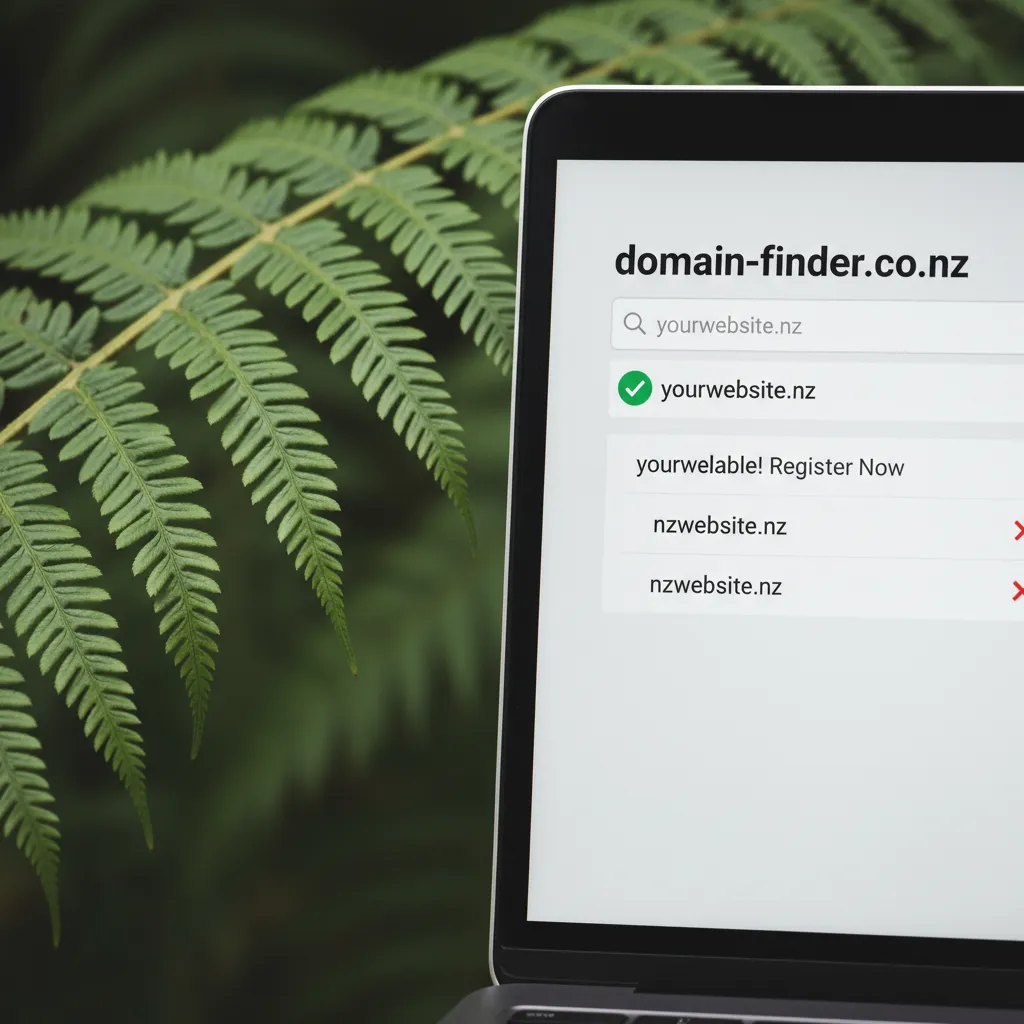
Once you have generated a list of potential names, the next step in the digital asset management process is verification and acquisition. In New Zealand, the domain hierarchy is distinct, and securing the right extension is vital for SEO and trust.
The Importance of .co.nz vs .nz
Traditionally, .co.nz is the standard for commercial entities in New Zealand. It carries the highest level of trust among local consumers. However, the shorter .nz extension allows for punchier branding and is becoming increasingly popular for modern tech companies and startups.
Strategy: If you find a Maori name you love, attempt to acquire both the .co.nz and the .nz versions to protect your brand. This prevents competitors from “squatting” on a similar domain structure.
Using .kiwi and .maori.nz
The .kiwi extension is a valid alternative if the primary country codes are taken, often signaling a friendly, patriotic, or export-focused brand. Additionally, .maori.nz is available, though it is generally reserved for organizations specifically promoting Maori culture, arts, or community services rather than general commercial enterprises.
Checking the Companies Office
A domain is not a legal business registration. You must cross-reference your generated name with the New Zealand Companies Office register. A name might be available as a .com or .co.nz, but if a registered company already trades under that name, you risk trademark infringement. Use the ONECheck tool provided by the NZ government to simultaneously check business names, trademarks, and web domains.
Meaning, Pronunciation, and Brand Story
A name generated from Te Reo Maori is more than just a label; it is a story. However, for that story to travel, it must be tellable. Brand equity is lost when customers are afraid to pronounce your business name for fear of getting it wrong.
The Phonetic Advantage
Te Reo Maori is a phonetic language, meaning words are generally pronounced exactly as they are spelled. This offers a distinct advantage over English, which is full of irregularities. However, you must educate your market on the vowel sounds:
- A: as in ‘far’
- E: as in ‘bed’
- I: as in ‘sheep’
- O: as in ‘pork’
- U: as in ‘boot’
Macrons Matter
Macrons (the line above a vowel, e.g., ā) indicate a long vowel sound. In the digital age, omitting macrons can change the meaning of a word entirely. For example, keke means cake, while kēkē means armpit. When registering domains, you usually use the non-macronized version (ASCII), but your logo, marketing materials, and legal name should always use the correct orthography to respect the language and ensure accurate meaning.
Weaving the Narrative
When you launch your brand, dedicate a page on your website to the “Story of Our Name.” Explain why you chose the specific Maori word, what it means, and how it relates to your business mission. This transparency builds trust and demonstrates cultural appreciation rather than appropriation.

Frequently Asked Questions
Is it legal to use a Maori word for a business name?
Yes, it is generally legal to use Maori words for business names in New Zealand. However, you cannot trademark descriptive words (e.g., you cannot trademark the word “Kai” for a food business). Additionally, the usage must not be offensive or misleading under the Fair Trading Act. Certain words protected under specific statutes or settlement acts may be restricted.
How do I check if a Maori business name is taken?
You should use the ONECheck tool provided by business.govt.nz. This tool searches the Companies Register, the trademark database (IPONZ), and domain name registrars simultaneously to ensure your chosen name is available across all necessary channels.
Do I need permission to use a Maori name?
For generic words found in the dictionary, permission is usually not required, though cultural advice is recommended. However, if you use a name associated with a specific Iwi, Hapū, Marae, or a famous ancestor, you should absolutely seek permission and consultation from that specific group to avoid offense and potential legal challenges.
What is the best Maori word for “business”?
The most common term is Pakihi. You might also see Umanga (career/profession/pursuit) or Kamupene (a transliteration of “company”). Depending on the nature of the business, words like Mahi (work) are also frequently used in compound names.
Can I use macrons in my domain name?
Yes, the .nz registry supports Internationalized Domain Names (IDNs), which allows for the use of macrons (ā, ē, ī, ō, ū). However, it is standard practice to register both the macronized version and the standard ASCII version to ensure users can reach your site regardless of their keyboard capabilities.
What does “Kia Ora” mean in business?
While “Kia Ora” is the standard greeting for “Hello,” its literal meaning is “Be well” or “Have life.” In a business context, it is an informal and friendly way to open correspondence, widely accepted in New Zealand corporate culture as a sign of inclusivity.
