

GST on domain names in New Zealand applies when a trader is GST-registered. If your annual turnover exceeds $60,000, you must charge 15% GST on sales to NZ residents. However, sales to non-residents are typically zero-rated (0%), allowing traders to claim back GST on expenses without charging overseas buyers.
Introduction: Navigating the Tax Landscape of Digital Assets
For many New Zealanders, domain trading begins as a side hustle—snapping up a catchy .co.nz or a generic .com with the hope of a future sale. However, as your portfolio grows and transaction volumes increase, the Inland Revenue Department (IRD) no longer views this as a hobby; it becomes a taxable activity. Understanding the nuances of GST on domain names in NZ is critical for maximizing profit margins and ensuring compliance.
The digital nature of domain names creates unique tax situations compared to physical goods. Since a domain name is technically a supply of services (a license to use a string of characters), the rules regarding the place of supply and the residency of the buyer heavily influence your GST obligations. Whether you are a full-time domainer or a business owner liquidating digital assets, getting the Goods and Services Tax wrong can result in significant penalties or missed opportunities for refunds.

When Must Domain Traders Register for GST?
The first step in compliance is determining if you are actually required to be in the GST system. In New Zealand, the threshold is clear, but its application to digital asset trading requires careful monitoring of your turnover.
The $60,000 Turnover Rule
You must register for GST if your total turnover (gross income before expenses) from all taxable activities exceeds $60,000 in any 12-month period, or if you expect it to exceed this amount in the next 12 months. For domain traders, “turnover” includes the total sale price of every domain sold, plus any parking revenue or leasing income generated by the portfolio.
It is important to note that this threshold applies to you as an entity. If you trade domains as a sole trader and also run a separate lawn-mowing business as a sole trader, the combined turnover of both activities counts toward the $60,000 threshold.
Voluntary Registration: Is it Worth It?
If your turnover is under $60,000, you can choose to register voluntarily. For domain investors, voluntary registration is often highly beneficial. Why? Because the domain market is global.
If you primarily sell high-value .com domains to American or European buyers, your sales are likely zero-rated (more on this below). This means you collect $0 GST from clients but can still claim back the 15% GST you pay on NZ-based expenses (like legal fees, local registrar fees, and internet costs). This often results in the IRD paying you a refund at the end of every taxable period.
GST on Domestic Sales vs. International Exports
Once registered, the application of GST depends entirely on the residency of your buyer. This is where the “place of supply” rules come into effect.
Selling to New Zealand Residents
If you sell a domain name (e.g., a premium .co.nz) to another New Zealand resident or a New Zealand-registered company, you must charge 15% GST on top of the agreed sale price.
For example, if you agree to sell a domain for $10,000 + GST:
- Sale Price: $10,000
- GST (15%): $1,500
- Total Invoice: $11,500
You collect the $1,500 and pass it on to the IRD. If you fail to add GST to the price and the contract is silent on tax, the price is deemed to be “GST inclusive,” meaning the tax comes out of your pocket, reducing your profit.

The Power of Zero-Rating: Selling to Non-Residents
This section is the most critical for professional domain traders. Under the Goods and Services Tax Act 1985, services supplied to non-residents who are outside New Zealand at the time of supply can be zero-rated. This means you charge GST at a rate of 0%.
Criteria for Zero-Rating
To apply 0% GST, you must be satisfied that:
- The buyer is not a resident of New Zealand.
- The buyer is physically outside New Zealand at the time the services are performed.
Since transferring a domain name is a remote service, the physical location requirement is usually satisfied if the buyer lives overseas. However, the burden of proof is on you.
Evidence Required for Audits
If the IRD audits your returns, you cannot simply say “I think they were American.” You need to retain evidence such as:
- The buyer’s foreign billing address.
- IP address logs from the transaction (if sold via your own site).
- Foreign bank account details or credit card origin.
- Email correspondence confirming their location.
Warning: If you sell a domain to a non-resident, but that domain is intended to be used by a presence they have in New Zealand (e.g., a US company buying a domain for their Auckland branch), standard 15% GST may apply.
Claiming GST on Registration and Renewal Fees
One of the primary advantages of being a GST-registered domain trader is the ability to claim input tax credits. You can claim back the GST component of any business-related expense.
Deductible Expenses
Common expenses where GST can be claimed include:
- Registration and Renewal Fees: Fees paid to NZ registrars (like Crazy Domains, Metaname, or 1st Domains).
- Brokerage Fees: If you use a kiwi broker to help sell a domain.
- Hosting and Server Costs: Fees for parking pages or developing sites.
- Home Office Expenses: A portion of your internet and electricity if you work from home.
- Computer Hardware: Laptops and monitors used for trading.
The “Exempt” vs. “Zero-Rated” Distinction
It is vital to understand that zero-rated supplies are taxable supplies (just at 0%). This is different from “exempt” supplies (like residential rent or financial services). Because your international sales are taxable, you maintain the full right to claim GST on your expenses. If your sales were “exempt,” you would not be able to claim GST on costs associated with those sales.

Issuing Correct Tax Invoices for Domains
When you sell a domain, your paperwork must be impeccable. The requirements for a tax invoice in New Zealand depend on the value of the sale.
Sales Under $1,000
For smaller domain sales, the invoice must include:
- The words “Tax Invoice”.
- Your name and GST number.
- The date of issue.
- A description of the goods (e.g., “Transfer of domain name example.co.nz”).
- The total price including GST, or the price excluding GST and the GST amount shown separately.
Sales Over $1,000
For high-value domain sales, you must also include:
- The buyer’s name.
- The buyer’s address.
- The quantity (usually 1).
If you are zero-rating the supply to an overseas buyer, your invoice should clearly state “GST Rate: 0% (Export)” or similar wording to avoid confusion. This ensures the buyer knows they do not need to attempt to claim back NZ GST, and it clarifies your records for the IRD.
Buying Inventory from Overseas Registrars
Many NZ traders acquire inventory from platforms like GoDaddy, Namecheap, or Sedo. How does GST apply here?
Since 2016, New Zealand has applied GST to “remote services” supplied by non-residents (often called the “Netflix Tax”). Large overseas registrars are required to charge 15% GST to New Zealand consumers.
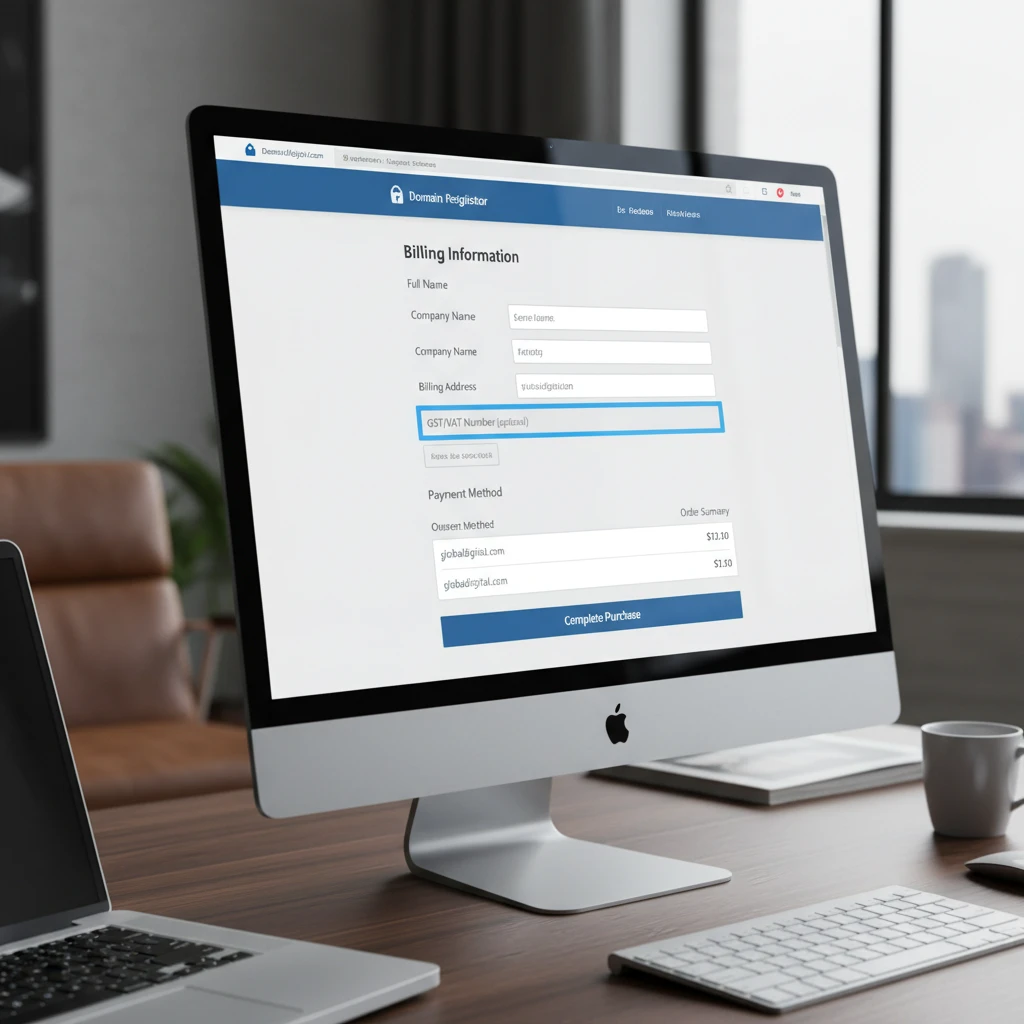
However, if you are a GST-registered business, these overseas suppliers should NOT charge you NZ GST. You usually need to provide your GST number to the overseas registrar to prove you are a business. If they do not charge you GST, you do not claim any GST back. If they mistakenly charge you GST, you generally cannot claim it back via the IRD; you must ask the supplier to refund it.
Common Pitfalls for NZ Domain Investors
Even experienced traders can trip up on tax compliance. Here are the most frequent errors observed in the secondary market.
1. The “Hobby” Defense
Traders often try to claim their sales are capital gains from a hobby rather than income from a taxable activity. The IRD looks at the frequency, scale, and intent. If you are buying domains with the primary intent of resale (rather than use), it is likely a taxable activity. Once you hit the $60k threshold, GST is mandatory, regardless of whether you consider it a hobby.
2. Wash Trading and Valuation
Selling domains between related entities (e.g., from your personal name to your company) must be done at open market value for GST purposes. You cannot artificially inflate or deflate prices to manipulate GST refunds or obligations.
3. Failing to Deregister
If you stop trading domains or your turnover drops permanently below the threshold, you may need to deregister. When you deregister, you must pay GST on the assets (domains) you still hold, calculated at their current market value. This can be a nasty surprise if you hold a valuable portfolio.
Conclusion
Navigating GST on domain names in NZ requires a shift in mindset from “collecting” to “business operations.” For the serious trader, the GST system is not just a compliance hurdle; it is a mechanism that, through zero-rating exports, can reduce the effective cost of doing business. By maintaining rigorous records of buyer residency and ensuring your invoices meet IRD standards, you can trade with confidence in the global digital economy.
People Also Ask
Do I pay GST on GoDaddy domains in NZ?
If you are a private consumer, GoDaddy will charge you 15% NZ GST. However, if you are a GST-registered business and provide GoDaddy with your GST number, they generally will not charge you GST. You cannot claim back GST if you were not charged it.
Is selling a domain name a capital gain or income in NZ?
In New Zealand, if you purchased the domain with the intention of selling it, the profit is generally treated as taxable income, not a tax-free capital gain. If you are in the business of dealing in domains, all sales are effectively income and subject to income tax and GST (if registered).
Can I claim GST on expired domains?
You cannot claim GST on the value of the domain itself if it expires worthless. However, you would have already claimed the GST on the registration fee when you paid it. The loss of the asset is an income tax matter (deductible loss), not a GST matter.
What is the GST rate for selling domains to Australians?
If you sell a domain to an Australian resident and you are a GST-registered NZ business, the sale is typically zero-rated (0% GST) as an export of services, provided the buyer is outside NZ at the time of supply.
Do I need to register for GST if I sell one expensive domain?
If the sale of a single domain pushes your total turnover over $60,000 in a 12-month period, you generally must register for GST. However, if this is a “one-off” transaction and you do not intend to continue trading, you may apply for an exemption, but you should consult an accountant as the IRD views this strictly.
How do I prove a buyer is a non-resident for GST purposes?
To zero-rate a sale, you should retain evidence such as the buyer’s foreign billing address, IP address logs, credit card issuer country, or a warranty in the sale agreement stating they are not an NZ resident.
