

GST on domain names in New Zealand applies when a seller is GST-registered and trading domains as a taxable activity. Sales to New Zealand residents attract the standard 15% GST rate, whereas sales to non-residents are typically zero-rated (0%), allowing the seller to claim back input tax while charging no GST to the overseas buyer.
When Must Domain Traders Register for GST?
For many New Zealand domain investors, the transition from a casual hobbyist to a professional trader is marked by the requirement to register for the Goods and Services Tax (GST). Understanding when this obligation kicks in is critical to maintaining compliance with the Inland Revenue Department (IRD).
Under current New Zealand tax law, you are required to register for GST if your turnover from a “taxable activity” exceeded $60,000 NZD in the last 12 months, or if you expect it to exceed this threshold in the next 12 months. For domain traders, a taxable activity involves the continuous or regular supply of goods and services (domains) for a consideration (money).

Voluntary Registration: Is it Worth It?
Even if your domain sales revenue is under $60,000, you may choose to register voluntarily. This strategy is particularly popular among domainers who incur significant setup costs. By registering early, you can claim back the GST (Input Tax) paid on expenses such as:
- Domain registration fees (e.g., .nz, .co.nz, .com).
- Web hosting and server costs.
- Brokerage commissions.
- Computer hardware and office equipment.
However, voluntary registration is a double-edged sword. Once registered, you must charge 15% GST on every domain you sell to a New Zealand resident, which effectively increases your price or reduces your margin if the buyer cannot claim it back.
Domestic vs. International Sales: The Rules
The digital nature of domain names means your market is global. However, the IRD treats sales differently depending on the residency of your buyer. This distinction is paramount for accurate bookkeeping.
Selling to New Zealand Residents
If you sell a domain name to a person or entity residing in New Zealand, and you are GST registered, you must charge 15% GST. This applies regardless of whether the domain extension is a local .nz or a generic .com.
For example, if you agree to sell a premium keyword domain for $10,000 + GST, the invoice total will be $11,500. You collect the $1,500 on behalf of the government and pay it during your next filing period. If the buyer is also a GST-registered business, they can claim that $1,500 back, making the tax neutral for B2B transactions.

Zero-Rating Exports: Selling to Non-Residents
One of the most advantageous aspects of the GST system for digital traders is the concept of zero-rated supplies. When you sell services (and intangible assets like domain names are classified as services/rights) to a non-resident who is outside New Zealand at the time of supply, the GST rate is 0%.
This is distinct from being “exempt.” If a supply is exempt (like financial services or residential rent), you cannot claim GST back on your expenses. If a supply is zero-rated, you charge the buyer $0 in tax, but you can still claim back the GST you paid on your expenses. This is the ideal scenario for a domain trader: buying inventory locally (claiming 15% back) and selling globally (charging 0%).
Evidence Required for Zero-Rating
You cannot simply assume a buyer is overseas. To apply the zero-rating rule correctly, you must maintain sufficient evidence of the buyer’s residency. The IRD generally expects you to hold two non-conflicting pieces of evidence, such as:
- The billing address of the customer.
- The IP address used during the transaction.
- Bank details indicating a foreign location.
- Country code of the SIM card used (if applicable).
If you sell through a marketplace like Sedo or Afternic, their platform usually handles the collection of VAT/GST where applicable for their fees, but you are responsible for declaring the income correctly in New Zealand. If the marketplace acts as the “reseller” (merchant of record), you are technically selling to the marketplace. If the marketplace is in Germany (Sedo) or the USA (Afternic), your sale to them is likely zero-rated.
Claiming GST on Registration and Renewal Fees
Profitability in domain trading often hinges on the “carry costs”—the annual renewal fees required to hold a portfolio. If you are GST registered, these costs are deductible inputs.
Buying from NZ Registrars
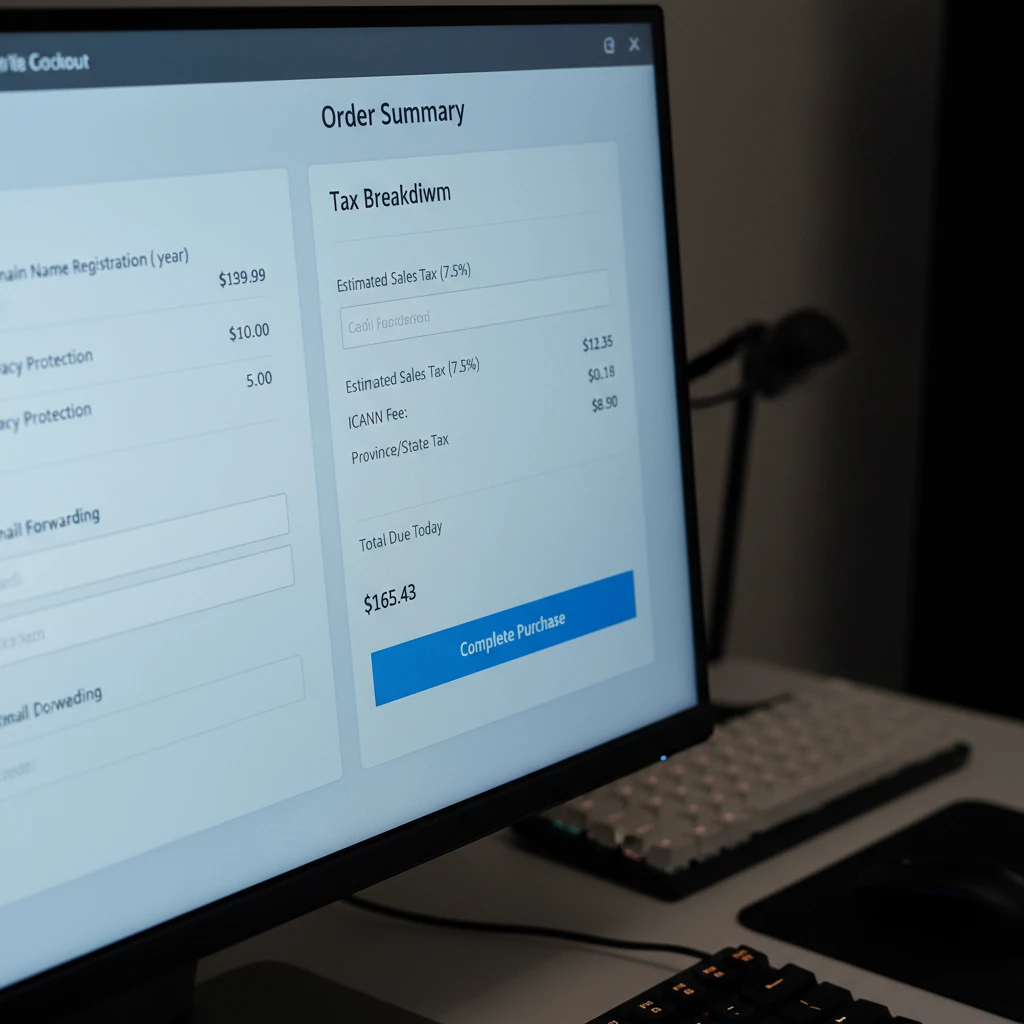
When you register a domain through a New Zealand accredited registrar (e.g., Crazy Domains, 1st Domains, Metaname), they will charge you 15% GST. You simply retain the tax invoice and claim this amount back in your GST return. This effectively reduces your holding costs by 15% compared to a non-registered hobbyist.
Buying from Offshore Registrars
The rules for buying from overseas giants like GoDaddy or Namecheap have evolved with the “GST on low-value imported goods” and “remote services” legislation. Large overseas registrars are now required to collect 15% GST from New Zealand consumers.
However, if you are a GST-registered business, you should provide your GST number to the offshore supplier. In many cases, they will then not charge you GST (zero-rating the supply to you). If they do charge you GST, you can generally claim it back, provided the invoice meets IRD standards. It is cleaner to provide your GST number upfront to avoid being charged the tax in the first place.
Issuing Compliant Tax Invoices
Professionalism in the secondary market is defined by your paperwork. When you close a sale, specifically for amounts over $200, you are legally required to issue a valid tax invoice within 28 days of a request.
A valid taxable supply information (formerly tax invoice) must contain:
- The words “Tax Invoice” in a prominent place.
- The name and registration number (GST number) of the supplier (you).
- The name and address of the recipient (the buyer).
- The date of issue.
- A description of the goods or services supplied (e.g., “Transfer of ownership for domain name [example.co.nz]”).
- The quantity or volume (usually “1”).
- The total amount payable and a statement that it includes GST, or the amount of GST shown separately.

Income Tax vs. GST: Understanding the Difference
It is a common misconception that if you are under the $60,000 threshold and not registered for GST, you do not have to pay any tax. This is incorrect. GST and Income Tax are separate regimes.
Even if you are not GST registered, if you are buying domains with the intention of selling them for a profit, the IRD views this as a business or a profit-making undertaking. Consequently, the net profit from your domain sales is subject to Income Tax.
Domain names held for trading are often considered “trading stock” rather than capital assets. This means the cost of purchasing the domains is deductible, but the revenue is fully taxable. Unlike capital gains (which are generally tax-free in NZ, subject to specific bright-line rules for property), income from trading stock is always taxable.
Frequently Asked Questions
Do I have to pay tax on selling a domain name in NZ?
Yes, if you acquired the domain with the intention of selling it, or if you are in the business of dealing in domain names, the profit is subject to Income Tax. If you are GST registered, you must also return GST on sales to NZ residents.
Is domain registration tax deductible in NZ?
Yes, if you are operating a business, domain registration and renewal fees are a deductible business expense for Income Tax purposes. If you are GST registered, you can also claim the GST portion back as an input tax credit.
Do I charge GST to overseas clients for domains?
Generally, no. If you sell a domain to a non-resident who is outside New Zealand, the supply is usually zero-rated (0% GST). You must retain evidence of their foreign residency, such as an overseas billing address or IP address.
What is the GST threshold for online businesses in NZ?
The mandatory GST registration threshold is $60,000 NZD in annual turnover (revenue, not profit). If your total sales from taxable activities exceed this amount in any 12-month period, you must register.
Are domain names capital assets or trading stock?
For domain traders, domain names are typically treated as trading stock (revenue account) rather than capital assets. This means proceeds from sales are treated as ordinary income, not capital gains.
How do I invoice a foreign company for GST in NZ?
When invoicing a foreign company, you issue an invoice with 0% GST (zero-rated). The invoice should still show your GST number and meet standard requirements, but the tax amount will be $0. Ensure you keep proof of the client’s offshore status.
