

A domain name sale agreement is a legally binding contract that outlines the specific terms of a domain transfer between a buyer and a seller. It details critical elements such as the exact domain name, the agreed purchase price, payment milestones, transfer obligations (including the release of the UDAI in New Zealand), and warranties regarding intellectual property rights, ensuring a secure and transparent transaction for both parties involved.
Conducting a private sale in the secondary domain market offers flexibility and potential cost savings by avoiding broker fees. However, without the safety net of a marketplace, the burden of security falls entirely on the participants. In New Zealand, where the digital economy is thriving, high-value .nz and .co.nz domains are frequently traded privately. To navigate this landscape safely, a robust domain name sale agreement template and a strict adherence to security protocols are non-negotiable.

Drafting a Simple Sales Agreement
When entering a private negotiation, the verbal (or email) agreement is rarely sufficient to protect your assets. A formal written contract serves as the roadmap for the transaction and the primary defense against disputes. For New Zealand domain sales, the agreement does not need to be overly complex, but it must be precise.
The primary purpose of the agreement is to synchronize the exchange of money for the digital asset. Unlike physical goods, a domain cannot be “returned” easily once transferred, making the clarity of the contract paramount. Below is a structural guide to creating your own agreement.
Essential Clauses for NZ Domain Contracts
To create a robust domain name sale agreement template, ensure the following sections are included. Note: This is for informational purposes and does not constitute legal advice. For high-value transactions, always consult a legal professional.
1. The Parties
Clearly identify the Seller and the Buyer. Include full legal names, physical addresses, and email addresses. If a company is involved, include the NZBN (New Zealand Business Number).
2. The Asset
Specify the exact domain name(s) being sold. It is crucial to be case-insensitive but character-perfect. If the sale includes auxiliary assets, such as matching social media handles, website files, or trademark rights, list them here explicitly.
3. Consideration (Price and Payment)
State the total purchase price and the currency (e.g., NZD or USD). Detail the payment method (Escrow, Bank Transfer, etc.) and the timeline. For example, “Payment shall be initiated within 48 hours of signing this Agreement.”
4. Transfer Obligations
This is critical for .nz domains. The seller must agree to unlock the domain and provide the UDAI (Unique Domain Authentication ID) to the buyer upon confirmation of funds. Define the timeframe for this action (e.g., “Seller will transfer the domain within 24 hours of Escrow.com confirming receipt of funds”).
5. Warranties and Representations
The Seller should warrant that they are the legal registrant of the domain, that they have the right to sell it, and that the domain is free of liens or legal disputes. This protects the buyer from purchasing stolen or encumbered assets.
6. Governing Law
For transactions within New Zealand, state that the agreement is governed by the laws of New Zealand. This simplifies legal recourse should a dispute arise.
Sample Template Structure
1. PARTIES: [Seller Name] AND [Buyer Name]
2. BACKGROUND: Seller is the registrant of [Domain Name] and wishes to sell to Buyer.
3. TERMS:
– Price: $[Amount] NZD
– Closing Date: [Date]
– Escrow Agent: [Name of Service]
4. EXECUTION: Signed by [Seller] and [Buyer]

Why You Should Avoid Direct Bank Transfers
In the context of a private sale, particularly with strangers found on the internet, direct bank transfers pose significant risks. While New Zealand’s banking system is secure, the nature of a domain transaction makes direct payments hazardous for both parties.
The Risk for the Buyer
If a buyer transfers funds directly to the seller’s bank account, they have zero leverage. The seller could simply refuse to transfer the domain, leaving the buyer with the difficult and expensive task of pursuing legal action. In many cases, if the seller is international, recovering funds is nearly impossible.
The Risk for the Seller
Sellers are not immune to risk. Fraudulent buyers may use stolen bank accounts to send money. Once the legitimate owner of the compromised account reports the fraud, the bank may reverse the transaction. If the seller has already transferred the domain, they lose the asset and the money. Furthermore, standard bank transfers do not offer “conditional release” mechanisms required for a simultaneous swap of asset and cash.
Using a Middleman Service (Escrow)
The gold standard for safely conducting a private sale is the use of an Escrow service. An escrow service acts as a neutral third party that holds the funds until all terms of the domain name sale agreement are met.
How Escrow Works in Domain Sales
- Agreement: Buyer and Seller agree on the price and terms.
- Funding: The Buyer sends the payment to the Escrow service, not the Seller.
- Verification: The Escrow service verifies the payment and notifies the Seller to transfer the domain.
- Transfer: The Seller transfers the domain (provides the UDAI) to the Buyer.
- Inspection: The Buyer confirms they have control of the domain.
- Release: The Escrow service releases the funds to the Seller.
For New Zealanders, while there are fewer local-specific escrow services for digital assets compared to real estate, global platforms like Escrow.com are widely accepted and support transactions in various currencies. Using such a service eliminates the “who goes first” dilemma.

Verifying Buyer Funds and Identity
Before drafting a contract or engaging an escrow service, performing due diligence on your counterparty is essential. In the anonymity of the internet, verifying who you are dealing with prevents wasted time and potential fraud.
Know Your Customer (KYC) Basics
Request verifiable contact information. A serious buyer should be willing to provide a phone number, a LinkedIn profile, or a business email address. If a buyer refuses to communicate outside of anonymous email relays or encrypted messaging apps, proceed with extreme caution.
Proof of Funds
For high-value domains (e.g., premium dictionary words or short acronyms), it is reasonable to request proof of funds before taking the domain off the market. This can be a redacted bank statement or a letter from their banker. However, the most secure method of verification is simply requiring the buyer to fund the Escrow account. Until the Escrow service confirms the funds are secured, the domain should remain in your control.
The Technical Transfer Process (UDAI)
In the New Zealand domain market, the transfer mechanism relies heavily on the UDAI (Unique Domain Authentication ID). Understanding this is crucial for fulfilling the technical obligations of your sales agreement.
What is a UDAI?
The UDAI is an 8-character password generated by the domain registrar. It is unique to that specific domain name. Possession of the UDAI allows a person to transfer the domain from one registrar to another or change the registrant details (the legal owner).
Steps to Transfer
Once the funds are secured in Escrow:
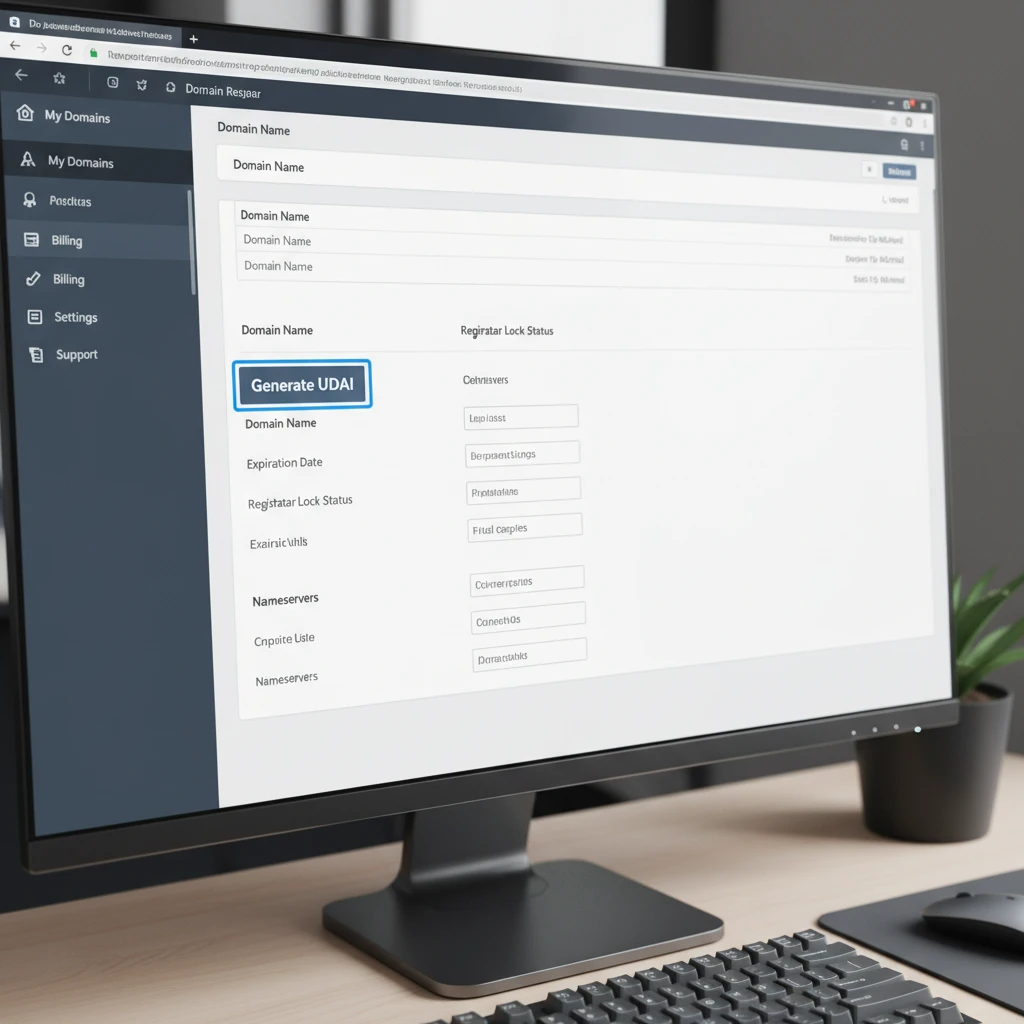
1. Seller: Logs into their registrar account and requests a new UDAI. It is vital to generate a fresh one to ensure no previous parties have access.
2. Seller: Provides the UDAI to the Buyer (usually via the Escrow platform’s interface).
3. Buyer: Provides the UDAI to their chosen registrar to initiate the transfer.
4. Completion: The registry updates the records. The Buyer confirms receipt, and the Seller gets paid.
Common Pitfalls in Private Sales
Even with a solid domain name sale agreement template, human error and sophisticated scams can derail a sale. Be aware of these common issues.
The “Appraisal” Scam
A buyer contacts you offering a high price but insists you first get an “independent appraisal” from a specific site they link to. This is a scam. The appraisal site is fake, designed to steal your credit card info or charge you for a worthless certificate. The buyer never intends to purchase the domain.
Incomplete Whois Updates
Sometimes, a transfer occurs technically (the registrar changes), but the contact details (Registrant Name) are not updated immediately. Ensure the agreement specifies that the sale is not complete until the legal registrant field reflects the buyer’s details. This prevents future disputes over ownership.
By combining a watertight sales agreement with the security of an escrow service and a clear understanding of the technical transfer process, you can conduct private domain sales in New Zealand with confidence and professionalism.
People Also Ask
Do I need a lawyer to sell a domain name?
For small transactions, a lawyer is not strictly necessary if you use a standard sales agreement and an escrow service. However, for high-value domains (five figures or more), legal counsel is highly recommended to draft custom indemnities and warranties.
Who pays the escrow fees in a domain sale?
This is a matter of negotiation. Typically, the fees are split 50/50 between the buyer and the seller. However, in some cases, the buyer may agree to pay all fees to sweeten the deal, or the seller might absorb them to facilitate a quick sale.
Is a domain sale agreement legally binding in NZ?
Yes, a properly drafted and signed contract regarding the sale of a domain name is legally binding in New Zealand, provided it meets the standard requirements of contract law (offer, acceptance, consideration, and intention to create legal relations).
Can I sell a domain name I just bought?
Generally, yes. However, some registrars enforce a 60-day transfer lock on newly registered or recently transferred domains. You can still agree to sell it, but the technical transfer might have to wait until the lock expires.
What happens if the buyer charges back after the transfer?
If you used a direct payment method like PayPal or a credit card without escrow, you are at high risk. If you used a licensed Escrow service, the funds are usually secured and verified before the domain is released, making chargebacks significantly harder and protecting the seller.
How do I determine the value of my domain name?
Domain value is subjective and depends on factors like keyword popularity, length, extension (.co.nz vs .nz), and brandability. Comparing recent sales of similar domains (comparables) on marketplaces like Sedo or DomainNameSales is the best way to estimate market value.
