

NZ domain valuation services provide professional, data-driven appraisals of New Zealand-specific web addresses (.co.nz, .nz) for commercial transactions, financial reporting, and legal disputes. These services utilize market comparables, traffic metrics, and brand authority analysis to determine the fair market value of digital assets within the local regulatory framework.
The Critical Importance of Accurate Digital Asset Valuation
In the modern digital economy, a domain name is often the most valuable piece of intellectual property a business owns. However, unlike physical real estate, the value of a digital asset is not immediately visible to the untrained eye. Accurate valuation is the cornerstone of digital asset management, ensuring that businesses do not undervalue their proprietary online presence or overpay for acquisitions.
For New Zealand businesses, the distinction between a generic .com and a local .co.nz or .nz extension is significant. Local domains carry inherent trust signals, search engine optimization (SEO) benefits for local queries, and brand protection within the jurisdiction. A professional valuation must account for these geographic nuances.

Defining Fair Market Value in the Digital Space
Fair Market Value (FMV) in the context of domain names is defined as the price at which the property would change hands between a willing buyer and a willing seller, neither being under any compulsion to buy or to sell and both having reasonable knowledge of relevant facts. In the niche of nz domain valuation services, this involves analyzing comparable sales (comps) specifically within the New Zealand market, rather than relying solely on global sales data which may skew expectations.
The Role of Brand Equity and SEO
A domain’s value is rarely just about the string of characters. It encompasses the history attached to that string. Professional valuers analyze the backlink profile (the number and quality of other sites linking to the domain), the domain authority, and the age of the domain. A .co.nz domain that has been active since the early 2000s with a clean history is exponentially more valuable than a newly registered domain due to its established trust with search engines like Google. Ignoring these metrics can lead to substantial financial miscalculations.
Valuation Services for Corporate M&A and Balance Sheets
Mergers and Acquisitions (M&A) activity in New Zealand increasingly revolves around digital capability. When one company acquires another, the allocation of the purchase price to specific assets is a critical accounting step. Digital assets, including domain names, websites, and associated social media handles, must be valued separately from general “goodwill.”
Purchase Price Allocation (PPA)
Under International Financial Reporting Standards (IFRS), which are adhered to by major NZ entities, intangible assets must be identified and valued. A vague estimation is insufficient for audit purposes. NZ domain valuation services provide the documentation required to defend asset values during an audit. This process involves isolating the domain’s value from the operating business to ensure the balance sheet accurately reflects the company’s digital holdings.

Insolvency and Liquidation
Unfortunately, not all business ventures succeed. In cases of liquidation or bankruptcy, liquidators have a fiduciary duty to maximize the return for creditors. Often, a premium domain name is the most liquid asset a failed technology company possesses. Professional valuation ensures that these assets are not sold for pennies on the dollar in a fire sale, but are instead marketed at a price that reflects their true commercial potential.
Methodologies Used in NZ Domain Valuation
To arrive at a defensible figure, professional appraisers typically employ a weighted approach using three primary methodologies. Understanding these methods helps stakeholders appreciate the rigor behind the final valuation certificate.
1. The Market Approach (Comparable Sales)
This is the most common method for domain valuation. It involves looking at recent sales of similar domains. For a New Zealand context, this means analyzing sales of similar length, keyword popularity, and extension (.co.nz vs .nz). For example, if ‘insurance.co.nz’ sold for a six-figure sum, it sets a precedent for ‘loans.co.nz’. Valuers access private databases of sales that are not publicly reported to build a robust comparison.
2. The Income Approach
This method is utilized for developed websites or domains that are currently generating revenue (e.g., parking revenue or lead generation). The value is calculated based on the Net Present Value (NPV) of expected future cash flows. This requires sophisticated modeling of traffic growth, conversion rates, and the discount rate appropriate for the digital asset risk profile.
3. The Cost Approach
The cost approach calculates what it would cost to recreate the asset from scratch. While less relevant for premium “category killer” domains (which cannot be recreated), it is useful for valuing the SEO equity built into a domain. How much marketing spend would be required to achieve the same organic search ranking and traffic volume as the domain in question? This often results in a significant valuation figure for established domains.
Risk Assessment and Due Diligence in Transfers
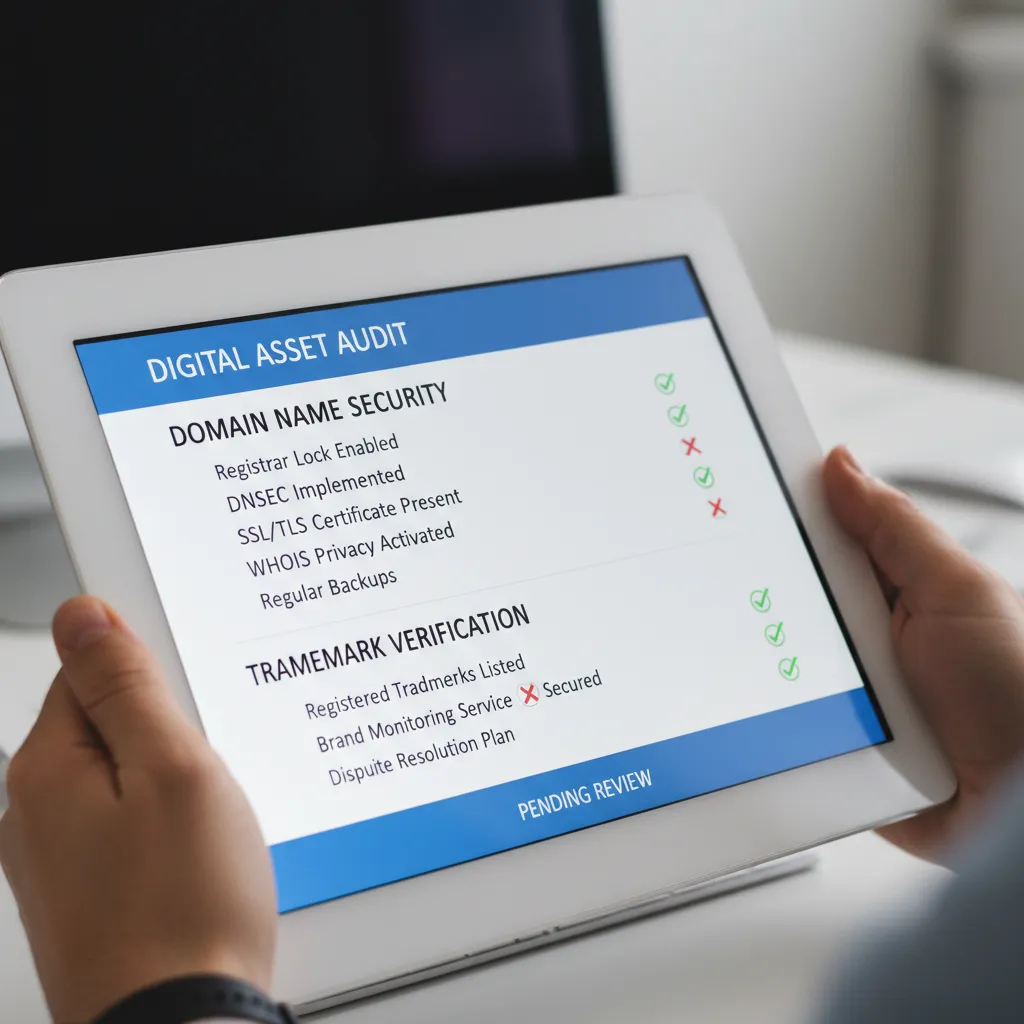
Valuation is inextricably linked to due diligence. A high valuation is meaningless if the asset carries toxic legal liabilities. Comprehensive nz domain valuation services always include a risk assessment component.
Trademark Infringement Analysis
In New Zealand, the Intellectual Property Office of New Zealand (IPONZ) maintains the register of trademarks. A domain name that infringes on an existing NZ trademark has a value of effectively zero—or negative value, considering potential legal fees. Valuers check the domain against IPONZ databases to ensure the buyer is not acquiring a lawsuit. This is particularly vital for .nz domains, where the Dispute Resolution Service (DRS) can strip ownership if the registration is found to be unfair.
Traffic Quality and Penalties
Not all traffic is good traffic. A domain may have been used previously for spamming, phishing, or distributing malware. Such domains may be blacklisted by Google or major ISPs. Technical due diligence involves scanning the domain’s history using tools like the Wayback Machine and checking spam blacklists. If a domain has a “manual penalty” from Google, its commercial value is severely impacted until that penalty is successfully revoked.
Tax Reporting for Digital Assets in New Zealand
The tax treatment of domain names in New Zealand is a complex area that requires specialized valuation for compliance with the Inland Revenue Department (IRD). Whether a domain is treated as capital or revenue depends on the intent of the acquisition and the nature of the business.
Capital vs. Revenue Account
Generally, if a business buys a domain name to use as a permanent asset (the “shop front” of the digital business), it is often treated as a capital asset. However, if a business is in the trade of buying and selling domains (domaining), the inventory is treated on the revenue account, and profits are taxable income. Accurate valuation at the start and end of financial years is crucial for calculating the correct tax liability.

Depreciation and Amortization
Under certain circumstances, the cost of acquiring a domain name may be amortized over its useful life. However, because domain names can be renewed indefinitely, they are often considered to have an indefinite useful life, meaning they are not amortized but are subject to annual impairment testing. This impairment testing requires a fresh valuation each year to determine if the asset’s market value has dropped below its book value.
GST Implications
For transactions involving nz domain valuation services and the subsequent sale of the asset, Goods and Services Tax (GST) applies if the seller is GST registered. Valuations should clearly state whether the estimated figure is inclusive or exclusive of GST (15%) to avoid disputes during settlement.
Selecting a Valuation Partner
When seeking a valuation for New Zealand domains, generalist appraisers often miss the mark. It is essential to choose a partner who understands the local digital ecosystem.
Key Credentials to Look For
- Local Market Data Access: Do they have access to sales data specifically for .co.nz and .nz, or are they relying on .com multipliers?
- Technical Competence: Can they analyze SEO metrics, backlink toxicity, and server history?
- Legal Awareness: Are they familiar with the Domain Name Commission (DNC) policies and IPONZ regulations?
- Detailed Reporting: Will you receive a simple number, or a comprehensive 20+ page report detailing the methodology, comparable sales, and risk factors?
For high-stakes transactions, such as the sale of a premium generic NZ domain (e.g., ‘property.co.nz’ or ‘cars.co.nz’), a certified appraisal is not an optional expense—it is an investment in negotiation leverage and due diligence.
Frequently Asked Questions
How much is a .co.nz domain generally worth?
There is no single average price as value depends heavily on the keywords, length, and commercial potential. While a standard registration costs roughly $20-$40 NZD per year, aftermarket values for premium .co.nz domains can range from $500 to well over $100,000 NZD for high-demand, single-word generic terms.
Why is domain valuation necessary for M&A?
In M&A, domain valuation is necessary to accurately allocate the purchase price to intangible assets on the balance sheet. It ensures compliance with accounting standards (like IFRS) and helps in identifying the true value of the digital intellectual property being acquired, separate from general goodwill.
Can I value a NZ domain name myself?
While automated tools exist, they are notoriously inaccurate for high-value domains as they cannot assess brandability or legal risks. For commercial transactions, tax reporting, or legal disputes, a professional valuation is required to provide a defensible, objective figure based on market data and technical analysis.
What is the difference between .co.nz and .nz for valuation?
Historically, .co.nz is the most established and trusted extension in New Zealand, often commanding a higher value due to consumer familiarity. However, the shorter .nz extension is gaining popularity. A valuation must consider the specific market perception and traffic trends for the specific extension in question.
Is a domain valuation tax-deductible in New Zealand?
Generally, if the valuation is sought as part of the process of acquiring a capital asset, it may be capitalized as part of the asset’s cost base. If it is for general business administration or monitoring the value of current assets, it may be deductible. You must consult with a qualified NZ tax accountant for your specific situation.
How long does a professional domain appraisal take?
A comprehensive professional appraisal typically takes between 3 to 5 business days. This allows the analyst time to verify traffic data, research comparable sales, check legal trademarks via IPONZ, and compile a detailed report. Automated or instant valuations are rarely sufficient for commercial purposes.
