

Subdomain Strategies
A subdomain SEO strategy involves organizing a website’s architecture using distinct child domains to host specific content verticals, regional variations, or technical applications. For digital asset brokerages, this approach segregates high-security trading platforms from marketing content, allowing for targeted keyword optimization, distinct technical environments, and specialized authority building within the New Zealand market.
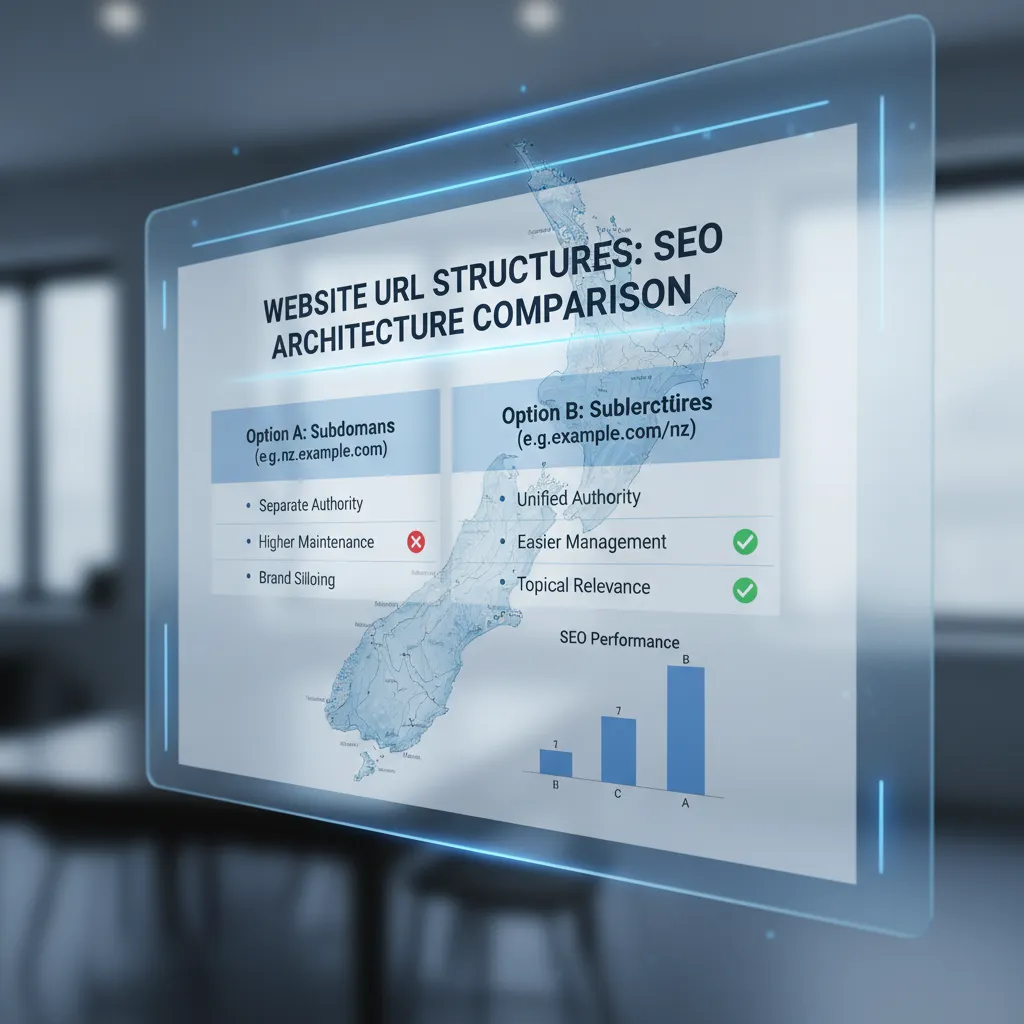
Subdomains vs. Subdirectories for Geo-SEO
In the competitive landscape of New Zealand’s digital asset brokerage sector, the architectural decision between subdomains (e.g., auckland.crypto-broker.co.nz) and subdirectories (e.g., crypto-broker.co.nz/auckland) is pivotal. While Google has historically stated that their crawlers treat both structures similarly, the practical implications for SEO authority and technical management differ significantly.
A subdomain is viewed by search engines as a distinct entity from the root domain. This means that link equity (the SEO value passed through backlinks) does not flow as automatically or efficiently between the root and the subdomain as it does with subdirectories. However, for a digital asset brokerage, there are compelling reasons to consider a subdomain strategy.
The Case for Subdomains in FinTech
For financial institutions and crypto-asset platforms, security and technical separation are often paramount. A subdomain strategy allows for:
- Platform Segregation: Hosting the trading engine on
trade.broker.co.nzwhile keeping the marketing content onwww.broker.co.nzensures that traffic spikes on the blog do not impact the latency of the trading execution engine. - Regional Autonomy: If your brokerage operates under different regulatory licenses in New Zealand versus Australia, a subdomain structure (e.g.,
nz.broker.comvsau.broker.com) provides a clean separation of legal disclaimers and compliance documents. - Distinct Content Strategies: If your brokerage offers a distinct “Academy” or “Research” arm that targets a completely different set of keywords (informational vs. transactional), a subdomain can signal to Google that this section has a unique purpose.
The Case for Subdirectories (Consolidated Authority)
Conversely, subdirectories consolidate domain authority. Every backlink earned by your educational content benefits your transactional pages. For a new NZ brokerage trying to break into the market, splitting authority across multiple subdomains can be detrimental. Unless there is a strict technical or legal requirement, subdirectories are generally recommended for purely geo-targeted content within the same country.
Strategic Use Cases for Digital Asset Brokers
When developing a subdomain SEO strategy, it is essential to align the architecture with business goals. In the context of cryptocurrency and digital assets, the user journey is often bifurcated between learning and trading. Here is how to leverage subdomains effectively.
The “App” vs. “Marketing” Split
The most common and effective use of subdomains in this niche is separating the application from the marketing site. Search engines prioritize content-heavy pages for ranking. Your trading dashboard, which is behind a login wall, has little SEO value. By placing it on app.yourbrokerage.co.nz, you keep your main domain focused purely on crawlable, indexable marketing content.
The “Institutional” vs. “Retail” Split
Institutional clients searching for “OTC crypto desk NZ” have a different search intent than retail users searching for “how to buy bitcoin NZ.” Institutional pages often require a different design language, different navigation, and a different tone of voice. A subdomain like institutional.yourbrokerage.co.nz allows you to create a completely different user experience (UX) without conflicting with the retail site’s structure.

Setting Up City-Specific Landing Pages
If you decide to utilize subdomains for geo-targeting—perhaps to create hyper-local microsites for Auckland, Wellington, and Christchurch—the execution must be flawless to avoid “doorway page” penalties.
Avoiding Duplicate Content
A major risk with auckland.broker.co.nz and wellington.broker.co.nz is duplicate content. You cannot simply copy the same “Buy Bitcoin” page and swap the city name. Google will filter these out. Each subdomain must offer unique value:
- Local Market Data: Display real-time sentiment analysis specific to NZ regions if available.
- Local Meetups and Events: List crypto-meetups or educational seminars specific to that city.
- Physical Presence: If you have OTC desks in these cities, feature the specific team members and office photos.
Local Schema Implementation
Regardless of the URL structure, Schema.org markup is non-negotiable. For subdomains, you must treat each as a separate entity in your schema markup.
{
  "@context": "https://schema.org",
  "@type": "FinancialService",
  "name": "Kiwi Digital Assets - Auckland",
  "url": "https://auckland.kiwidigital.co.nz",
  "areaServed": "Auckland",
  "description": "Premium digital asset brokerage servicing the greater Auckland region."
}
DNS Setup for Subdomains
Implementing a subdomain strategy requires precise configuration of the Domain Name System (DNS). Improper setup can lead to security warnings or site outages, destroying trust in a financial brand.
A Records vs. CNAME Records
To set up a subdomain, you generally use one of two DNS record types:
- A Record: Points the subdomain (e.g.,
pro.broker.co.nz) to a specific IP address. This is used when the subdomain is hosted on a different server than the main site (common for trading platforms). - CNAME Record: Points the subdomain to another domain name. This is often used when using third-party landing page software (like Unbounce or HubSpot) to host your geo-pages.

SSL Certification Management
Security is the currency of the digital asset world. Users will not deposit funds if they see a “Not Secure” warning. When using subdomains, you have two SSL options:
- Wildcard SSL (*.domain.co.nz): Secures the main domain and an unlimited number of subdomains. This is efficient for scaling city-specific pages.
- Single Domain SSL: Requires a separate certificate for each subdomain. This is more manageable if the subdomains are hosted on completely different infrastructure providers.
Tracking Performance by Region
One of the distinct advantages of a subdomain strategy is the cleanliness of data reporting. Because search engines and analytics platforms view subdomains as separate properties, you can isolate performance metrics with granular precision.
Google Search Console (GSC) Verification
You should verify each subdomain as a separate property in Google Search Console. This allows you to see exactly which keywords are driving traffic to your Auckland site versus your Wellington site. You should also verify a “Domain Property” which aggregates data across all subdomains to see the holistic health of your brand.
Google Analytics 4 (GA4) Configuration
In GA4, you have a strategic choice:
- Cross-Domain Tracking: If the user journey moves from
www(marketing) toapp(trading), you must configure cross-domain tracking in the Data Stream settings. This ensures the session is not broken, and you can attribute the conversion back to the original marketing source. - Separate Properties: If the subdomains operate as distinct business units (e.g., an advisory arm vs. a self-service brokerage), keeping them in separate GA4 properties might be cleaner for reporting to different department heads.

Risks and Mitigation
While powerful, subdomains carry SEO risks. The primary concern is Keyword Cannibalization. This occurs when your main domain and your subdomain compete for the same keyword, confusing Google about which one to rank. To fix this, ensure strictly distinct keyword mapping. The root domain should target broad terms like “Crypto Broker NZ,” while subdomains target long-tail, geo-specific terms like “OTC Ethereum Trade Auckland.”
Additionally, Authority Dilution is a concern. If you launch five city subdomains, your link-building efforts are split five ways. You must engage in a robust internal linking strategy. The footer of your main site should link to key subdomains, and the subdomains should reference the parent brand heavily to pass authority back and forth.
People Also Ask
Is a subdomain better than a subdirectory for SEO?
Generally, subdirectories (folder paths) are better for SEO because they consolidate domain authority into a single property. However, subdomains are preferred for distinct business lines, disparate technical environments, or when content topics vary drastically from the main site.
Does Google treat subdomains as separate sites?
Yes, Google treats subdomains as distinct entities. While there is some association with the root domain, they are largely evaluated independently regarding authority and trust flow, which requires separate link-building strategies for each.
How do I track subdomains in Google Analytics?
In GA4, you can track subdomains within the same Data Stream by default. However, to track the user journey across the root domain and subdomains as a single session, you must ensure “Cookie Domain” is set to auto and configure cross-domain tracking if the subdomains span different top-level domains.
Can I use subdomains for different cities in New Zealand?
Yes, you can use subdomains like wellington.brand.co.nz. However, this is resource-intensive as each subdomain requires unique content to avoid duplicate content penalties. For most businesses, subdirectories like brand.co.nz/wellington are more efficient.
Do I need a wildcard SSL for subdomains?
A wildcard SSL certificate is the most efficient way to secure multiple subdomains, as it covers *.yourdomain.com. Alternatively, you can purchase individual SSL certificates for each subdomain, but this becomes difficult to manage as you scale.
What is the best subdomain strategy for a crypto exchange?
The industry standard for crypto exchanges is to use the root domain (www.exchange.com) for marketing, education, and user acquisition, and a dedicated subdomain (app.exchange.com or trade.exchange.com) for the actual trading platform to ensure security and performance isolation.
