

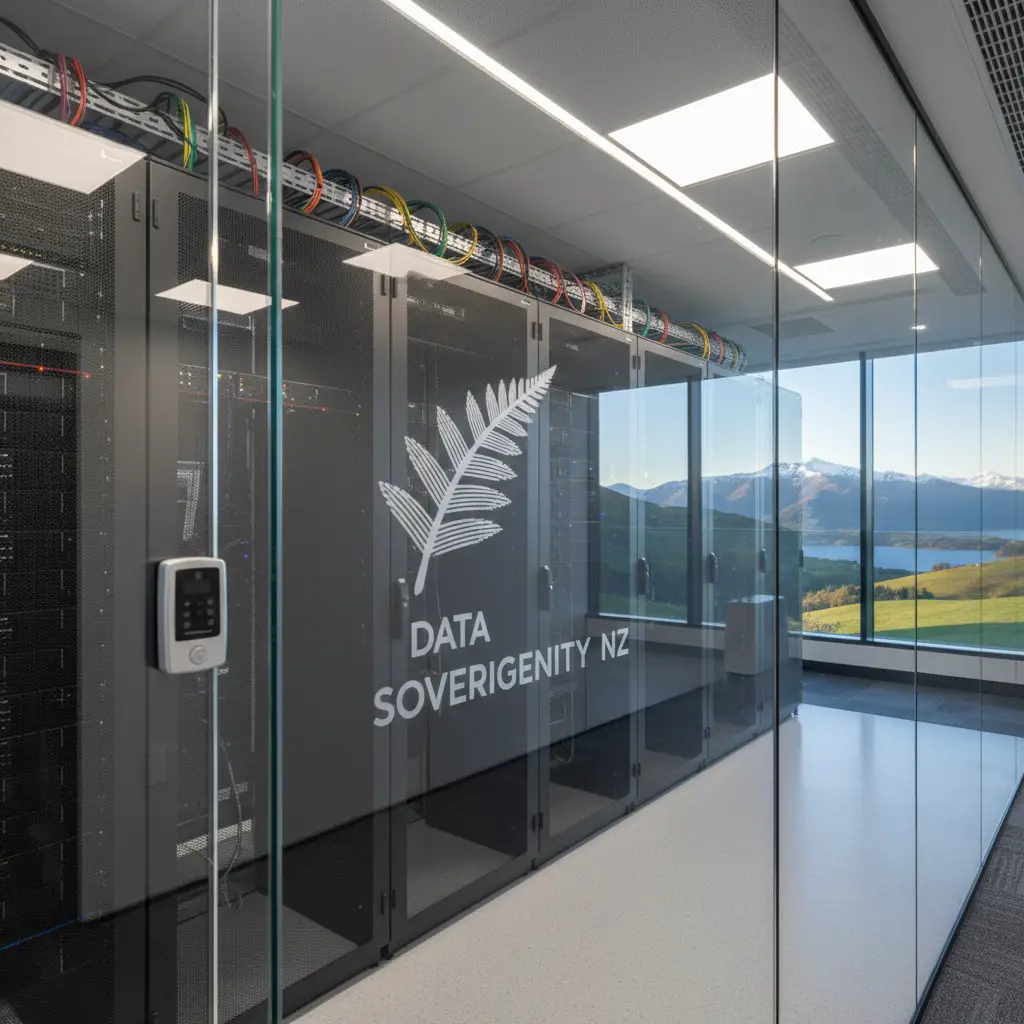
Hosting Requirements NZ
Web hosting in New Zealand requires strict adherence to the Privacy Act 2020 to ensure data sovereignty and legal compliance for domestic businesses. Utilizing local servers significantly reduces latency, optimizing Time to First Byte (TTFB) for NZ audiences. Key requirements include robust DDoS protection, Tier 3 data center reliability, and sustainable energy usage to align with national environmental standards.
For digital asset brokerages and high-performance advisory firms, selecting the right infrastructure is not merely a technical decision—it is a strategic asset. The digital landscape in Aotearoa is unique, governed by specific legislative frameworks and geographical constraints that dictate the performance and security of your online presence. Whether you are managing high-volume transactional data or sensitive client portfolios, understanding the nuances of web hosting New Zealand is critical for operational success.
What is Data Sovereignty in the NZ Context?
Data sovereignty refers to the concept that digital data is subject to the laws of the country in which it is located. For New Zealand businesses, particularly those in the financial and advisory sectors, this is the most critical factor when selecting a web host. Relying on offshore servers (commonly in the US or Australia) exposes your sensitive business data to foreign jurisdictions, such as the US CLOUD Act, which can compel service providers to disclose data regardless of where it is stored.
The Privacy Act 2020 Implications
The introduction of the Privacy Act 2020 has tightened the requirements for how organizations handle personal information. If you host client data offshore, you remain liable for ensuring that the offshore provider offers protection comparable to New Zealand law. Hosting locally simplifies compliance significantly. By keeping data within NZ borders, you ensure that:
- Jurisdictional Clarity: Disputes and breaches are handled under NZ law.
- Mandatory Reporting: You can more easily comply with the requirement to report serious privacy breaches to the Privacy Commissioner.
- Client Trust: New Zealand clients, especially in government and finance, often mandate that their data remains onshore.
Māori Data Sovereignty
An increasingly important consideration in the NZ digital landscape is Māori Data Sovereignty. This principle asserts that data subject to Māori rights and interests should be controlled by Māori. For digital asset brokerages dealing with Iwi organizations or indigenous assets, utilizing local hosting providers that acknowledge and facilitate these governance structures is becoming a competitive necessity.
How Does Local Hosting Improve Site Performance?
Latency is the delay before a transfer of data begins following an instruction for its transfer. In the context of web hosting New Zealand, physical distance is the primary enemy of speed. While light travels fast in fiber optics, it is not instantaneous. A request traveling from Auckland to a server in Virginia (USA) and back takes significantly longer than a request traveling from Auckland to a data center in Albany or Hamilton.
The Impact on Core Web Vitals and SEO
Google’s Core Web Vitals specifically measure user experience metrics like Largest Contentful Paint (LCP) and First Input Delay (FID). High latency directly degrades these scores.
- TTFB (Time to First Byte): Hosting in Sydney typically adds 30-50ms of latency for NZ users compared to local hosting. Hosting in the US can add 150-200ms.
- Conversion Rates: For digital asset brokerages, milliseconds matter. A delay of one second in page response can result in a 7% reduction in conversions. When trading assets or providing real-time advisory data, lag is unacceptable.

Submarine Cable Connectivity
New Zealand is connected to the world via major submarine cables like the Southern Cross Cable and Hawaiki. However, relying on these international links introduces points of failure. Local hosting utilizes the domestic backbone, ensuring that your service remains accessible to local clients even if international bandwidth is constricted or severed.
Why is Green Hosting a Strategic Advantage?
New Zealand’s electricity grid is one of the cleanest in the world, with a high percentage of energy generated from renewable sources like hydro, geothermal, and wind. This presents a unique opportunity for businesses to align their digital footprint with their Corporate Social Responsibility (CSR) goals.
Sustainable Infrastructure
Choosing a local host often means your digital assets are powered by renewable energy. Many top-tier NZ data centers are now certifying their operations as carbon-zero. For a Digital Asset Brokerage, this is a powerful marketing narrative. Investors and clients are increasingly scrutinizing the Environmental, Social, and Governance (ESG) credentials of their partners.

Energy Efficiency Ratings (PUE)
When evaluating web hosting New Zealand providers, ask for their Power Usage Effectiveness (PUE) rating. A PUE closer to 1.0 indicates high efficiency. NZ’s temperate climate allows for free air cooling for much of the year, reducing the energy required for air conditioning—a major cost and carbon driver in data centers globally.
How to Choose Hosting for High-Traffic Assets?
High-traffic sites, such as trading platforms or popular advisory portals, require infrastructure that goes beyond basic shared hosting. The “Commercial” intent of your search suggests you are looking for enterprise-grade solutions.
VPS vs. Dedicated vs. Cloud
For a brokerage firm, shared hosting is insufficient due to the “noisy neighbor” effect where other sites can drag down your performance.
- VPS (Virtual Private Server): A good entry point, offering dedicated resources within a virtualized environment.
- Dedicated Servers: You rent the entire physical machine. This offers maximum performance and security but requires higher technical management.
- Cloud Hosting (Public/Private): The most scalable option. NZ providers like Catalyst Cloud or Datacom offer local cloud solutions that rival AWS or Azure but with data sovereignty benefits.
Scalability and Uptime SLAs
Your Service Level Agreement (SLA) is your insurance policy. Look for a provider offering a 99.99% uptime guarantee. For high-traffic events (e.g., market volatility), your host must offer “elasticity”—the ability to automatically scale resources up to handle a spike and down when traffic normalizes.

What are the Security Standards for Digital Brokerages?
In the digital asset brokerage niche, trust is the currency. A security breach does not just cause downtime; it destroys reputation. Hosting requirements in NZ for financial services are stringent.
DDoS Protection
Distributed Denial of Service (DDoS) attacks are common against financial institutions. Your NZ host must have network-level DDoS mitigation that scrubs malicious traffic before it reaches your server. Local providers often have scrubbing centers within NZ to prevent latency during an attack.
Backup and Disaster Recovery (DR)
Data redundancy is non-negotiable. Ensure your host provides:
- Off-site Backups: Data should be backed up to a geographically separate location (e.g., primary in Auckland, backup in Christchurch) to survive a regional disaster.
- Immutable Backups: Backups that cannot be altered or deleted by ransomware.
- RTO/RPO: Clear objectives on Recovery Time (how fast you are back up) and Recovery Point (how much data you might lose).
People Also Ask
Is it better to host a website in New Zealand or Australia?
For businesses targeting a New Zealand audience, hosting in New Zealand is superior due to lower latency (faster speeds) and data sovereignty compliance under the Privacy Act 2020. While Australian hosting can be cheaper, the speed penalty and potential legal complexities regarding data jurisdiction make NZ hosting the better choice for serious enterprises.
How does server location affect SEO in New Zealand?
Server location is a signal to search engines like Google about your target audience. Hosting in NZ with a local IP address helps signal relevance to users searching from New Zealand. Furthermore, the speed benefits of local hosting improve Core Web Vitals, which is a direct ranking factor for Google.
What are the costs of business web hosting in New Zealand?
Costs vary significantly based on requirements. Basic business shared hosting ranges from $20-$50 NZD per month. VPS hosting typically costs between $80-$200 NZD per month, while dedicated servers and enterprise cloud solutions can range from $300 to over $1000 NZD per month depending on resource allocation and management services.
Does the Privacy Act 2020 require data to be stored in NZ?
The Act does not explicitly ban offshore storage, but it requires that if you send data offshore, you must ensure the destination has comparable privacy safeguards. Storing data within New Zealand is the most straightforward way to ensure compliance and avoid the legal complexities of cross-border data transfer assessments.
What is Tier 3 data center certification?
A Tier 3 data center is a facility with redundant capacity components and multiple independent distribution paths serving the IT equipment. It guarantees 99.982% availability. For digital asset brokerages, Tier 3 is the recommended minimum standard to ensure that maintenance or equipment failures do not cause service outages.
Can I use a .nz domain with overseas hosting?
Yes, you can point a .nz domain to a server located anywhere in the world. However, doing so negates the speed and data sovereignty benefits. For the best SEO and user experience results, it is recommended to pair a .nz domain with local web hosting New Zealand infrastructure.
