


Naming Your NZ Startup
NZ startup domain names are digital identities ending in .nz or .co.nz, specifically chosen to represent a New Zealand-based business. Selecting the right domain involves checking the .nz registry for availability, ensuring local brand relevance, and securing legal rights to build trust with Kiwi consumers while maintaining global scalability for future growth.
How do you conduct availability checks in the .nz registry?
The first step in any digital strategy for a New Zealand startup is verifying the availability of your desired name within the local registry. The .nz domain space is managed by the Domain Name Commission (DNC), which oversees the registry and ensures that the ecosystem remains fair and competitive. Unlike generic top-level domains (gTLDs) like .com, the .nz registry offers specific localized extensions that signal geographic relevance to both users and search engines.
To check availability, founders should use an authorized registrar or the official WHOIS lookup tool provided by the DNC. It is important to check both the shorter .nz extension and the traditional .co.nz suffix. While .co.nz was the standard for decades, the introduction of direct .nz registrations in 2014 has provided a more modern, concise option for startups. Securing both is often recommended to prevent “cybersquatting” or brand confusion by competitors.
Understanding the .nz vs .co.nz distinction
Choosing between .nz and .co.nz often comes down to brand identity. The .co.nz extension is deeply established and carries a sense of longevity and commercial trust. However, the shorter .nz is increasingly popular among tech-focused startups and creative agencies for its brevity and modern aesthetic. If your primary audience is the New Zealand public, having a .nz presence is a powerful trust signal that can improve click-through rates (CTR) in local search results.
The importance of the WHOIS database
When a domain appears taken, the WHOIS database is your primary resource. It provides technical details about the domain’s registration. In New Zealand, privacy settings often redact personal information, but you can still see the registrar and the date of expiry. If a domain is registered but not in use, this information becomes the starting point for a potential acquisition through a domain broker. Monitoring the registry for pending deletes can also be a strategy for securing high-value, short-form names that are about to expire.
How do you balance brandability with local keywords?
For an NZ startup, the domain name is a tug-of-war between “brandability” (a unique, catchy name) and “SEO keywords” (terms people search for). A brandable name like “Xero” allows for a unique identity that can be trademarked easily, whereas a keyword-rich name like “AucklandPlumbing.co.nz” provides immediate SEO benefits but lacks a distinct brand personality.
The modern approach favors brandability with a subtle nod to the local market. Using Māori words or New Zealand slang can create instant rapport with the local community, provided the usage is culturally respectful and appropriate. This creates a “local hero” vibe that distinguishes the startup from international giants. However, founders must ensure the name is easy to spell and pronounce over the phone, as word-of-mouth remains a potent marketing force in New Zealand’s relatively small business ecosystem.

The role of geo-modifiers in startup domains
If your startup provides a localized service, including a geo-modifier (like “NZ” or “Kiwi”) can be beneficial. For example, “FintechNZ.co.nz” immediately tells the user what the company does and where it operates. While this can limit you if you plan to expand to Australia or the US later, it is an excellent way to capture high-intent local traffic during the early growth stages. The key is to ensure the geo-modifier doesn’t make the domain excessively long; ideally, keep it under 15 characters.
Psychology of the Kiwi consumer
New Zealanders often exhibit a preference for local businesses. A .nz domain acts as a digital “Made in New Zealand” stamp. When a user sees a .nz domain in the search results, they subconsciously assume the prices will be in NZD, the shipping will be local, and the customer support will be in a similar time zone. This psychological shortcut is a significant advantage that global .com domains often lack in the New Zealand market.
How do you avoid trademark issues in New Zealand?
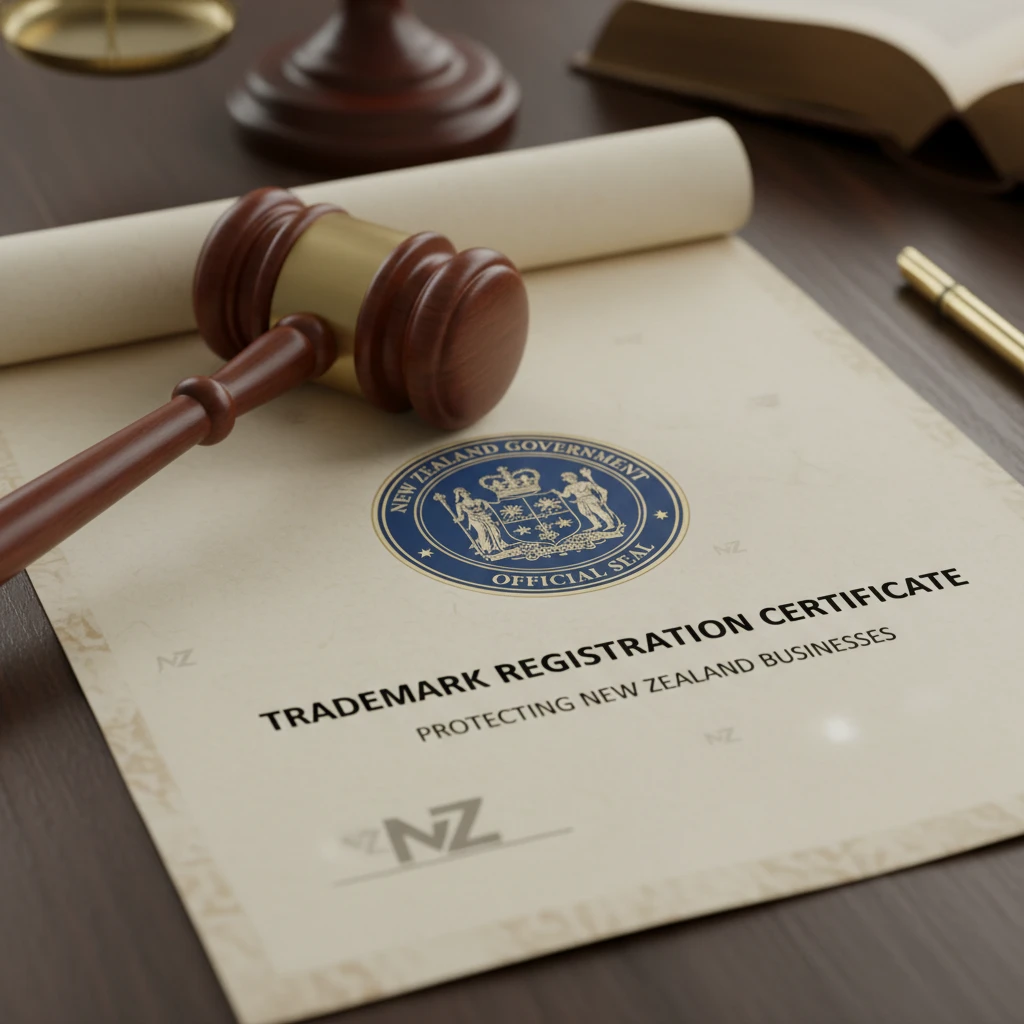
Securing a domain name does not grant you the legal right to use that name in trade. This is a common misconception among first-time founders. In New Zealand, trademark rights are managed by the Intellectual Property Office of New Zealand (IPONZ). Before finalizing your domain choice, it is mandatory to search the IPONZ Trade Mark Register to ensure you aren’t infringing on an existing business’s intellectual property.
Infringement can lead to costly legal battles, forced rebranding, and the loss of your domain name through the Domain Name Commission’s dispute resolution process. It is not enough for the names to be identical; if they are “confusingly similar” within the same industry, you could face a challenge. For instance, if “KiwiSaaS.co.nz” exists, registering “TheKiwiSaaS.nz” for a similar service would likely result in a trademark dispute.
Searching the IPONZ database effectively
When searching the IPONZ database, look for registered trademarks in the “classes” relevant to your business. If you are a software company, you would focus on Class 9 and Class 42. It is also wise to check the Australian trademark registry (IP Australia), as many businesses operate across the Tasman, and a conflict there could hinder your expansion plans. Professional legal advice is highly recommended if your chosen name is close to an existing brand.
Common Law and ‘Passing Off’
Even if a name isn’t officially trademarked, an existing business may have “common law” rights if they have built a reputation under that name. In New Zealand, the Fair Trading Act 1986 prohibits misleading and deceptive conduct. If your domain name leads consumers to believe your startup is affiliated with another established brand, you could be sued for “passing off.” This makes thorough market research just as important as a formal trademark search.
How do you future-proof your domain for international expansion?
While a .nz domain is perfect for launching in Wellington or Auckland, most startups eventually eye global markets. Future-proofing means ensuring your brand can transition smoothly to a .com or other regional extensions (like .com.au or .co.uk) without losing its identity. If the .com version of your .nz domain is owned by a massive corporation or a domain squatter asking for six figures, you may want to reconsider the name before you invest heavily in branding.
A common strategy is to launch with the .nz domain to capture the local market and prove the business model, while simultaneously negotiating for the .com or securing social media handles. If your brand name is a common word, expansion will be difficult. Unique, invented names (neologisms) are generally easier to secure across all TLDs and social platforms, making them the gold standard for scalable startups.

The ‘First-to-File’ vs ‘First-to-Use’ reality
Different countries have different rules. While New Zealand recognizes some rights for the first person to use a name, many other jurisdictions (including China) are “first-to-file.” If you plan to expand, you should ideally register your trademarks and domains in your target markets as soon as possible. Delaying this can result in “brand hijacking,” where local entities register your name in their country and demand a ransom when you try to enter the market.
Localized subdirectories vs. separate domains
When you do expand, you must decide between using a single global domain (e.g., startup.com/nz and startup.com/au) or separate country-code top-level domains (ccTLDs). For NZ startups, keeping the .nz domain for the local site and using a .com for the global site is a robust strategy. This allows you to tailor the content, currency, and SEO specifically for Kiwi users while maintaining a professional global front.
The Role of Domain Brokerage and Escrow
Sometimes, the perfect domain is already taken. In these cases, a domain broker specializing in the New Zealand market can be invaluable. Brokers understand the local landscape and can anonymously negotiate with the current owner to secure the domain at a fair market price. This is particularly useful for startups that want to maintain a low profile during the acquisition phase to avoid “startup tax”—where sellers inflate prices once they realize a well-funded company is interested.
Furthermore, using localized escrow services is critical for high-value transactions. Escrow ensures that the buyer’s funds are only released to the seller once the domain transfer is confirmed in the .nz registry. This protects both parties from fraud and ensures a smooth handover of the digital asset. For NZ startups, using a service that understands New Zealand banking and legal frameworks provides an extra layer of security that international platforms might lack.
Frequently Asked Questions
Can anyone register a .nz domain name?
Yes, there are currently no nexus requirements for .nz or .co.nz domains, meaning individuals or businesses located outside of New Zealand can register them. However, they are primarily intended for those with a connection to the country.
How much does a .nz domain typically cost?
A standard .nz or .co.nz registration usually costs between $20 and $50 NZD per year, depending on the registrar. Premium domains purchased from third parties can cost anywhere from a few hundred to several thousand dollars.
Is .nz better than .co.nz for SEO?
Google treats .nz and .co.nz equally in terms of SEO. Both signal to search engines that your content is relevant to New Zealand users. The choice should be based on brand preference and availability.
What happens if someone steals my domain name idea?
If you haven’t registered the domain or a trademark, it is difficult to reclaim a name someone else bought first. However, if they registered it in bad faith to extort you, you may have grounds for a dispute under the DNC’s Dispute Resolution Service (DRS).
Should I buy multiple variations of my domain?
Yes, it is a common practice to buy common misspellings and both the .nz and .co.nz versions. You can then redirect these secondary domains to your primary website to ensure you don’t lose traffic.
How long does it take to transfer a .nz domain?
A .nz domain transfer is usually near-instant once the UDAI (Unique Domain Authentication ID) is provided by the seller to the buyer’s registrar. It is one of the fastest registry systems in the world.
