

Domain leasing in New Zealand is a strategic financing model where businesses rent a premium .nz domain name for a set period, often with an exclusive option to purchase. This arrangement allows startups to secure high-value digital real estate immediately by converting a large upfront capital cost into manageable monthly operating expenses, ensuring brand authority without depleting cash reserves.
Overview of Domain Financing in the Digital Economy
In the competitive landscape of New Zealand’s digital economy, a domain name is no longer just a web address; it is a foundational digital asset that dictates brand authority, search engine visibility, and consumer trust. However, the scarcity of premium generic keywords and short acronyms under the .nz, .co.nz, and .net.nz extensions has driven valuations into the five and six-figure range. For many emerging startups and SMEs, securing such an asset upfront is financially prohibitive.
This liquidity gap has given rise to sophisticated domain financing models. Much like commercial real estate leasing, domain financing bridges the divide between asset holders (domain investors) and end-users (businesses). It transforms the acquisition of intellectual property from a barrier to entry into a manageable operational process. By leveraging financing, businesses can deploy their capital into product development and marketing while still operating under a category-defining brand name.

How Domain Leasing Works in New Zealand
Domain leasing operates on a contractual basis where the lessee (the business) pays a recurring fee to the lessor (the domain owner) for the exclusive rights to use the domain name. This transaction is typically facilitated through secure escrow services or specialized domain brokerages to ensure the safety of both parties.
The Role of DNS and Control
During a lease, the legal ownership (Registrant Name) usually remains with the lessor until the final payment is made or the lease concludes. However, the lessee is granted full control over the DNS (Domain Name System) settings. This means the business can point the domain to their website, set up professional email addresses, and build their SEO profile on the domain as if they owned it outright. This distinction between beneficial use and legal title is the core mechanism that protects the lessor against default while empowering the lessee.
Lease-to-Own Models for Premium .nz Names
The most popular financing structure in the New Zealand market is the “Lease-to-Own” (LTO) model. This is effectively an installment plan that culminates in the transfer of ownership.
Standard Term Structures
LTO agreements generally span from 12 to 60 months. The total purchase price is divided into equal monthly installments, often with a slight premium to account for the financing duration (effectively an interest rate, though rarely labeled as such). For example, a premium domain valued at NZD $24,000 might be leased for NZD $500 per month over 48 months. Unlike a standard rental, every dollar paid contributes toward the principal value of the asset.
Flexibility and Cancellation
A unique feature of many domain LTO contracts is the cancellation clause. Unlike a bank loan where the borrower is personally liable for the full debt regardless of business success, many domain leases allow the lessee to cancel the contract by simply stopping payments. In this scenario, the lessee loses the equity built up in the domain and the usage rights revert to the owner, but they are not burdened with remaining debt. This provides a “fail-safe” mechanism for startups operating in volatile markets.

Financial Analysis: OpEx vs. CapEx for Digital Assets
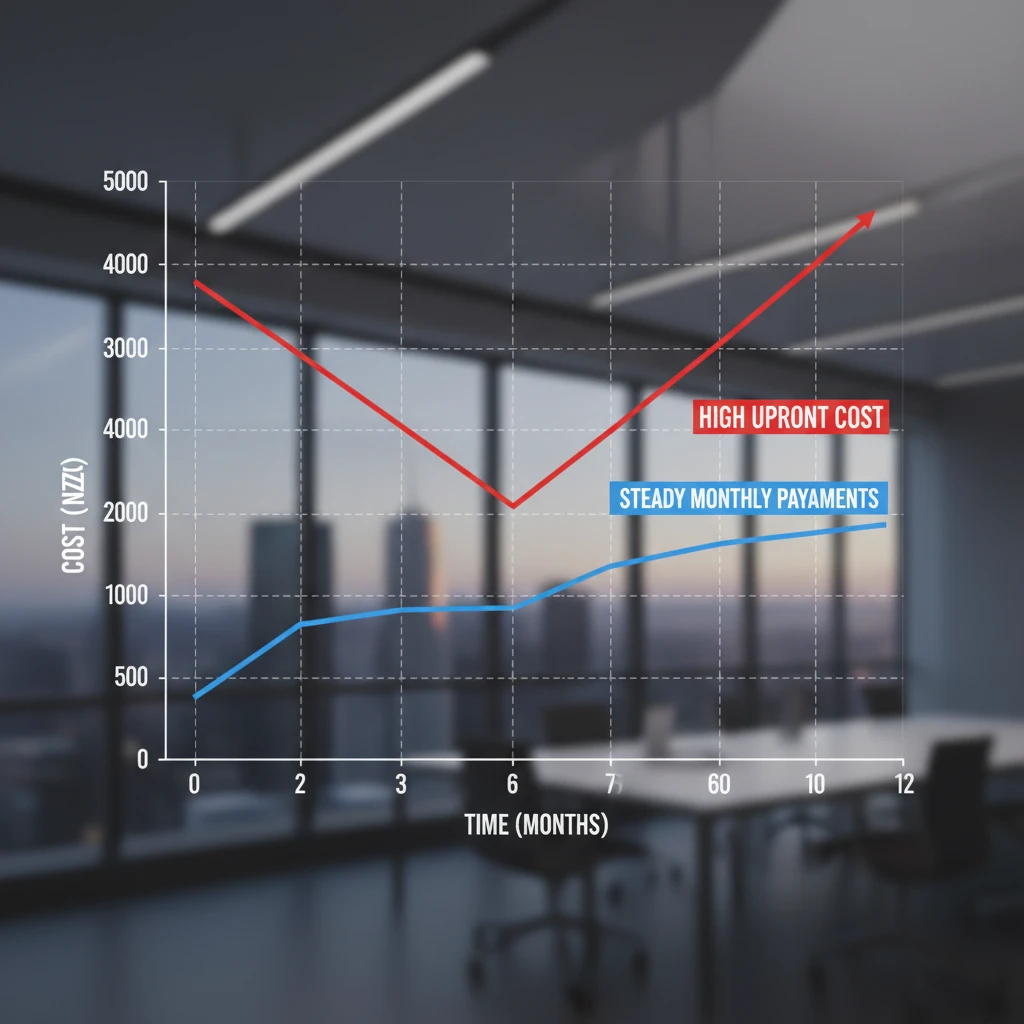
Deciding between buying a domain outright and leasing it involves a critical analysis of Capital Expenditure (CapEx) versus Operating Expenditure (OpEx). For New Zealand businesses, understanding this distinction is vital for cash flow management and tax planning.
The CapEx Approach (Outright Purchase)
Purchasing a premium domain for NZD $50,000 is a significant CapEx event. This asset sits on the balance sheet as an intangible asset. While it secures the asset immediately, it ties up a substantial amount of cash that could otherwise be used for inventory, staff, or advertising. Furthermore, intangible assets like domains are not always easily depreciated for tax purposes in the same way physical machinery is, depending on specific accounting interpretations.
The OpEx Approach (Leasing)
Leasing a domain converts that large lump sum into a monthly OpEx. From an accounting perspective, these lease payments are typically treated as a deductible operating expense, similar to paying for web hosting or office rent. This reduces the taxable income of the business in the short term.
Cash Flow Efficiency
For a startup with NZD $100,000 in seed funding, spending 30% of that capital on a domain name is high-risk. By leasing the domain for $1,000 a month, the business retains its capital runway to prove its business model. If the business scales successfully, the buyout price is easily covered by revenue. If the business pivots, they haven’t sunk a fortune into a name they no longer need.
Legal Frameworks and Agreement Structures
Leasing a .nz domain requires a robust legal framework to prevent disputes. The agreement must align with the policies set forth by the Domain Name Commission (DNC) of New Zealand, specifically regarding registrant responsibilities.
Key Clauses in a Domain Lease Agreement
- Transfer of Title Condition: The contract must explicitly state that the legal title of the domain will be transferred to the lessee immediately upon the receipt of the final payment.
- Default and Cure Period: What happens if a payment is missed? Standard agreements provide a “cure period” (e.g., 10 days) for the lessee to rectify a missed payment before the lease is considered in default and the domain is reclaimed.
- Trademark Indemnification: The lessee should indemnify the lessor against any trademark infringement claims arising from how the lessee uses the domain during the lease term.
- Escrow Holding: For high-value transactions, it is best practice to have a neutral third party (an escrow service) hold the domain or the transfer codes to ensure the lessor cannot arbitrarily revoke access while payments are being made.
The Dispute Resolution Service (DRS)
It is important to note that while a private lease agreement governs the financial relationship, the .nz Dispute Resolution Service handles policy breaches. If a lessee uses a leased domain for illicit activities, the lessor (as the legal registrant) could be liable under DNC policies. Therefore, lease agreements often include strict “acceptable use” policies.
Strategic Advantages for Kiwi Startups
Beyond the financial mechanics, domain leasing offers strategic competitive advantages in the New Zealand market.
Instant Credibility
New Zealand consumers are discerning. A business launching on a generic, high-value .co.nz domain (e.g., Loans.co.nz or Insurance.co.nz) gains instant trust. Leasing makes this level of credibility accessible to new entrants who would otherwise be relegated to obscure, hyphenated, or long-tail domain names.
Defensive Branding
Established companies can use leasing to secure defensive domains—names similar to their own or related to new product lines—without committing full capital immediately. This prevents competitors from acquiring valuable digital territory.
Risks and Considerations
While advantageous, domain leasing is not without risks. Lessees must be aware of the “Equity Trap.” If a business pays 90% of the lease installments and then defaults on the final few payments due to a cash crunch, they typically forfeit the domain and all previous payments. This makes the domain lease one of the most critical liabilities to service.
Additionally, there is the risk of “SEO Loss” upon default. If a business spends years building backlinks and content on a leased domain but fails to complete the purchase, they lose not just the name, but the entire search engine equity associated with it. Mitigation involves setting up automatic payments and prioritizing domain lease costs above less critical operational expenses.
People Also Ask
Can I rent a domain name in NZ without buying it?
Yes, pure rental agreements exist where you pay for the use of the domain for a specific period without an option to purchase. However, this is less common than lease-to-own models, as most businesses prefer to build equity in the brand they are developing.
How does lease-to-own work for .nz domains?
In a lease-to-own arrangement, you and the seller agree on a total price and a monthly payment schedule. You get full use of the domain immediately (DNS control), but the seller retains legal ownership until the final payment is made, at which point the domain is transferred to you.
Is domain leasing tax deductible in New Zealand?
Generally, lease payments are considered operating expenses and are tax-deductible in the year they are incurred. However, if it is a lease-to-own contract, your accountant may need to determine if it should be treated as a capital purchase financed over time. Always consult a qualified NZ accountant.
What happens if I stop paying my domain lease?
If you default on payments and fail to cure the default within the grace period, the contract is usually terminated. You will lose the right to use the domain, the DNS will be reverted by the owner, and you generally forfeit all monies paid up to that point.
Who owns the domain during the lease period?
The lessor (seller) remains the legal registrant of the domain name in the WHOIS database during the lease term. The lessee (buyer) is granted exclusive usage rights and control over the technical settings (DNS) to host their website and email.
Are premium .nz domains worth the investment?
For businesses targeting the New Zealand market, a premium .nz or .co.nz domain is highly valuable. It signals local relevance, improves click-through rates from local search results, and builds immediate consumer trust compared to .com or non-traditional extensions.
