


DNC Dispute Resolution Process
The DNC Dispute Resolution Process (DRS) is a formal mechanism managed by the Domain Name Commission in New Zealand to resolve disputes over .nz domain registrations.
Navigating the intellectual property landscape of the New Zealand digital ecosystem requires a thorough understanding of how domain rights are enforced. Whether you are a brand owner protecting a trademark or a domain investor managing a portfolio, understanding the .nz policy framework is critical.
Understanding the NZ DNC Dispute Resolution Process
The Domain Name Commission (DNC) serves as the regulator for the .nz domain name space. Unlike the Uniform Domain-Name Dispute-Resolution Policy (UDRP) used for generic top-level domains like .com, New Zealand utilizes its own specific policy known as the Dispute Resolution Service (DRS). This service is designed to be accessible, faster, and significantly cheaper than High Court litigation.
For stakeholders in the NZ domain brokerage and localized escrow services market, the DRS is the primary playbook for recovering assets or defending legitimate holdings. The policy is strictly concerned with whether a domain name is an “Unfair Registration” in the hands of the current holder (the Respondent).
The system is binary in its outcome: a domain is either transferred, cancelled, or the complaint is dismissed. There are no monetary damages awarded through the DRS, which emphasizes its role purely as a mechanism for correcting the register rather than punishing bad actors financially.
Eligibility to File a DRS Complaint
Not every grievance regarding a domain name qualifies for the DNC dispute resolution process. To initiate a valid claim, the Complainant must satisfy specific threshold requirements regarding their rights.
Establishing Rights in a Name
The first hurdle in the DRS policy is proving that the Complainant has “rights” in respect of a name or mark which is identical or similar to the domain name in dispute. Unlike some jurisdictions that require a registered trademark, the NZ DRS recognizes both:
- Registered Rights: Trademarks registered with the Intellectual Property Office of New Zealand (IPONZ).
- Unregistered Rights: Common law rights established through commercial use and reputation within New Zealand (often referred to as the tort of passing off).
For domain brokers and escrow agents, verifying these rights is part of due diligence. If a client wishes to acquire a domain that is currently taken, simply having a similar business name is not enough; there must be a demonstrable history of trading and reputation associated with that name.
The “Unfair Registration” Threshold
Possessing rights is only half the battle. The Complainant must also prove that the domain name in the hands of the Respondent is an “Unfair Registration.” This differs subtly from the “Bad Faith” requirement in UDRP. Under NZ policy, a registration is unfair if it:
- Was registered or otherwise acquired in a manner which, at the time when the registration or acquisition took place, took unfair advantage of or was unfairly detrimental to the Complainant’s rights; or
- Has been used in a manner which has taken unfair advantage of or has been unfairly detrimental to the Complainant’s rights.
The Three Stages of the NZ Dispute Process
The DNC dispute resolution process is structured to encourage settlement before a binding decision is required. This tiered approach saves time and resources for all parties involved.

Stage 1: Informal Mediation
Once a valid complaint is filed and the Respondent has submitted a response (or failed to do so within the timeframe), the process moves to informal mediation. This is a complimentary service provided by the DNC.
During this phase, a neutral mediator attempts to help the parties reach a mutually meaningful settlement. This is often the preferred stage for domain brokers to negotiate a purchase price or transfer agreement to avoid the risk of a binding decision. Mediation is confidential and “without prejudice,” meaning nothing said during mediation can be used as evidence if the case proceeds to the next stage.
Stage 2: Expert Determination
If mediation fails to produce a resolution, the Complainant can opt to pay a fee to move the matter to Expert Determination. Here, an independent expert (usually a senior IP lawyer or adjudicator) is appointed by the Domain Name Commission.
The Expert reviews the submissions from both the Complainant and the Respondent. There are no oral hearings; the decision is based entirely on the written evidence provided. The Expert will issue a written decision determining whether the domain is an Unfair Registration. If they find in favor of the Complainant, the domain is usually ordered to be transferred.
Stage 3: Appeal
Either party has the right to appeal an Expert’s decision. An appeal is heard by a panel of three experts. This stage involves significantly higher fees and is relatively rare. The appeal panel reviews the original decision and can overturn it, uphold it, or order a retrial. This acts as a safety valve to ensure legal accuracy in complex cases.
Evidence Required for ‘Unfair Registration’
Success in the DNC dispute resolution process hinges entirely on the quality of evidence. Assertions without proof are generally dismissed. For those in the domain escrow and brokerage space, advising clients on evidence gathering is a value-added service.

Proof of Confusion or Deception
Evidence that internet users have been confused by the domain is powerful. This might include:
- Emails intended for the Complainant sent to the Respondent.
- Logs of customer support queries asking if the domain is associated with the brand.
- Analytics showing traffic diversion.
Pattern of Conduct
If the Respondent has a history of “cybersquatting”—registering multiple domains corresponding to third-party trademarks—this constitutes strong evidence of unfair registration. The DNC allows Complainants to cite previous adverse decisions against a Respondent.
Offer to Sell
One of the most common grounds for a finding of Unfair Registration is evidence that the Respondent acquired the domain primarily for the purpose of selling, renting, or otherwise transferring the domain name to the Complainant or a competitor for a profit. Screenshots of “For Sale” pages or email threads demanding exorbitant fees are critical pieces of evidence here.
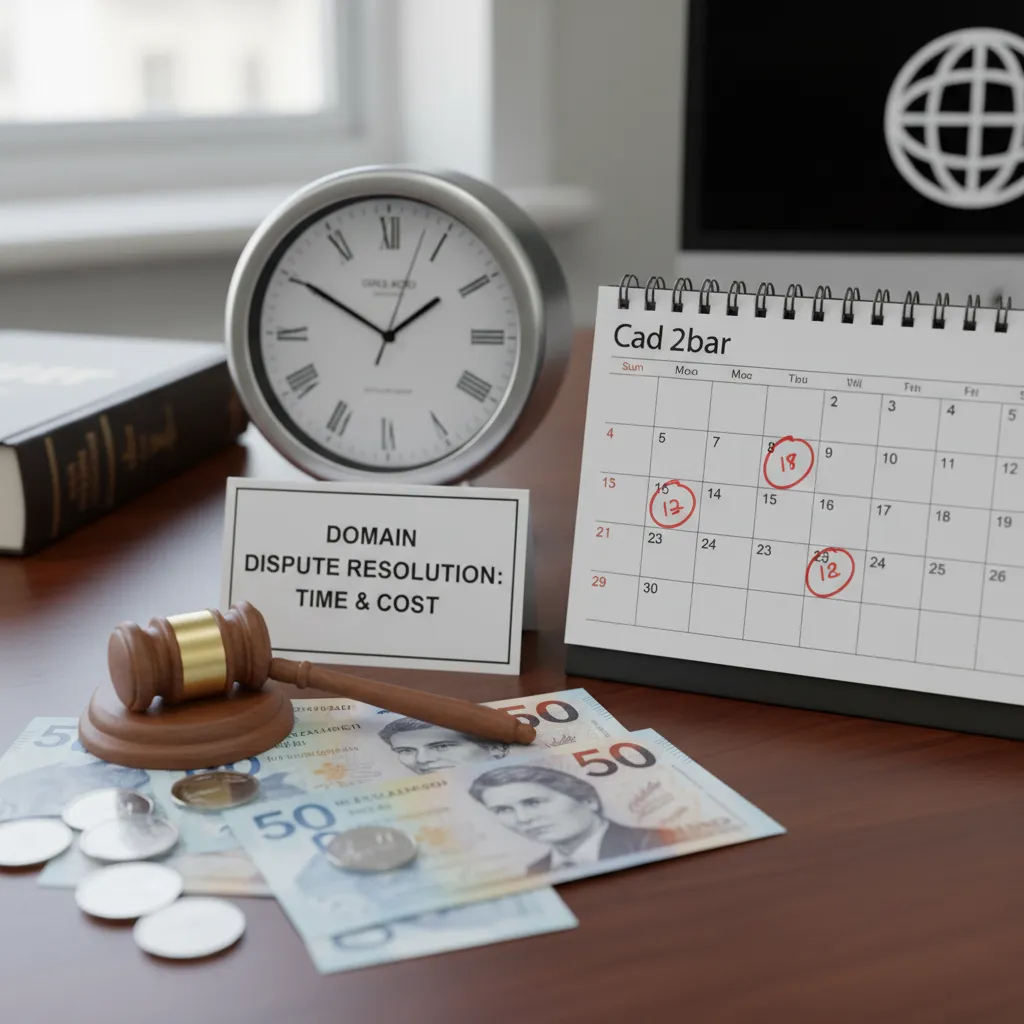
Costs and Timelines for NZ Domain Mediation
Understanding the financial and temporal investment required for a DNC dispute is essential for ROI calculations in domain portfolio management.
Fee Structure
The New Zealand system is designed to be accessible, but it is not entirely free beyond the mediation stage. All fees are generally quoted in New Zealand Dollars (NZD) and exclude GST.
- Filing a Complaint: Free.
- Mediation: Free.
- Expert Determination: If the Complainant opts for this, the fee is typically $2,000 NZD. If the Respondent requests a three-person panel, costs increase significantly.
- Appeal: An appeal requires a fee of approximately $7,200 NZD, which covers the cost of a three-member panel.
Note: If the Complainant wins, the fees paid for Expert Determination are generally not recoverable from the Respondent, unlike court costs. This is a sunk cost of brand protection.
Expected Timelines
The DNC moves faster than the courts, but it is not instantaneous.
- Response Window: Once notified, a Respondent has 20 working days to submit a response.
- Reply: The Complainant has 5 working days to reply to any new points raised.
- Mediation: Typically lasts 10-20 working days depending on the responsiveness of parties.
- Decision: Once an Expert is appointed, a decision is usually rendered within 10-15 working days.
Total time from filing to decision usually ranges between 2 to 4 months.
Strategic Advice for Domain Brokers and Investors
For professionals in the domain industry, the DNC dispute resolution process is a double-edged sword. It protects legitimate IP but also poses a risk to investors holding generic terms.
For Domain Investors (Respondents)
If you hold a portfolio of .nz domains, ensure you are not infringing on existing rights. Generic terms (e.g., shoes.co.nz) are generally safe. However, if you receive a complaint, do not ignore it. Failure to respond often leads to a default judgment against you. Participation in mediation is highly recommended; it is often better to negotiate a sale price than to risk losing the asset entirely in Expert Determination.
For Brand Owners (Complainants)
Before filing, consider a brokerage approach. Sometimes, using a localized escrow service to anonymously purchase the domain is cheaper and faster than the $2,000+ Expert Determination fee, especially if the outcome is uncertain. Use the DRS as a leverage tool, not necessarily a first resort.
People Also Ask
How much does the DNC dispute resolution process cost?
Filing a complaint and participating in mediation is free. However, if the case proceeds to Expert Determination, the Complainant must pay a fee of $2,000 NZD (plus GST). Appeals cost significantly more, typically around $7,200 NZD.
Do I need a lawyer for a .nz domain dispute?
No, legal representation is not mandatory. The process is designed to be accessible to laypeople. However, given the legal complexities of proving “rights” and “unfair registration,” engaging an IP lawyer or a domain expert is highly recommended to improve your chances of success.
How long does a DNC dispute take to resolve?
The entire process typically takes between 2 to 4 months. This includes the 20-day response period for the Respondent, the mediation phase, and the time required for an Expert to write their decision.
What happens if the Respondent does not reply to the complaint?
If the Respondent fails to reply within the 20-day window, the Complainant can request a Summary Decision. This is a faster, lower-cost route where an Expert determines if the complaint is valid based solely on the Complainant’s evidence.
Can I appeal a DNC decision?
Yes. Either party can appeal the decision of an Expert within 10 working days of the decision being notified. The appeal is heard by a panel of three experts, but it attracts a substantial fee.
Is the DNC decision binding?
Yes, the decision is binding on the Registrar and the parties involved regarding the domain name’s status. However, the DNC process does not prevent either party from taking the matter to the New Zealand High Court, though the Court generally respects the DNC’s findings unless there is a significant error of law.
