


Buy Premium .nz Domains
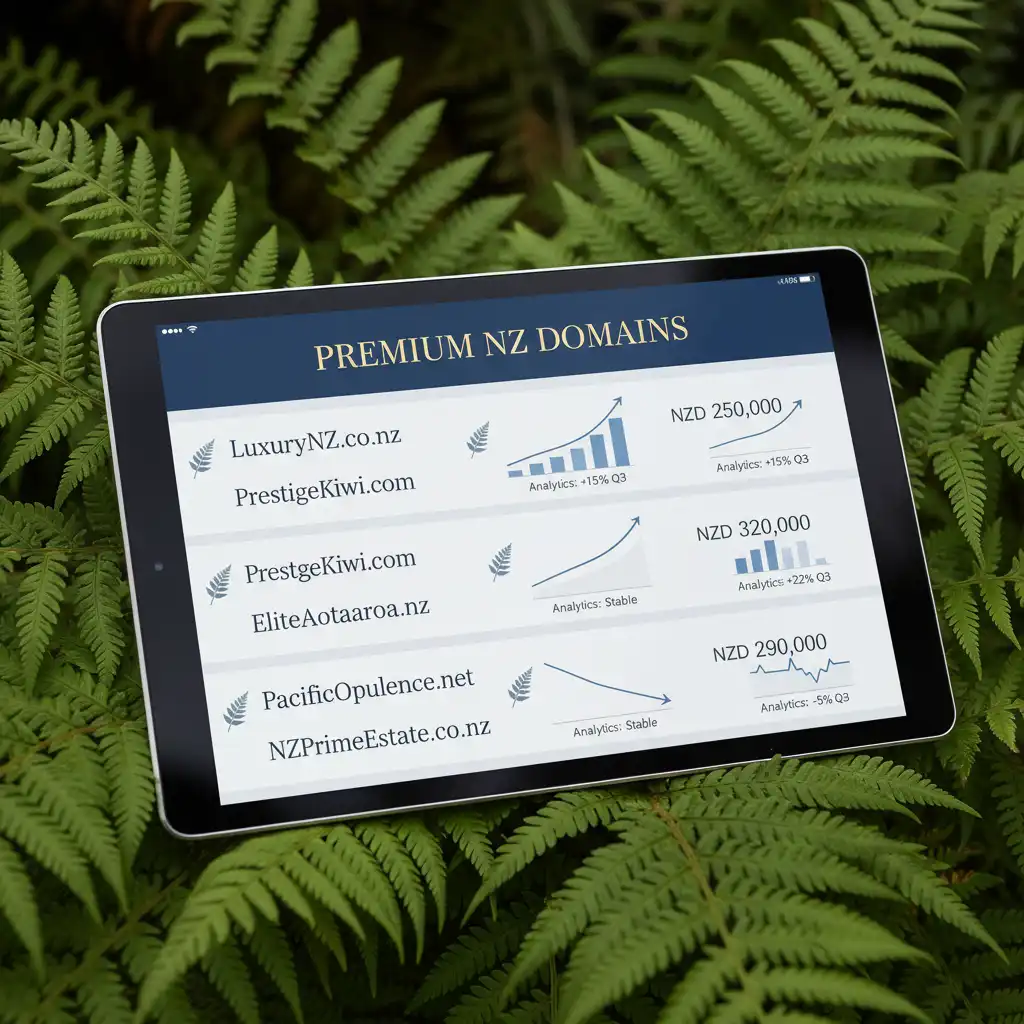
Buying a premium .nz domain involves acquiring a high-value, pre-registered web address that commands immediate brand authority and search engine relevance in New Zealand. These exclusive digital assets are typically secured through specialized brokerages, utilizing escrow services and strict transfer protocols to ensure the safe acquisition of high-ticket intellectual property.
Why Invest in Premium .nz Digital Real Estate?
In the competitive landscape of New Zealand’s digital economy, a domain name is more than just a technical address; it is the cornerstone of brand identity and the primary vehicle for online trust. When you buy premium .nz domain names, you are not merely purchasing a string of characters, but acquiring a distinct competitive advantage that can define market leadership.
Premium domains are characterized by their brevity, keyword relevance, and memorability. Unlike standard registrations, these assets often consist of single dictionary words, high-volume industry keywords, or concise acronyms. For businesses operating within New Zealand, the .nz extension (and the traditional .co.nz) signals local relevance to search engines like Google, which is critical for local SEO performance.
The value proposition of a premium domain lies in its ability to reduce marketing costs over time. A “category-killer” domain (e.g., Insurance.nz or Loans.nz) captures direct navigation traffic—users typing the keyword directly into the browser bar—bypassing search engines entirely. This type-in traffic converts at a significantly higher rate than paid traffic because the user intent is explicit and immediate.
Immediate SEO Authority and Trust
New domains start with zero authority. They reside in what SEO professionals often call the “sandbox,” requiring months or years of content creation and backlink building to rank for competitive terms. Premium domains, particularly those on the secondary market, often come with an existing history. They may have an aged registration date and an existing backlink profile, allowing the new owner to bypass the initial gestation period of a new website.
Furthermore, consumer psychology plays a pivotal role. A premium .nz domain implies longevity and stability. Customers are inherently more likely to trust and click on a clean, professional domain like “Builders.nz” compared to a hyphenated or long-tail alternative like “Best-Home-Builders-Auckland.co.nz.” This increased Click-Through Rate (CTR) signals to search algorithms that the site is relevant, further boosting organic rankings.
Curated Categories of High-Value Domains
Navigating the secondary market requires an understanding of asset classes. Just as in physical real estate, where commercial, residential, and industrial zones differ in value and utility, digital assets fall into distinct categories. When looking to buy premium .nz domain assets, investors typically target the following tiers.
Category Killers and Generic Keywords
These are the crown jewels of the domain industry. They consist of single, generic words that define an entire industry. Examples might include Mortgages.nz, Travel.nz, or Cloud.nz. Owning a category killer positions a brand as the default authority in that sector. The scarcity of these domains drives their price, often reaching into the five or six-figure range, but the ROI is justified by the instant market dominance they provide.
Short Brandables and Acronyms
Short, pronounceable names (4-5 letters) or 2-3 letter acronyms (LL.nz or LLL.nz) are highly liquid assets. They are flexible enough to host any business model and are easy to spell and remember. In the mobile-first era, where typing on small screens is prone to error, brevity is a significant asset. Acronyms are particularly valuable for corporations looking to shorten their URL for social media and marketing collateral.
Geo-Targeted Domains
For businesses with a specific regional focus, pairing a service with a location is a powerful strategy. Domains such as AucklandLaw.nz or ChristchurchRealEstate.nz offer hyper-local targeting. While less expensive than national category killers, they offer extremely high conversion rates for local service providers.
The Process of Purchasing Premium Assets
Acquiring a premium domain is a transactional process that differs significantly from registering a new name for $30. It involves negotiation, due diligence, and secure transfer mechanisms. Following a structured acquisition path is essential to protect capital and ensure legal ownership transfer.
Step 1: Identification and Valuation
Before making an offer, a buyer must assess the fair market value of the domain. Valuation is an art and a science, influenced by keyword search volume, cost-per-click (CPC) data, extension (.nz vs .co.nz), length, and comparable sales history. Tools like Estibot or GoDaddy Appraisal can provide a baseline, but a manual assessment by a digital asset broker is recommended for high-ticket items to account for market nuances specific to New Zealand.
Step 2: Brokerage and Negotiation
Most premium domains are already owned by investors or other businesses. They may be listed on marketplaces like Sedo or Afternic, or they may require a “private acquisition” where a broker contacts the owner on your behalf. Using a broker preserves your anonymity; if a large corporation approaches a domain owner directly, the price often inflates. A broker navigates the negotiation to secure a fair price based on market data, not the buyer’s pocket depth.
Step 3: Secure Escrow Services
Never transfer funds directly to a seller via bank transfer or PayPal for a high-value domain. The standard for premium transactions is Escrow. The buyer deposits funds into a neutral third-party holding account (like Escrow.com or a specialized law firm trust account). The funds are only released to the seller once the domain has been successfully transferred and verified in the buyer’s control. This eliminates the risk of fraud.
Financing Options for High-Ticket Domains
For startups and SMEs, the capital outlay for a premium domain (which can range from $5,000 to $500,000+) can be a hurdle. However, modern digital asset brokerages offer flexible financing structures to make these assets accessible. Treating a domain purchase as a capital expenditure (CapEx) rather than an operating expense allows for creative funding solutions.
Lease-to-Own Agreements
This is the most common financing model. The buyer pays a deposit followed by monthly installments over a set period (usually 12 to 60 months). During the lease term, the buyer has full use of the domain—they can build a website, set up email, and run marketing campaigns. However, the legal ownership (Whois data) remains with the seller or escrow agent until the final payment is made. This model allows businesses to secure the asset immediately while managing cash flow.
Pure Domain Leasing
Similar to leasing commercial office space, a business can lease a premium domain for a monthly fee without an option to buy. This is useful for short-term campaigns or testing a market vertical before committing to a full purchase. However, for long-term brand building, ownership is always preferable to avoid the risk of lease termination or price hikes.

Immediate Transfer Protocols and Security
Once the financial terms are settled, the technical transfer of the domain must occur. In New Zealand, the .nz registry operates under specific protocols managed by the Domain Name Commission (DNC). Understanding these steps ensures a seamless handover.
The UDAI (Unique Domain Authentication ID)
The key to any .nz transfer is the UDAI. This is an 8-character authorization code generated by the current registrar. The seller must provide this code to the buyer. The buyer then inputs this code at their chosen registrar (e.g., Metronet, Crazy Domains, or a corporate registrar) to initiate the “pull” of the domain. The UDAI acts as the password for the asset; it should never be shared publicly.
Change of Registrant (COR)
A standard transfer moves the domain between registrars, but a Change of Registrant updates the legal owner’s details. For premium transactions, both usually happen. It is critical to ensure that the “Registrant Name” and “Registrant Contact” fields are updated to reflect the new owner’s legal entity immediately. Failure to update this can lead to disputes later, especially regarding intellectual property rights.
Registry Locking
After acquiring a high-value domain, it is best practice to apply a “Registry Lock” or “Transfer Lock.” This is a higher level of security than the standard registrar lock. It requires manual authentication between the registrar and the registry to make any changes to the domain, rendering it virtually immune to hijacking or unauthorized transfers.

The Role of Expert Advisory in Acquisition
The digital asset market is unregulated compared to financial markets, making expert advisory crucial. A specialized New Zealand digital asset broker provides more than just introductions; they provide risk mitigation. Brokers perform due diligence on the domain’s history to ensure it hasn’t been used for spam or trademark infringement, which could result in the domain being blacklisted by Google or seized via a Dispute Resolution Service (DRS) policy.
Furthermore, brokers understand the nuance of the .nz market versus the global .com market. They can advise on whether a .co.nz or a direct .nz is more appropriate for your specific business goals, and they can structure contracts that protect the buyer’s interests throughout the escrow period.
Frequently Asked Questions
How much does a premium .nz domain cost?
The price varies wildly based on demand, length, and keyword value. A decent two-word brandable might sell for $2,000 to $10,000 NZD. High-value category killers (single words) or 2-3 letter acronyms often range from $20,000 to over $100,000 NZD depending on the commercial potential of the keyword.
How do I buy a premium .nz domain that is already taken?
If a domain is registered but not in use, you can hire a domain broker to perform a “stealth acquisition.” The broker contacts the owner anonymously to negotiate a sale price. If the domain is listed on a marketplace like Sedo, you can purchase it directly or place a bid.
What is the difference between .co.nz and .nz?
.co.nz is the traditional extension for New Zealand businesses and has high trust and recognition. .nz is the newer, shorter option introduced in 2014. Both are excellent, but .nz is perceived as more modern, while .co.nz is seen as more institutional. Ideally, a premium brand should secure both.
Is buying a premium domain a tax-deductible expense?
In New Zealand, purchasing a domain name is generally considered a capital asset (intangible asset) rather than an immediate expense if it is a one-off purchase for a premium name. It may need to be amortized over time. However, annual renewal fees are deductible operating expenses. Always consult a qualified NZ accountant for specific advice.
How long does the transfer process take?
Once funds are secured in escrow, the technical transfer of a .nz domain is very fast. Once the UDAI is entered by the buyer, the transfer is often instantaneous or takes a few hours. The entire process, including negotiation and escrow funding, typically takes 3 to 10 business days.
Can I lose my premium domain if I forget to renew it?
Yes. If you fail to pay the renewal fee, the domain enters a grace period (usually 90 days for .nz) where it stops working but can be recovered. After that, it is released back to the public pool and can be registered by anyone. For premium domains, it is vital to set up auto-renew and have multiple payment methods on file.
